Why your heat pump makes noise in a New York winter
Answer a few questions instead of calling shop after shop.
A heat pump works harder in a New York winter than it ever does in summer, and it tells you so. A rattle, a buzz, a hard clunk when it switches into defrost, a whistle from somewhere in the ductwork. Some of that noise is normal. The reversing valve shifts with a clunk. The outdoor fan can hum louder on a cold, still night. But a grinding sound, a screech, or a bang that wasn't there last winter means something has worn loose or failed, and it's worth knowing which before it gets worse or the heat stops altogether on a night you need it most.
Finding out shouldn't mean the usual run around. You search, you find a handful of HVAC companies, you call each one, explain the noise, the model, when it started, what you've already tried, and then wait to see who calls back and when. Some don't. The ones that do give you a quote with no idea who's actually showing up at your door.
This page skips that. You tell it what's going on once, and it goes to one licensed contractor near you in New York, not five companies fighting for the job. Someone who works on heat pumps all winter here knows what tends to go first when the temperature drops and the system is running nonstop to keep up: a worn bearing in the outdoor fan motor, a loose panel buzzing in the wind, a failing component in the defrost control. They've heard the noise before, in houses like yours, in weather like this.
Heat pumps in cold climates work differently than people expect, and a noise that would mean nothing in April can mean something in January. The rest of this page gets into why. What you do next is simpler. One contractor, one conversation, and you're not stuck sorting through quotes from strangers to figure out who to trust with it.
Why does my heat pump get so loud in the winter?
Your heat pump has been fine all year, then the cold hits and it starts rattling, buzzing, or clunking every time it cycles. You're not imagining it getting louder. It's worth knowing which of those sounds is the unit doing its job in weather it wasn't built to love, and which one means a part is wearing out before the New York winter is over.
Cold air makes a heat pump work harder, and that work makes noise
Below freezing, a heat pump has to pull heat out of air that doesn't have much to give. The compressor runs longer and under more strain, the outdoor fan works harder to move cold air across the coil, and the unit goes into defrost more often to clear frost off that coil. Each of those is louder in January than it is in July. A reversing valve clunking when defrost starts, a fan laboring in the cold, a compressor running longer than it does in summer: that's the system doing what it's built to do in weather this hard on it. A grinding, a screeching, or a noise that's new and gets worse is the compressor or motor telling you something is failing, not just working harder.
Summer here isn't just hot, it's heavy. NOAA puts the average dew point across New York summers at 62°F, and that's the number that tells you how much moisture your heat pump is pulling out of the air on top of cooling it. That extra load runs the compressor longer and puts more cycles on the same parts that give you trouble come winter, the reversing valve, the fan motor, the contactor. A unit that's been straining all summer doesn't get a break before defrost season starts asking more of it. If you're already hearing something off, you don't need to spend an evening calling around and repeating the same description to three different companies. One local contractor who works on heat pumps all year, through the humidity and the cold, can tell you in one visit whether what you're hearing is wear from the season behind it or something that needs fixing now.
A noise that shows up every time the unit cycles into defrost isn't something to live with until spring. If it's a failing reversing valve or a bad motor bearing, waiting through a New York winter just means running a system that's wearing on itself every day, on power that already costs more here than in most of the country. Finding someone to look at it is usually the part that stalls people. You'd normally be searching for a contractor who actually works on heat pumps rather than just furnaces, calling a few, explaining the same rattle and clunk to each one, then waiting on quotes to compare. Submit this request instead and it goes to one local contractor who services this equipment all winter and has a good idea what that sound means before they even arrive. No fielding calls from five companies, no repeating yourself. Just the noise, explained and dealt with, by someone who knows what a heat pump sounds like when something's actually wrong.
Normal Winter Noise or a Problem
Normal
A whoosh or a soft hiss when the system switches between heating and defrost is the reversing valve doing its job.
A clunk at startup as the compressor kicks on is common in cold weather, when the refrigerant inside is denser.
A burst of noise for a few minutes every half hour or so in freezing weather is likely a defrost cycle clearing ice off the outdoor coil.
A steady hum from the outdoor unit while it runs is the compressor and fan working, not a sign of trouble.
Air moving through the vents sounding louder on the coldest days is normal, since the system runs longer to keep up.
Needs a look
A rattle that wasn't there last winter usually means a bolt, panel, or mount has worked loose and needs tightening.
A buzz that continues after the unit cycles on, rather than fading, often points to a failing contactor or a loose electrical connection.
A hard bang every time the system shifts into defrost can mean the reversing valve itself is sticking or wearing out.
A grinding or squealing sound from the outdoor unit usually means a motor bearing is going bad.
A whistle from the ductwork that gets louder as it gets colder can mean a restriction forcing the system to push air harder than it should.
Ice building up on the outdoor coil that doesn't clear during the defrost cycle means that cycle isn't working right, and the noise it makes will keep happening.
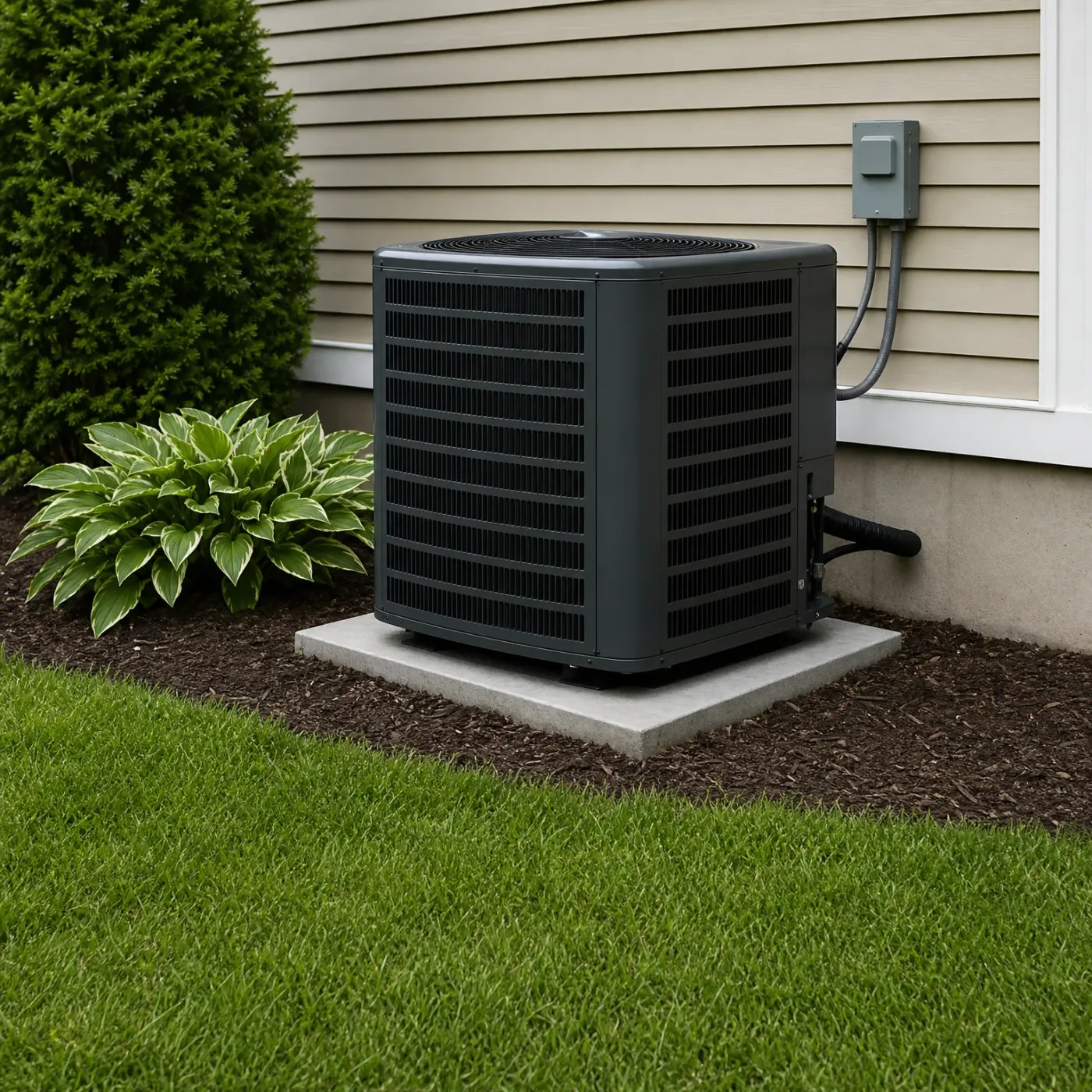
Running clean
A heat pump that sounds right usually looks right. The fins are clear, the grille is open, and the pad underneath sits level against the wall. Air moves through it without a fight. That's one less thing pulling at the compressor on a cold New York morning.
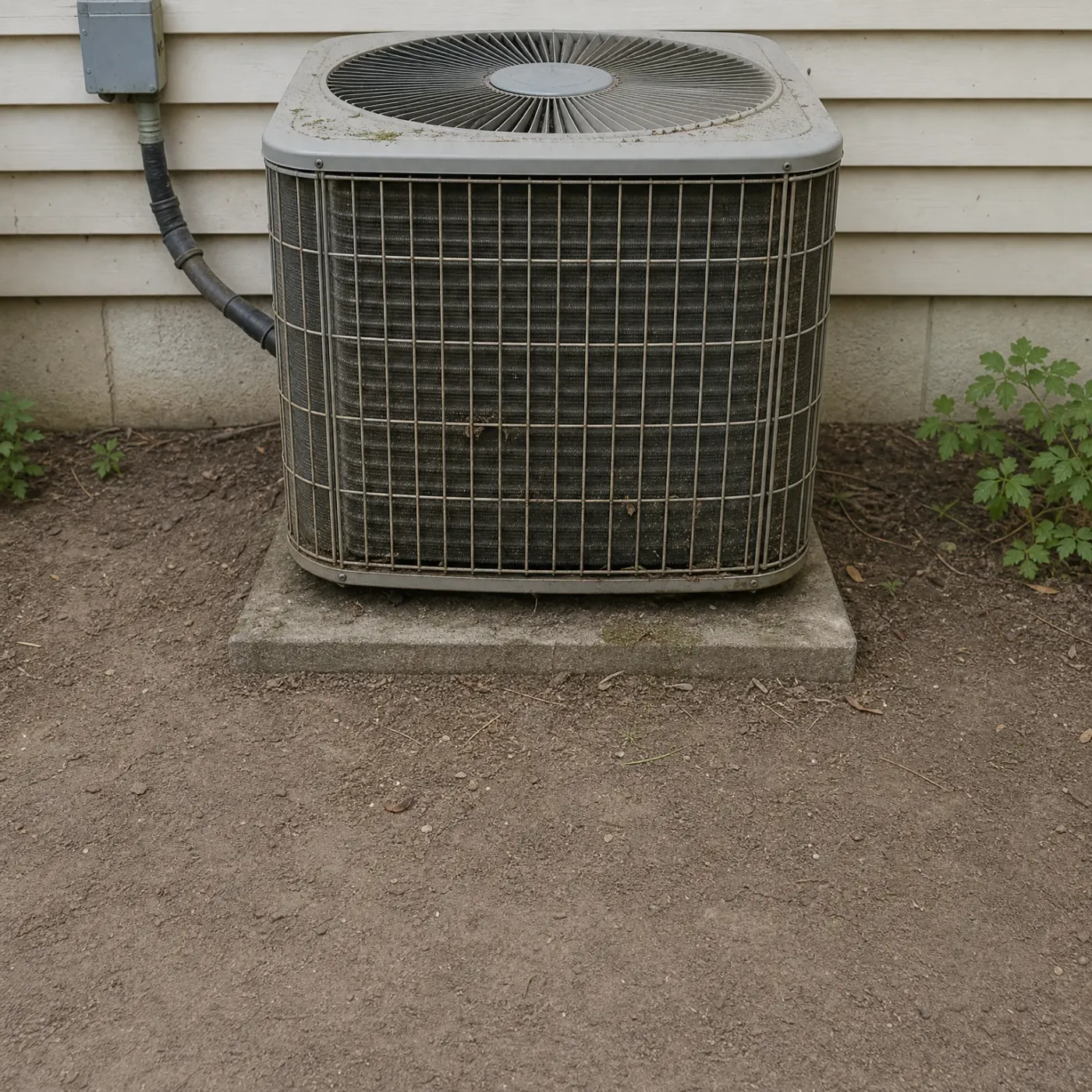
Choked with grime
Dust and grime packed into the fins block the airflow the unit needs to run the defrost cycle properly. The compressor works harder to move the same air, and that strain shows up as noise. A unit coated like this is already telling you something before it fails outright.
Power costs 26.39 cents per kilowatt-hour statewide
At 26.39 cents a kilowatt-hour, a heat pump straining through a noisy cycle isn't just annoying, it's running longer and pulling more power to get the same heat into your house. A clunk or a rattle that keeps showing up usually means something inside is working harder than it should, and that shows up on your bill before it shows up as a breakdown.
EIA-861 2025 statewide residential average
What the noise is telling you
A new sound that repeats every defrost cycle points to a part wearing out, not a system settling in.
The reversing valve, the motor bearing, and the compressor mounts are the usual sources once a noise turns constant.
Letting a clunk or a buzz run through a New York winter means paying 26.39 cents a kilowatt-hour for a system working harder than it should.
A local contractor who services heat pumps through winters like this one can usually place the sound before taking the panel off.
One contractor gets the call, not four, so you explain the noise once instead of repeating it down a list of estimates.
Catching it now means one repair instead of a system pushed toward a bigger failure by spring.
A heat pump that suddenly gets loud in a New York winter is almost always pointing at one of three things: the reversing valve, a motor bearing, or a compressor mount that's come loose. None of those get quieter on their own. The sound you hear at the start of a cycle or during defrost is the clearest clue you'll get before anyone opens the cabinet, and it's usually enough for someone who works on these systems all winter to have a good idea what they're looking at before the panel comes off.
That's the kind of thing a local contractor hears often enough to recognize fast, someone who's been inside heat pumps through enough New York winters to know which sound means a bearing and which means a valve. You call once, explain what you're hearing, and one contractor comes out, not four companies working off the same vague description of a rattle. No repeating yourself down a list of estimates, no sorting through quotes from people who've never heard the actual sound.
The part underneath doesn't change whether you wait or not. A worn bearing or a loose mount keeps wearing. What changes is the cost of running it that way, at 26.39 cents a kilowatt-hour, every cycle the system fights through on its own. Catching it now, while it's still one part failing, usually means one repair. Wait, and winter has a way of turning that into something bigger by the time spring comes around.
Heat Pump Repair
Describe it once
Step 1 of 3: Equipment
Describe your heat pump job, and a local pro who handles it gets in touch.
Say what's going on with your heat pump, and a pro who works on them reaches out.
Once you send the form, finding a pro is off your list.
After you send the request, you're done searching.
Explain the job once and skip repeating it on every call.
Skip searching for a heat pump pro and answer a few questions instead.
Only one pro gets your request, so you hear from one company.