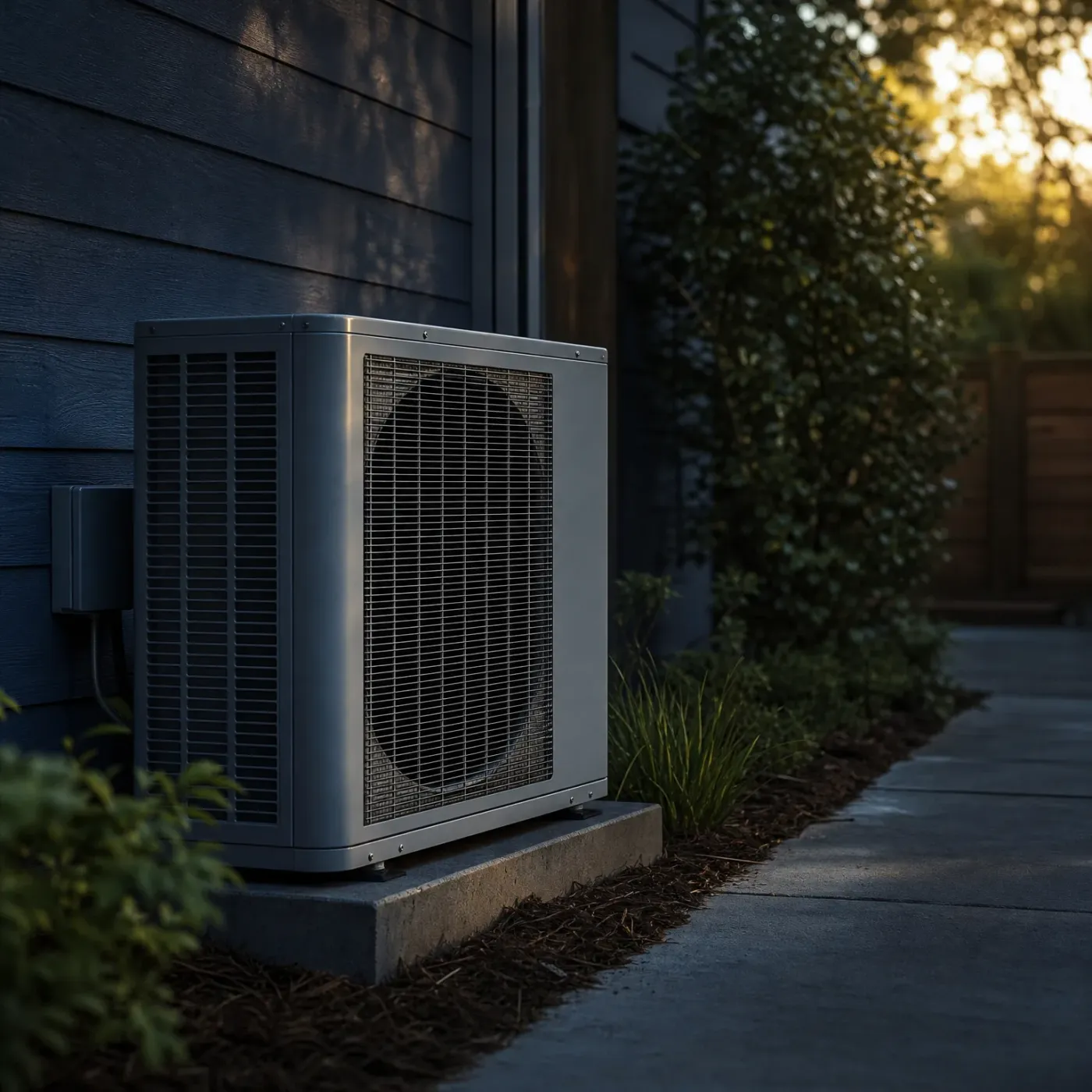
A gray outdoor heat pump unit on a concrete pad beside a dark horizontal-siding wall, with a small electrical box on the wall, shrubs and a concrete walkway to the right at dusk.

No phone calls to make

Why your heat pump keeps short cycling in New York

A heat pump that turns on and off every few minutes isn't resting between cycles the way it should. This page gets into what causes that in New York, from a frozen coil to a bad sensor to a system that's the wrong size for your house. Skip calling around and comparing quotes. One licensed local contractor who works on heat pumps all year, summer and winter, can take a look.

Skip calling around

A heat pump that short cycles is turning on, running a few minutes, then shutting off, over and over, instead of finishing a normal heating or cooling run. A few things cause that. The outdoor coil can ice over when it's cold out, which trips the system off before it can run a full cycle. A dirty air filter or blocked return can starve it of airflow and do the same thing. A thermostat sensor reading the wrong temperature will shut the system down early thinking the room is already comfortable. And if the heat pump is bigger than your house needs, it can satisfy the thermostat fast and shut off before it's dehumidified the air or evened out the room, which matters once summer turns sticky here. Short cycling wears on the compressor every time it restarts, and it tends to get worse, not better, left alone. It's also one of the more expensive problems to ignore, since New York runs some of the highest power rates in the country and a heat pump cycling this way is working harder for less heat or cooling delivered.

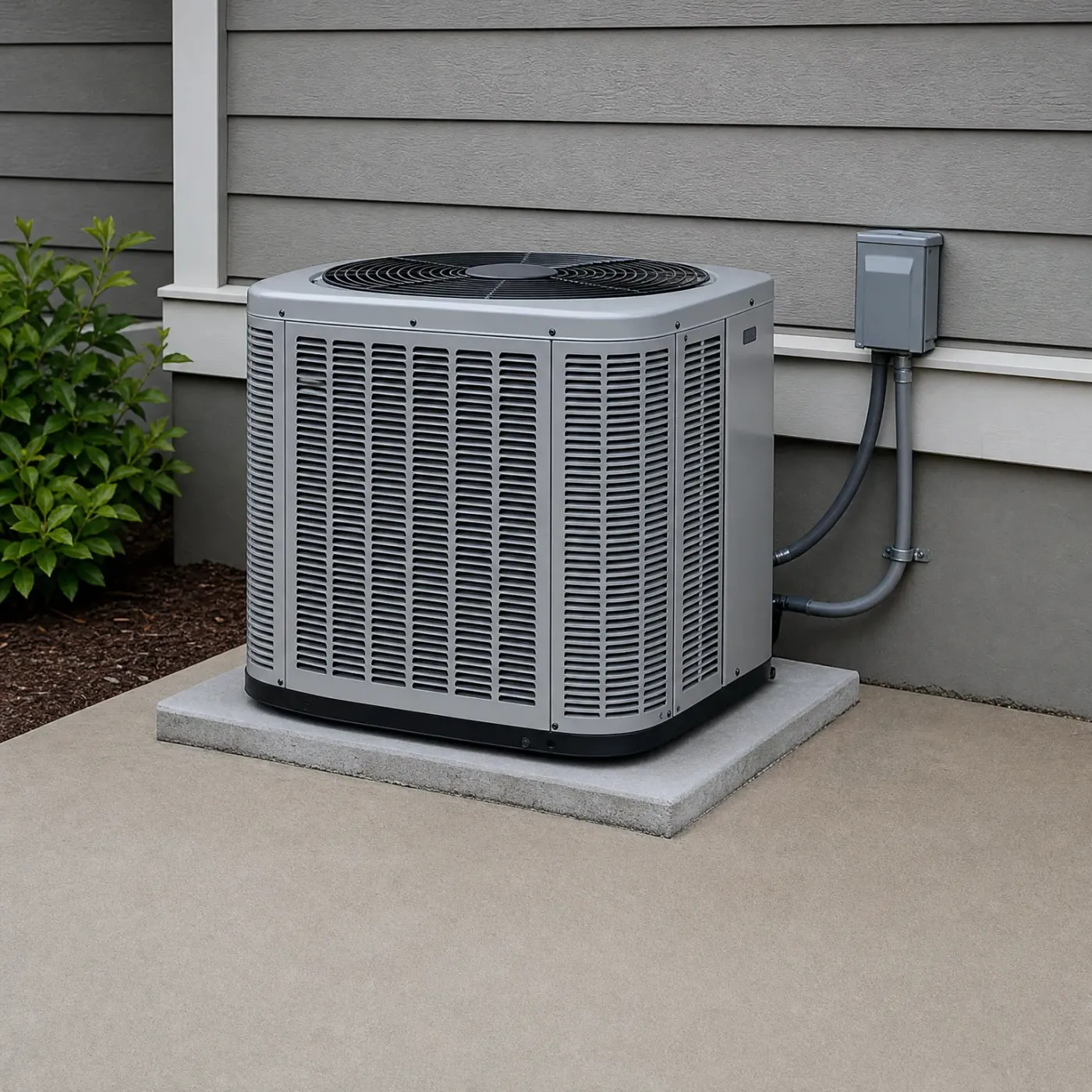
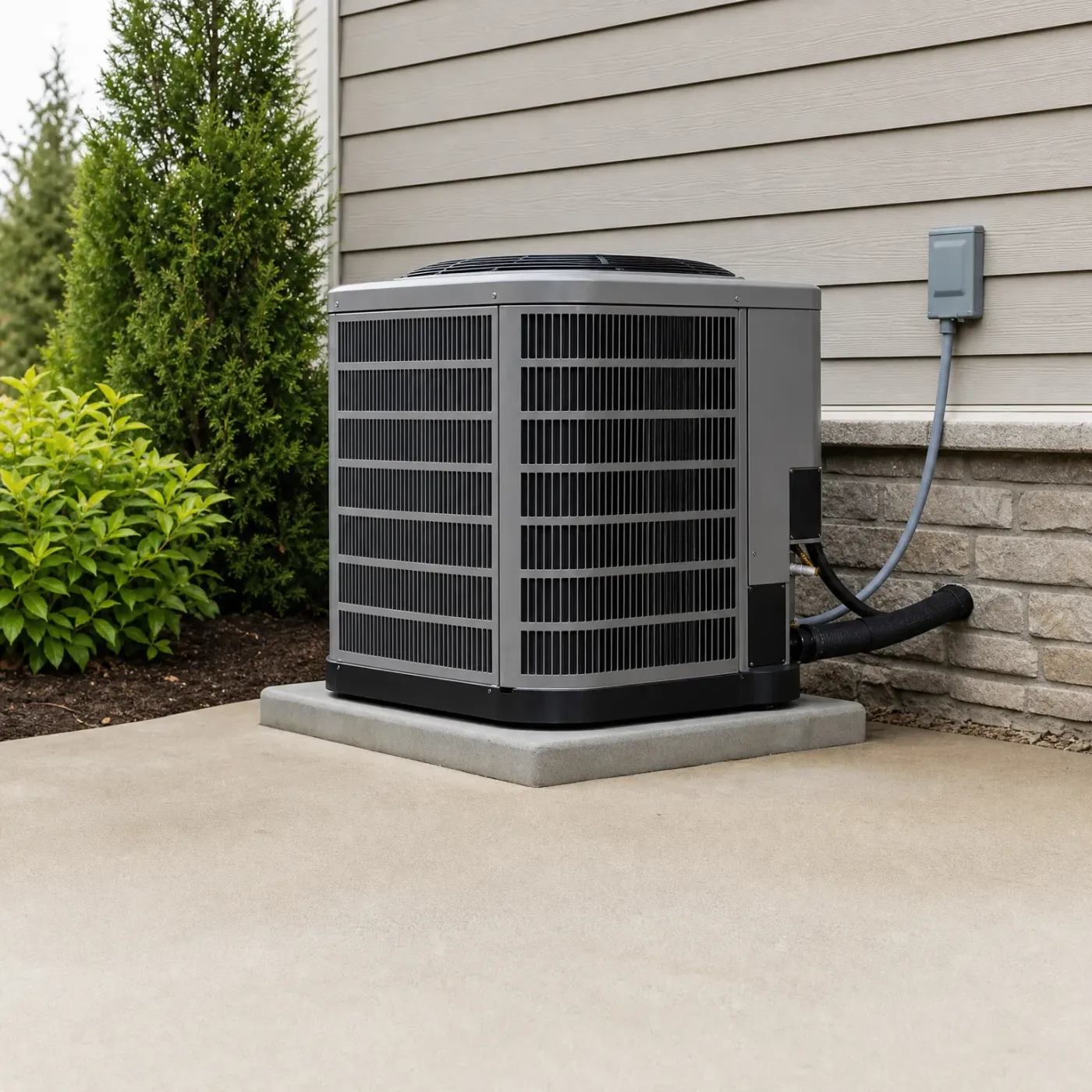
A gray outdoor air conditioner condenser unit on a concrete pad beside a house with horizontal lap siding and a stone veneer base, with a conduit running to a wall-mounted disconnect box and shrubs and evergreen trees to the left.

Running the way it should

A heat pump on a normal cycle runs long enough to actually satisfy the thermostat, often ten minutes or more depending on the temperature outside. The outdoor unit hums along steadily instead of kicking on and off. That steady run is what keeps rooms even and keeps the compressor from wearing out early.
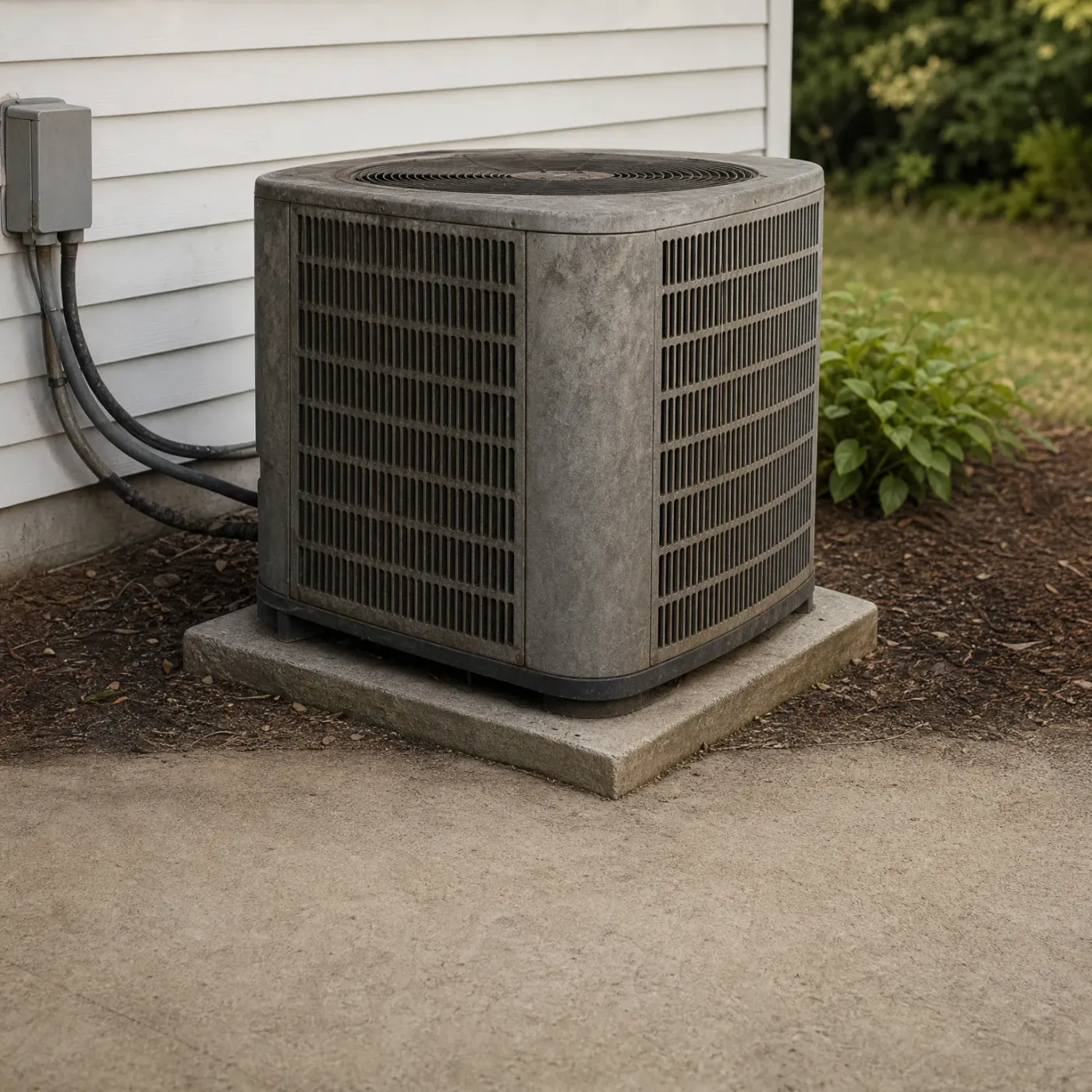

An outdoor air conditioning condenser unit sits on a concrete pad beside a white horizontal-siding house, with a gray electrical disconnect box and insulated refrigerant lines on the wall, mulch and green shrubs to the right, and a concrete slab in the foreground.

Stopping before it should

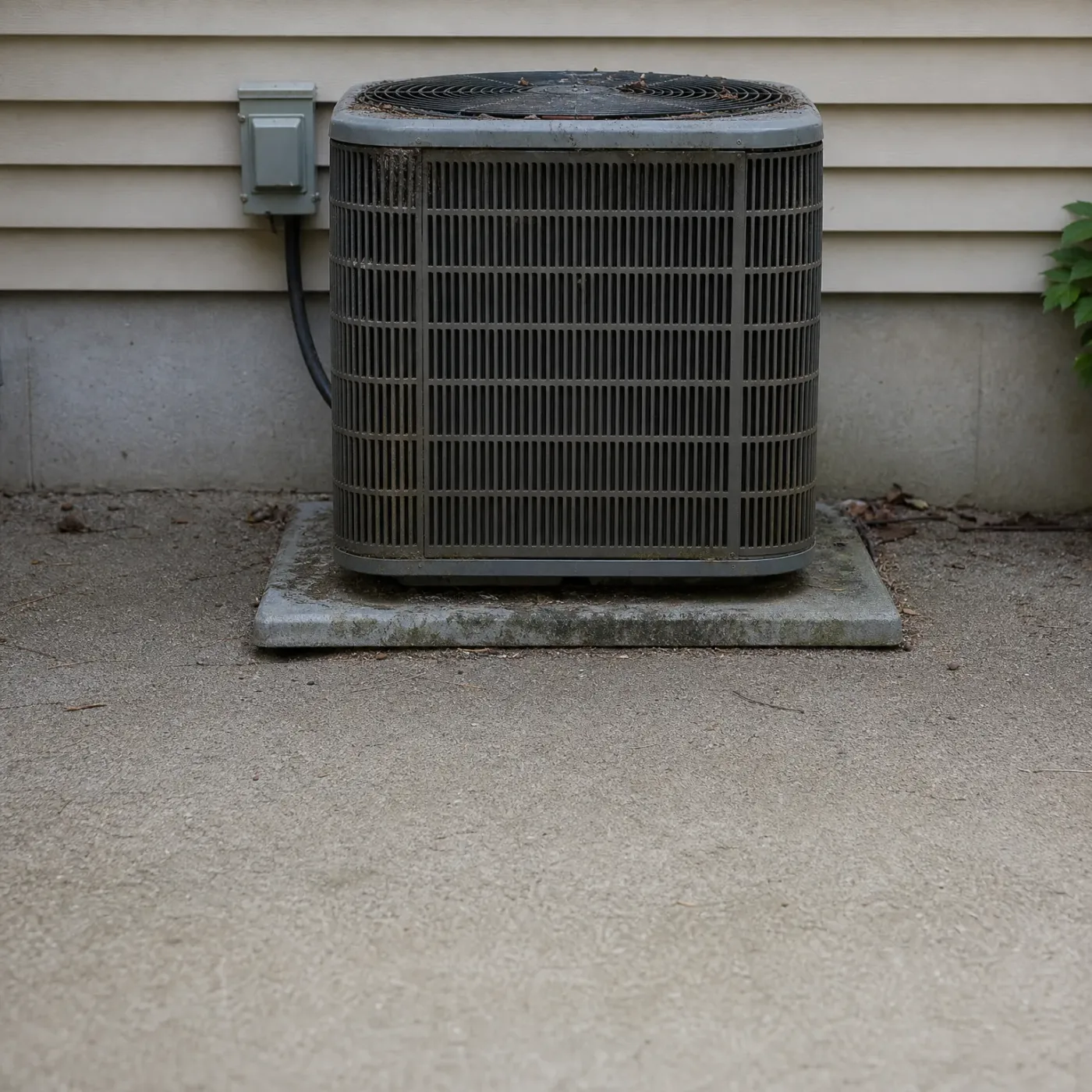
An older unit that shuts off every few minutes hasn't finished a heating or cooling run. You might notice rooms that never quite get comfortable, or the outdoor unit cycling on and off when you walk past it. Short runs like that put more wear on the compressor each year.

Short Cycling: Winter vs. Summer Causes

Short cycling in winter

  • A frozen outdoor coil is the usual cause here once temperatures drop into the 30s and below, and the system shuts off to protect itself before it finishes a run.
  • A heat pump that's oversized for the house satisfies the thermostat fast and shuts off before it's pulled enough heat through the ducts.
  • A failing defrost control board can tell the unit to shut down and restart even when the coil isn't actually iced.
  • With gas heating common in New York, a heat pump paired with a furnace as backup can short cycle if the switchover between the two isn't set right.
  • Because electricity here costs more than in most states, a unit that keeps restarting instead of running a full cycle adds up faster on the bill.

Short cycling in summer

  • A low refrigerant charge shows up more in the muggy months, when the system works harder and a leak causes it to shut off before cooling the house.
  • A dirty outdoor coil blocks airflow in the heat of summer, and the unit trips off on high pressure before finishing a cooling run.
  • A thermostat mounted somewhere that gets direct sun or sits near a vent can misread the room and cycle the system on and off too soon.
  • A clogged filter restricts airflow across the indoor coil, and in sticky weather that coil can ice over just like the outdoor one does in winter.
  • A failing capacitor struggles most on the hottest, most humid days, when the compressor needs the strongest start and the part can't deliver it.
A woman in a knitted shawl sits in a living room with a fireplace, shelves, a sofa with cushions, and a lamp by a bright window, looking off to the side.
A woman with long brown wavy hair in a green shirt over a white top stands in a living room with built-in white shelves, a ceiling fan, a potted plant and a sliding glass door.
A woman with shoulder-length gray-streaked hair in a light gray knit sweater stands smiling and looking off to the side in a living room with a sofa, houseplant, framed picture, and sunlit sliding glass door.
A woman with shoulder-length curly gray hair wearing a gray knit sweater stands near a window with a sheer curtain, looking to the side, with a blurred interior room behind her.
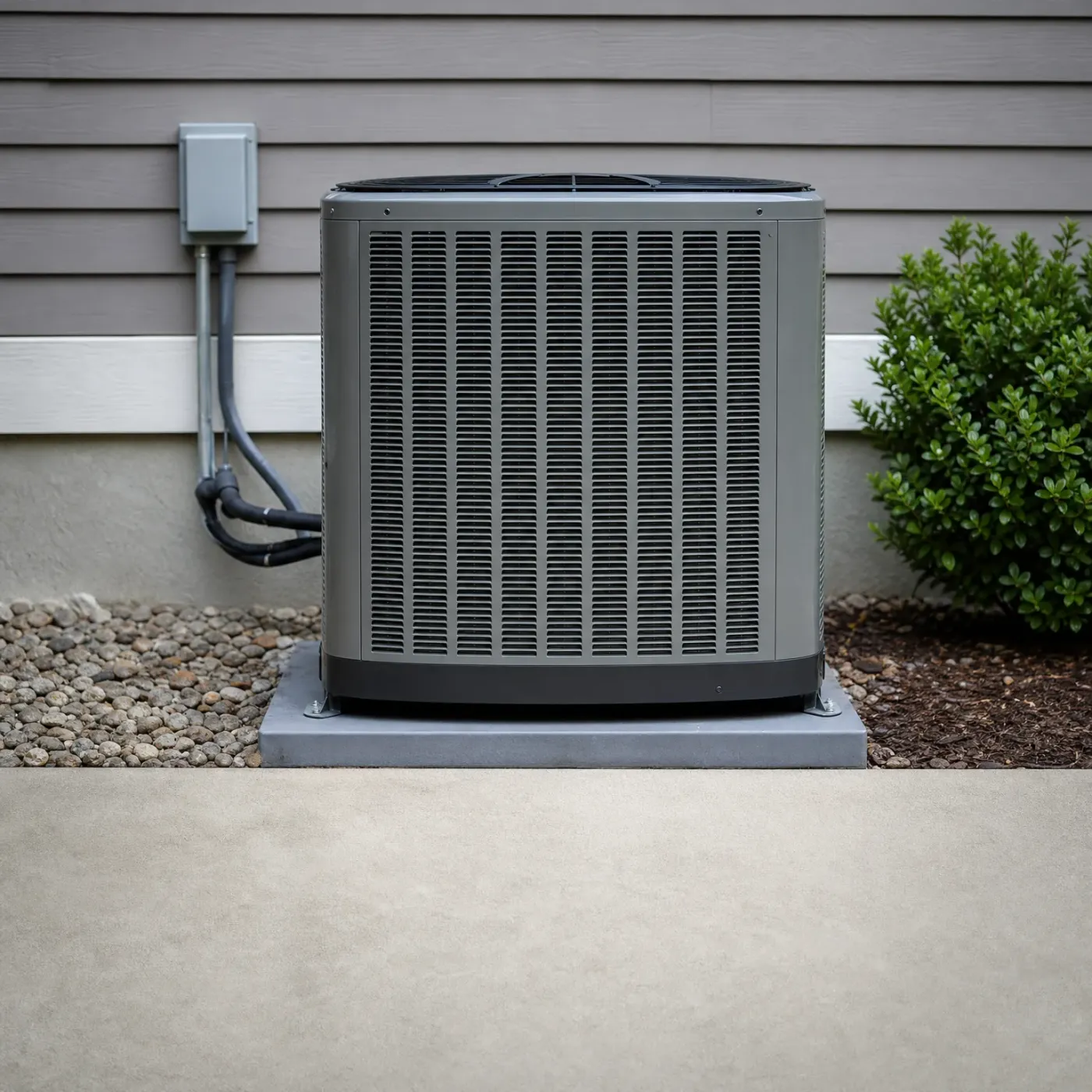
A gray outdoor condenser unit on a concrete pad beside a house with horizontal lap siding, with a metal disconnect box and refrigerant lines on the wall, river rock and mulch to the sides, and a green shrub at right.
A clean outdoor unit like this one pulls air through the coil without a fight, which is what lets a cycle run its full length.
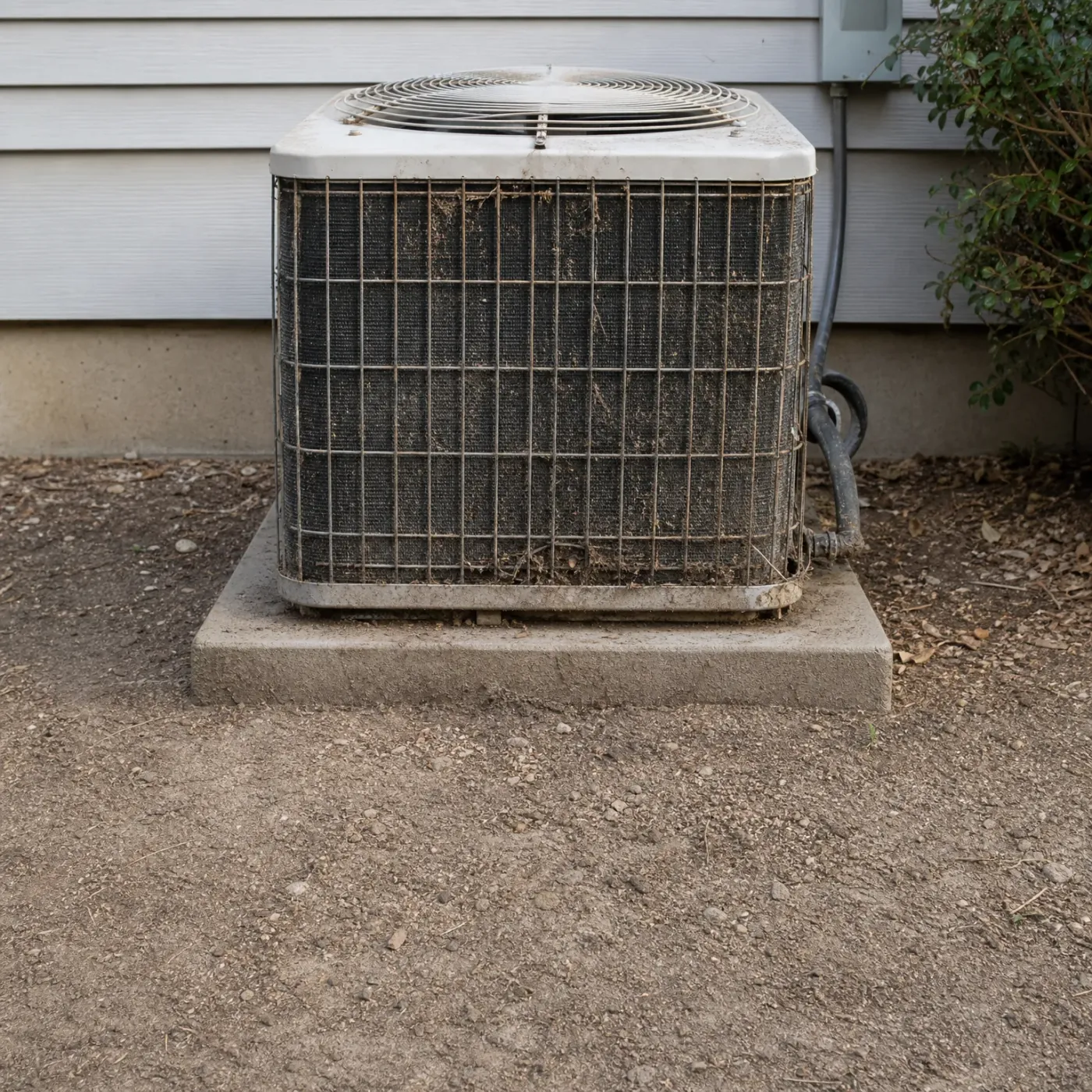
A dirty outdoor air conditioner condenser unit with debris on its coil grille, sitting on a concrete pad beside a light-colored horizontal siding wall, with bare dirt ground in front and a shrub at right.
A coil packed with leaves and dirt like this one blocks airflow, and a blocked coil is a common reason a heat pump shuts off early.
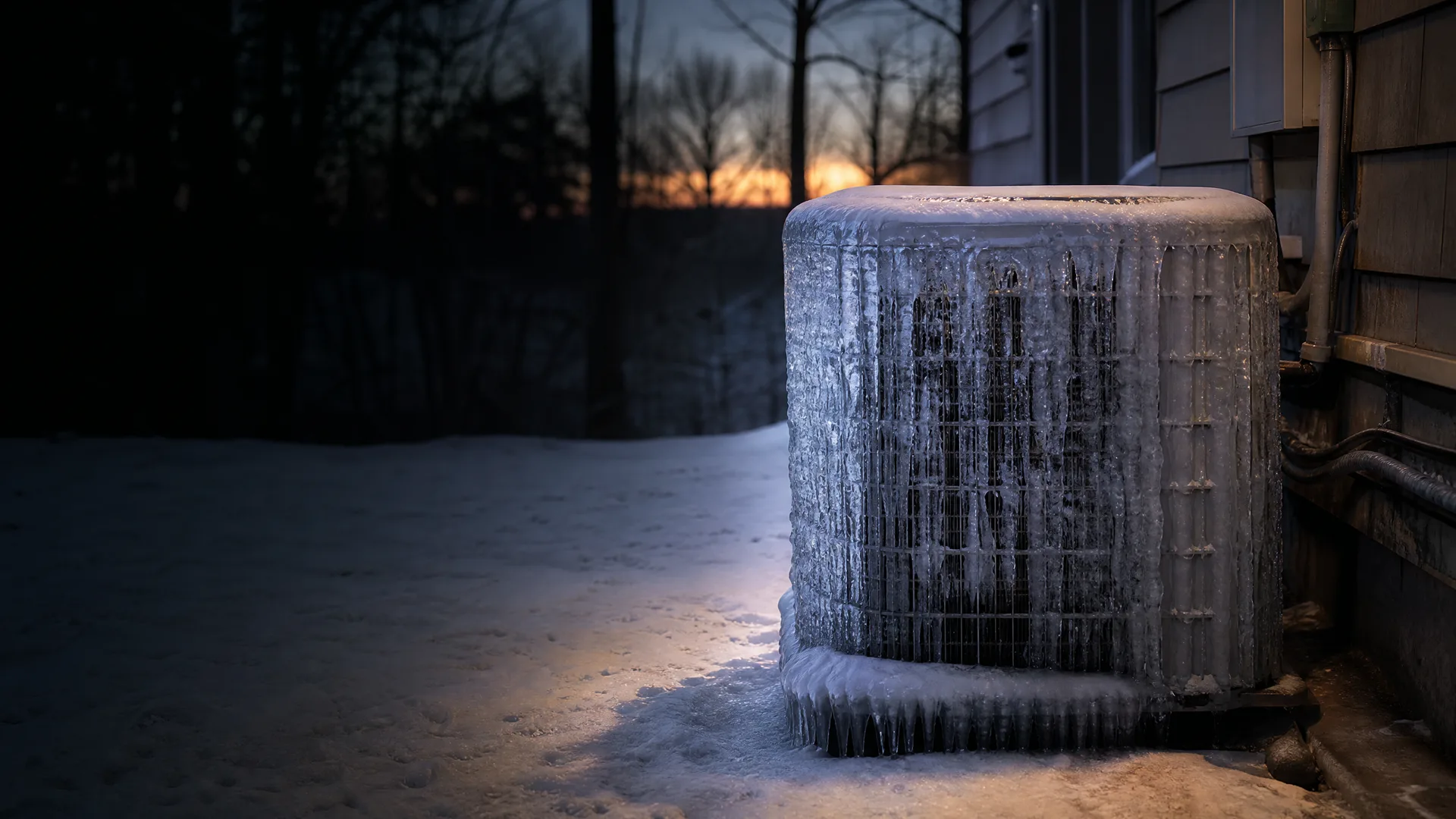
An outdoor condenser unit encased in thick ice stands on snow beside a house with horizontal siding and exterior pipes, with bare trees and a sunset glow in the background.

It's just past six and still dark when you go out for the paper and see it. The outdoor unit is sheathed in ice, thick over the coil and down the sides, the fan barely visible underneath. Inside, the house has gone cool enough that you noticed it from bed, the kind of January morning where the thermostat reads a few degrees under what you set it to. You can hear the unit clicking on, running a minute or two, then quitting. It's done this three times since you got up. The driveway is frosted and quiet, and the only sound out here is that short, failing hum starting up again behind you as you head back inside.

Why does your heat pump keep shutting off so soon?

You'll notice the pattern before you notice a cause. The outdoor unit kicks on, runs a few minutes, goes quiet, then starts again not long after. Inside, a room that used to hold its temperature now drifts, because the system keeps stopping before it finishes the job. You might hear the outdoor fan start and stop more often than it used to, or notice the air coming from the vents feels lukewarm instead of warm. Some households catch it by the sound alone, that click and hum repeating every few minutes instead of settling into one steady run. Left alone, a heat pump that starts and stops like this wears on its own parts faster and runs up your power bill without keeping the house as comfortable as it should.

A woman and a child wrapped together in a thick knitted blanket on a sofa, both with eyes closed, with a lit table lamp and houseplant in the dim background.
An older woman with gray hair in a bun and glasses, wearing a beige knit sweater, smiles while looking to the side in a warmly lit kitchen, with a loaf of bread on the counter in the foreground and a snowy scene outside the window.

One form, no calling around

A heat pump that short cycles all winter is running up your power bill while it fails to keep up, and power here is some of the most expensive in the country. Most houses nearby heat with gas, so the heat pump handling your place alone is already working harder than most, and short cycling on top of that wastes real money every month it runs this way. Figuring out whether it's a frozen coil, a bad sensor, or a system that was never sized right for your house takes someone who sees this equipment every season in New York, not a guess over the phone. That's who gets your request, one contractor local to you, instead of your name going out to a handful of companies who all want the job. No calling around, no explaining the same thing four times, no stack of quotes to sort through while your house stays cold. Just the one call that actually knows what's going on with your system.

A single-story gray horizontal-siding house with multiple front-facing gables, white-trimmed windows, a dark front door, and a concrete walkway crossing a partly dry lawn under a clear blue sky.

Summer air in New York averages a dew point of 62°F across June, July and August, measured from where homes here actually sit, and that's heavy enough to feel sticky walking outside. A heat pump cooling that air has to pull a lot of moisture out along with the heat, which means longer run times to satisfy the thermostat. If yours is short cycling instead, shutting off after a few minutes and kicking back on soon after, it's not getting the chance to wring that moisture out. You'll notice it as a house that feels cool on the thermostat but still damp, with air that never quite feels dry against your skin.

NASA POWER T2MDEW county cells weighted by homes

What's actually happening inside the heat pump when it short cycles?

You've watched the pattern enough times now that you want to know what's actually going on inside the unit, not just what's wrong with your house. The outdoor fan spins up, the compressor kicks in, and a few minutes later it all goes quiet again. You want the mechanical explanation, the thing a tech would check first if they opened the cabinet.

The compressor is shutting off before it builds a stable refrigerant cycle

A heat pump needs a few minutes of steady running for refrigerant pressures to level out between the outdoor coil and the indoor coil. When something interrupts that, a pressure switch or a sensor reading out of range, the control board cuts power to the compressor rather than let it keep running in a state that could damage it. That's the click and silence you hear. The compressor itself takes the hardest hit, since starting it up draws far more current than running it does, and a unit that restarts every few minutes is starting up far more often than it was built for. Whatever tripped the shutoff, frozen coil, failing sensor, wrong refrigerant charge, is doing it again each time the system tries to restart.

  1. The thermostat calls for heat or cooling to start.

  2. The compressor and outdoor fan both kick on together.

  3. A low charge or weak part trips a safety switch early.

  4. The system shuts down before the room temperature changes.

An outdoor air conditioning or heat pump condenser unit on a concrete pad beside a house with horizontal vinyl siding, a gray electrical disconnect box and conduit on the wall, and a concrete walkway in the foreground.
Before you get your heat pump repair
A gray outdoor condenser unit on a concrete pad beside a house with gray lap siding, connected by conduit and refrigerant lines to a wall-mounted disconnect box, with a green shrub and mulch bed at left.
After you get your heat pump repair

Power costs 26.39 cents per kilowatt-hour statewide

At 26.39 cents a kilowatt-hour, a heat pump that short cycles all winter isn't just failing to keep your house warm, it's burning through power every time it restarts the compressor instead of finishing one steady run. That add-on cost shows up on your bill whether the system is heating your rooms or not.

EIA-861 2025 statewide residential average

A gray outdoor heat pump unit on a concrete pad beside a house with gray horizontal siding, with conduit and an electrical box on the wall and a shrub at left.

Calling around on your own

Finding someone to look at a short cycling heat pump usually means searching, calling a few numbers, and explaining the same thing each time: the unit kicks on, runs a few minutes, quits, starts again. One company can't make it, another doesn't work on heat pumps, and you're left comparing quotes from people who never saw your system and don't know if the last one you talked to already knows your address.

An outdoor air-source heat pump unit with a dark grille stands on a concrete pad beside a white wall and wood-clad facade, surrounded by gravel.

One contractor who knows the system

A local contractor who services heat pumps all winter in New York has already seen this pattern on plenty of other outdoor units, iced over or short of refrigerant or just the wrong size for the house they're attached to. You explain it once, to one person, and they come knowing the usual causes before they open the panel. No flood of calls back, no sorting through strangers' quotes, just the one call that gets someone out to look at yours.

A closed silver laptop and a ceramic mug of dark coffee sit on a wooden table in front of two chair backs, with a kitchen counter, tiled backsplash, wooden cutting boards, a vase of greenery and a potted plant by a window behind.

A heat pump that keeps shutting off early has a reason, and it's findable

A frozen coil, a dirty one, a low charge, a bad sensor, a system sized wrong for your house from the start. Whichever it is, the pattern you've been watching all winter or all summer traces back to one of these, and a contractor who works on heat pumps every season in this area knows where to look first. You don't need to diagnose it yourself to describe what's happening. You already have: on, a few minutes, off, again.

What you'd otherwise be doing is the part that wears you down before the repair even starts. Searching for someone who works on heat pumps specifically, calling a few places, explaining the same on-off pattern to each one, then sitting with two or three quotes trying to guess which company actually knows this equipment. One request here sends it to a licensed contractor local to you, and only that one, so you're not fielding calls from five companies while you're trying to keep the house comfortable for whoever's home.

Interior corner with a beige sofa holding a dark green and a light cushion and a textured throw, a potted small-leaved tree beside a white-framed window, and a dark shallow bowl on a wooden coffee table in the foreground.
A single-story stucco house at dusk with a lit paver walkway lined by low path lights, desert plants and boulders in front, and distant mountains under an orange and blue sky.

Heat Pump Repair

Skip the search

Step 1 of 3: Equipment
  • A cream chunky cable-knit throw draped over a beige upholstered armchair beside a bright window, with a wooden side table holding a book and a vase of leafy branches at left.
    • Say what's going on with your heat pump, and a pro who works on them reaches out.
    • A local pro who knows heat pumps gets your details and gets in touch.
  • Living room corner with a gray sofa holding beige pillows and a knit throw, a round wooden coffee table with a dark planter and shallow bowl, a jute rug, a floor lamp, a framed landscape print on the wall, and a window showing trees.
    • Send the request today and stop worrying about who to call.
    • Send the request and finding a pro stops being your problem.
  • A living room corner with a cream sofa and cushion, knit throw, wooden coffee table holding a shallow bowl and dark ceramic vase with green foliage, a floor lamp, potted plant in a woven basket, and linen curtains at a window.
    • Describe what your heat pump is doing once, in one form.
    • Answer a few questions instead of calling shop after shop.
  • A round reclaimed-wood coffee table with a black metal base sits on a woven rug in front of a cream sofa with cushions, with a lit built-in fireplace and a tall indoor tree in the background.
    • Your request goes to one pro, not a list of companies.
    • The pro who reaches out is licensed in New York.