


Profile view of a bearded man wearing a black baseball cap and a dark gray T-shirt against a plain light background.

Why your heat pump has ice on it in a New York winter

Step 1 of 3: Equipment

A little frost along the bottom of the outdoor unit is normal in a New York winter. Your heat pump pulls heat out of the cold air outside, and that drops the coil's surface temperature low enough that moisture in the air freezes onto it. To deal with that, the system runs a defrost cycle every so often, reversing itself for a few minutes to melt that frost off. You'll know it's working when you see steam rising from the unit during one of those cycles. The problem is when the ice doesn't go away between cycles, when it builds up thick, or when it covers the coil completely instead of just the lower edge. That usually means the defrost cycle isn't triggering the way it should, or something else, like a low refrigerant charge, a failing sensor, or a blocked coil, is stopping the unit from melting itself clear. Left alone, a heat pump that can't defrost properly loses heating capacity and can end up straining the compressor.

A woman in a gray turtleneck sweater stands by a window looking outside at snowy ground, with a dimly lit living room containing a sofa, shelves, lamp and a lit candle behind her.
A woman in a cream cable-knit turtleneck sweater stands in a warmly lit living room with a fireplace and shelves behind her, looking out a window toward snow-covered trees and a railed deck.
A woman in a cream knit turtleneck sweater stands by a window looking out at snow, with a lit fireplace, sofa and lamp in the room behind her.
A woman in a gray knit sweater sits by a window looking out at falling snow, with a dimly lit living room containing a sectional sofa, pillows, a lamp and houseplants behind her.

Your heat pump runs a defrost cycle to clear that coil. It reverses briefly, blows heat through the outdoor coil, and melts the ice off before switching back to heating your home.

If ice is building up faster than the defrost cycle can clear it, or it's climbing the sides of the unit instead of staying at the bottom, that's the system struggling, not the weather.

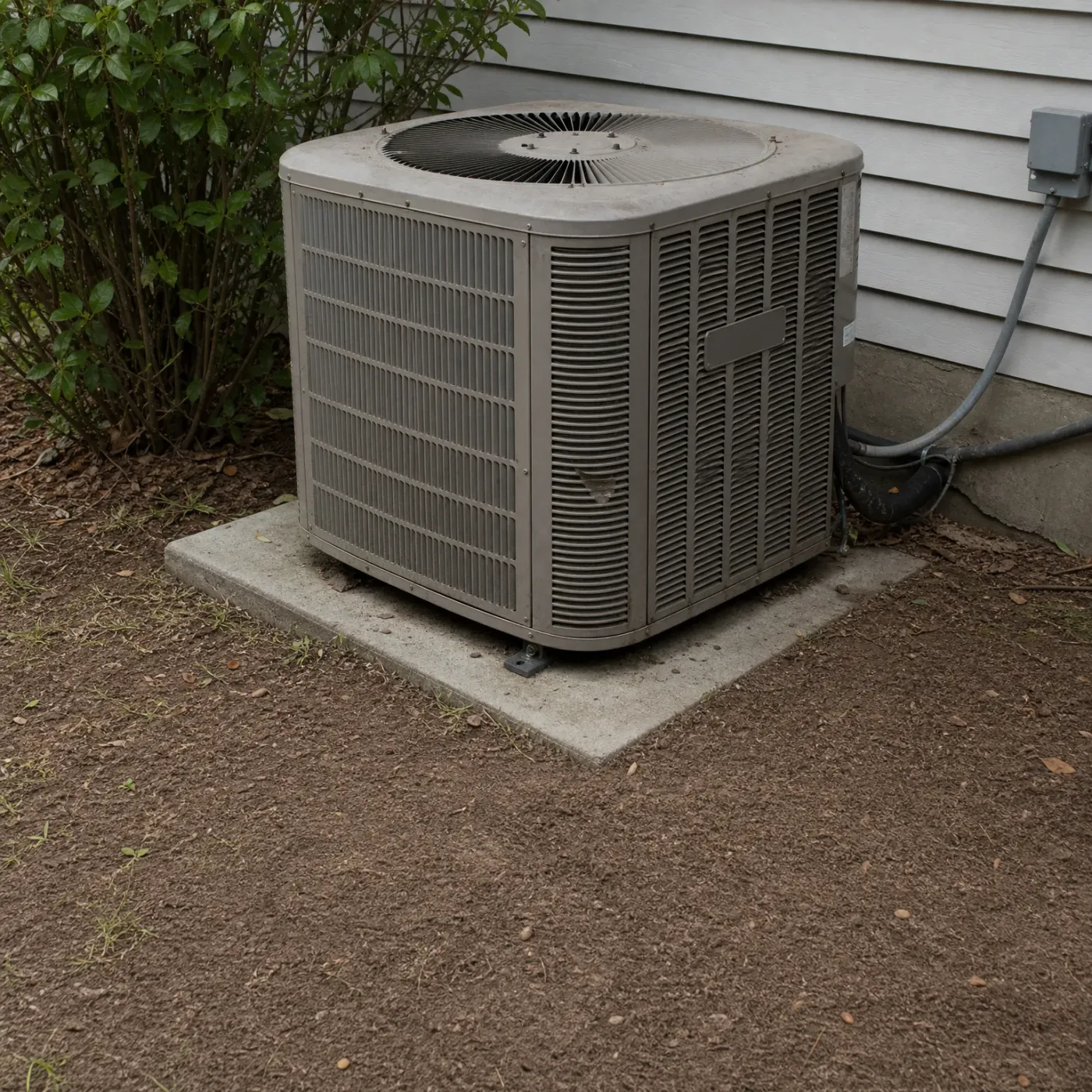
An outdoor air conditioner condenser unit on a concrete pad beside a house with horizontal lap siding, with a shrub to the left, bare dirt in front, and conduit and a metal disconnect box on the wall.
Before you get your heat pump repair
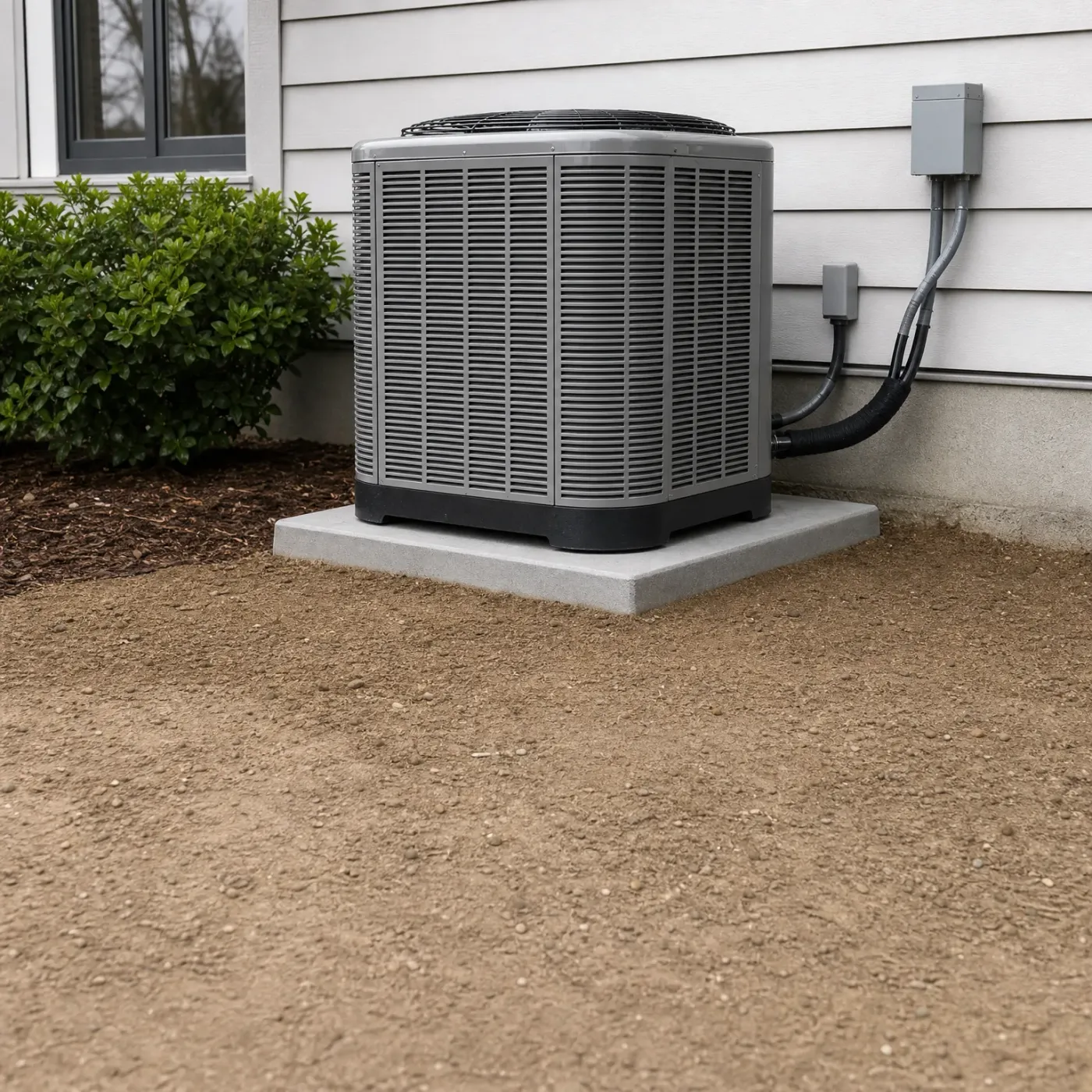
A gray outdoor condenser unit on a concrete pad beside a white horizontal-siding house, with refrigerant lines and conduit running to a wall-mounted disconnect box, bare soil in front and a green shrub at left.
After you get your heat pump repair

What a frozen coil costs you

A heat pump that can't finish its defrost cycle starts running longer to pull the same heat out of the air. In New York, with power priced the way it is, that shows up fast on the bill. Worse, if the coil stays iced over, the system leans harder on the backup heat strip to keep your house warm, and that strip pulls far more power than the heat pump itself. You end up paying more for less heat, and the ice keeps building instead of clearing on its own.
What keeps piling up on it

Ice that doesn't clear between cycles doesn't stay put. It thickens around the coil and the fan, and a fan that can't turn freely puts strain on the motor behind it. Keep running it like that and you risk a motor failure instead of a simple defrost repair. You might also notice your heat pump short cycling, or the air coming from your vents feeling cooler than it should, because a coil wrapped in ice can't pull in enough heat to keep up with a cold New York night.

Power costs 26.39 cents per kilowatt-hour statewide

At that price, a heat pump stuck defrosting instead of heating is an expensive way to keep your house warm. When ice keeps it from switching back efficiently, every extra hour it runs adds up fast on your bill.

EIA-861 2025 statewide residential average

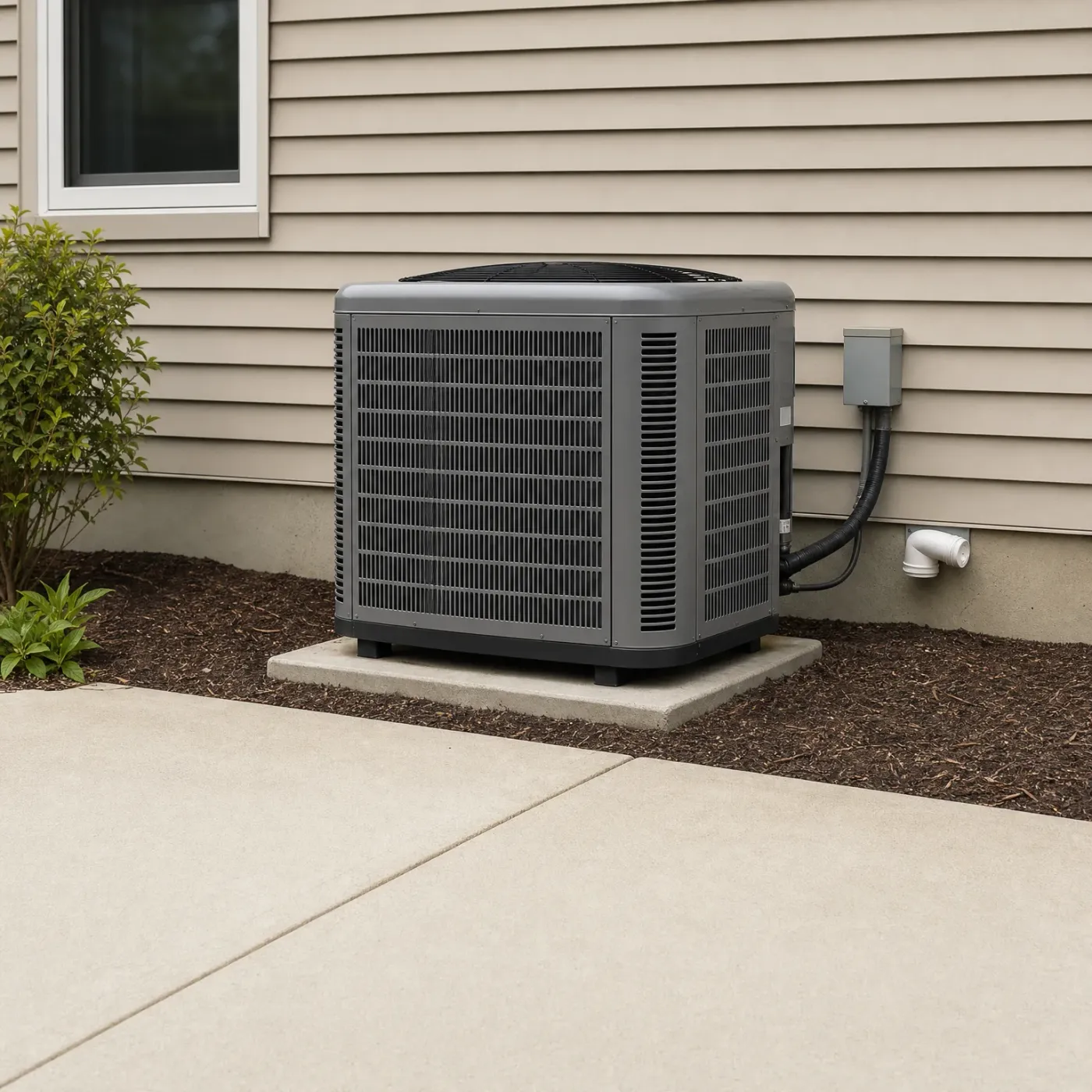
A gray outdoor condenser unit on a concrete pad beside a beige vinyl-sided house, with a wall-mounted disconnect box, flexible conduit, mulch bed, shrubs and a concrete walkway in front.

A thin frost line, clearing on its own

Here the frost sits low on the coil, a light coating that comes and goes with the defrost cycle. The unit runs its cycle, the ice melts off, and it goes back to pulling heat into your house. Nothing to call anyone about.

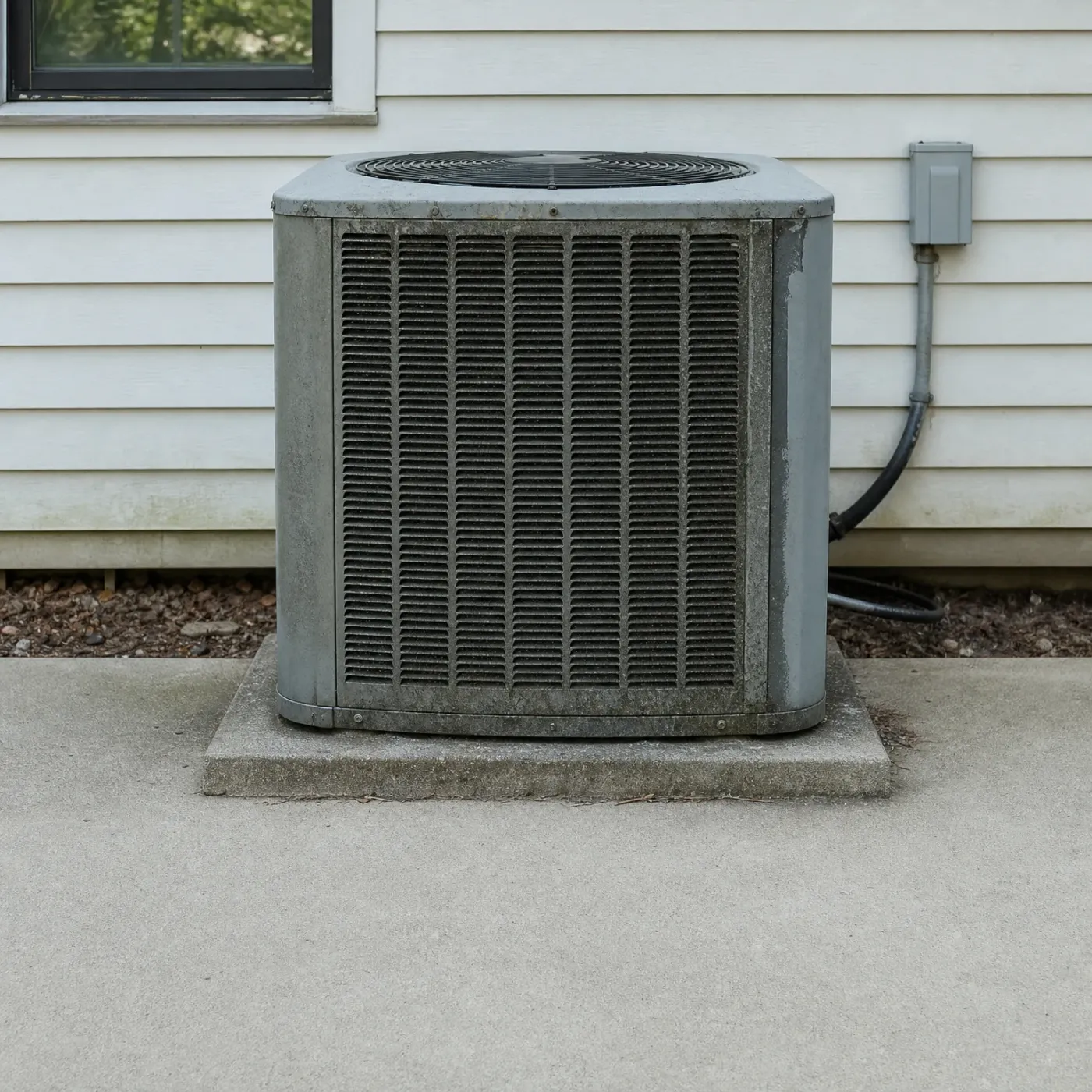
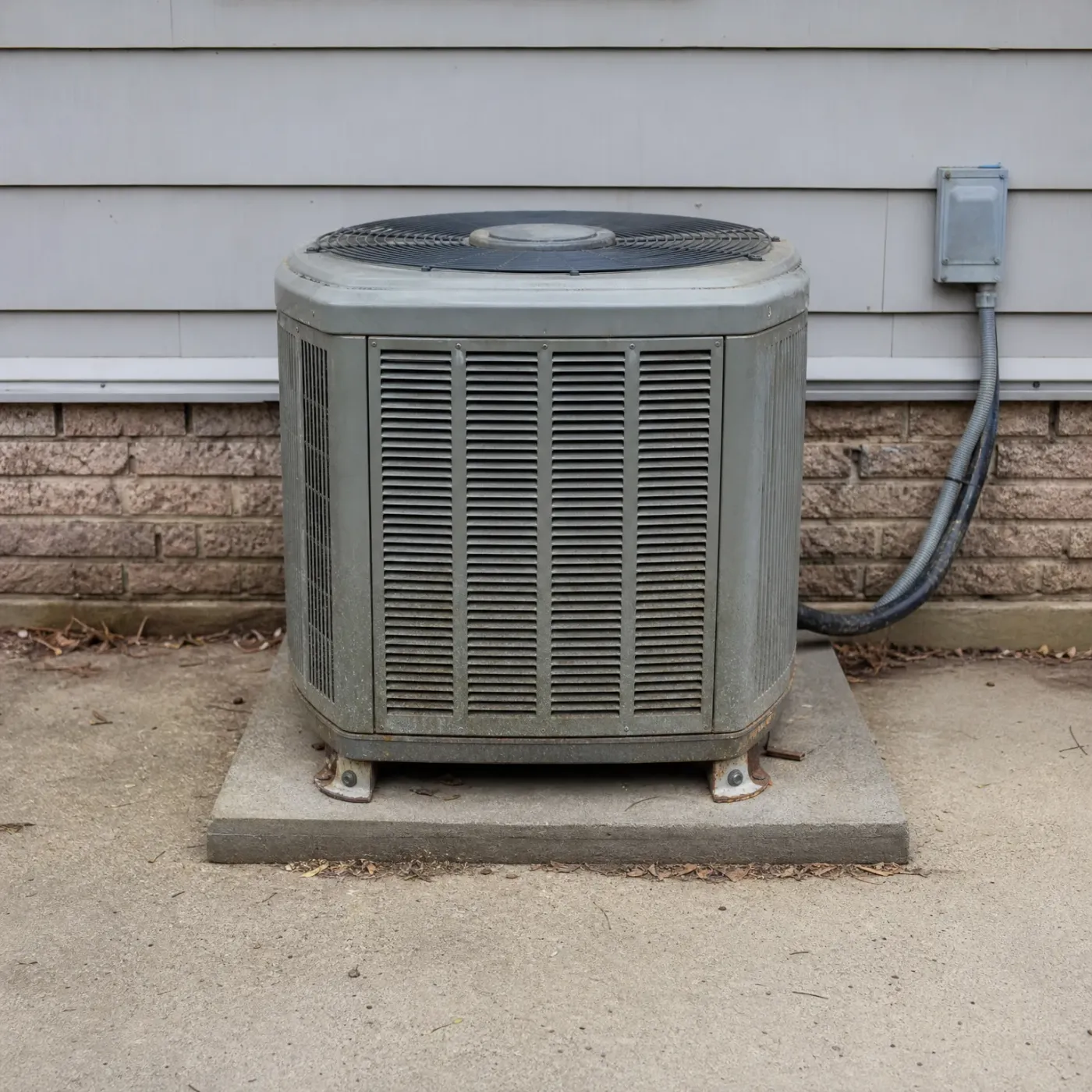
An outdoor air conditioning condenser unit on a concrete pad beside a house with horizontal siding above a brick foundation, with a flexible conduit running to a wall-mounted disconnect box.

Ice building up where it shouldn't

Here the coil is caked, not just frosted, and the cabinet's picked up a layer of grime along with it. Dust and dirt on the coil hold ice in place and slow the airflow the defrost cycle depends on. That's worth a call.

Is the ice on your unit the normal kind or not

Go out and look at it. If the ice is a thin layer low on the coil, that's the kind that clears itself on the next defrost cycle, nothing to worry about. If it's climbing up the sides, wrapping around the coil, or building into a solid block, that's different. You might hear the outdoor fan straining or notice it's not spinning at all under the ice. The unit may run longer than usual trying to keep up, or you'll feel less heat coming from your vents even though it's working hard. Left alone through a New York winter, a coil that stays iced over stops moving heat into your house at all, and the system can wear down components trying to push through it.

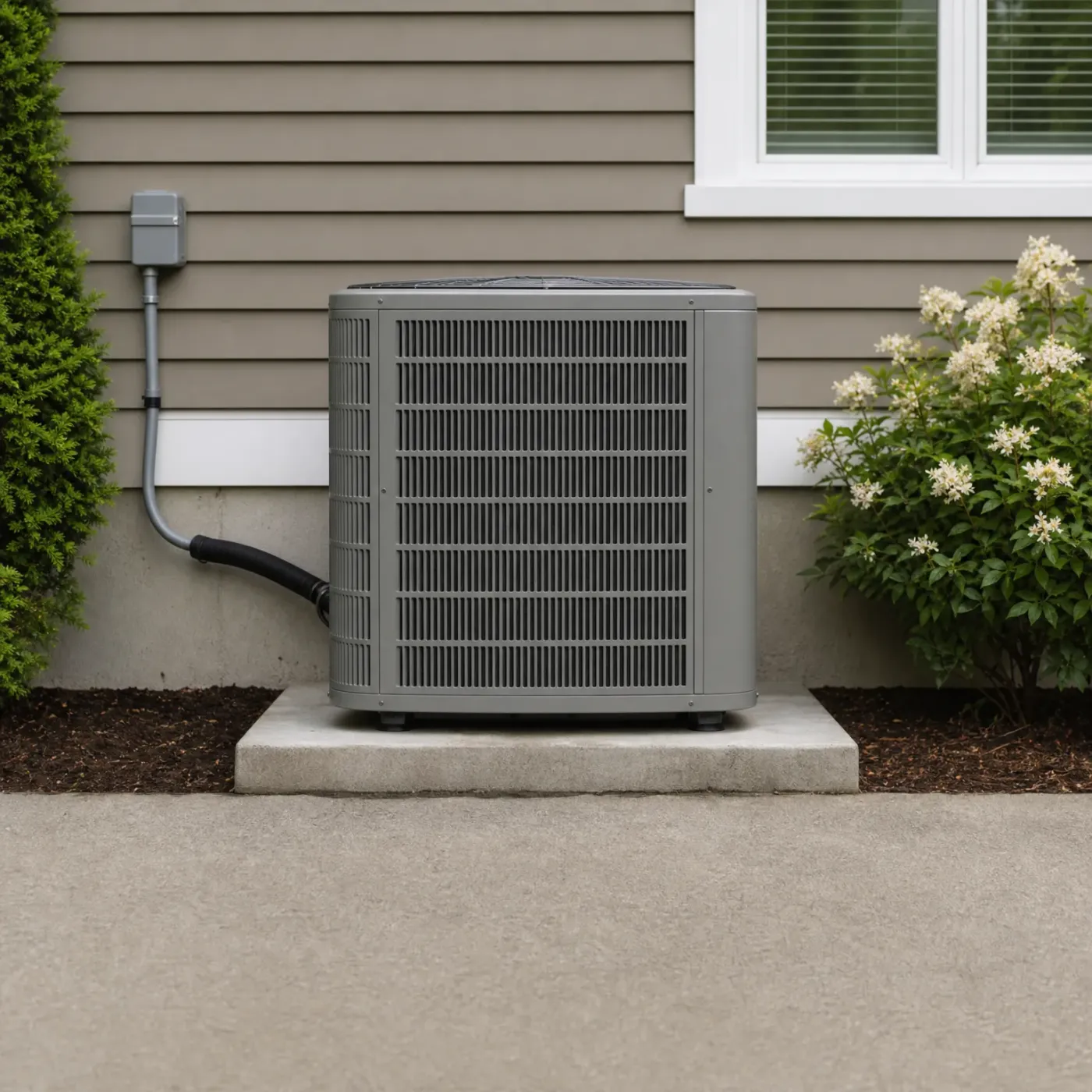
A gray outdoor condenser unit on a concrete pad beside a house with horizontal lap siding, a conduit and disconnect box on the wall, a shrub with white flowers at right and evergreen foliage at left.
This is what a heat pump looks like doing its job, coil clear and running its normal cycle through a New York winter.
A gray outdoor air conditioning condenser unit on a concrete pad beside a house with light vinyl siding, with a gray electrical disconnect box and conduit on the wall to the right.
This is a coil gone past that, caked and blocked, the kind of buildup that calls for a repair visit.
A bearded man in a plaid flannel shirt stands in a kitchen looking out a window toward snow-covered shrubs, with a steaming mug on the windowsill and potted plants on a shelf behind him.
A smiling man with dark curly hair in a navy t-shirt sits on a gray couch indoors, with a large-leafed plant and a window in the background.

Get your heat pump to the right pro

Send the request today and stop worrying about who to call.

There's no charge for the request.

A dimly lit bedroom at dusk with a made bed, a table lamp on a nightstand, and a condensation-covered sash window with a dark curtain.

It's January, past ten at night, and the living room still hasn't warmed up. You've got a sweater on inside your own house. Outside, the unit is running, you can hear it, but the fan sounds like it's working against something. You go out with a flashlight and there it is, a thick white ridge climbing the side of the coil, past where the fins are supposed to show through. The ground under the unit is dry. It's been iced like this since yesterday. You go back in, turn the thermostat up two degrees out of habit, and sit there in your coat waiting for air that isn't coming.

Normal frost or a repair call

Leave it alone

  • A thin, even frost low on the coil that disappears after the defrost cycle runs needs no attention.
  • The unit still blows warm air inside once the cycle finishes and the ice has melted off.
  • The fan spins freely and the outdoor coil looks the same the next morning as it did before the frost formed.
  • Rooms hold their temperature the way they always have, even with a cold snap outside.
  • You hear the defrost cycle kick in, a short change in the sound of the unit, then it settles back to normal.

Get it looked at

  • Ice has built up thick enough to wrap around the coil or climb past the bottom few inches.
  • The outdoor fan sounds like it's straining or has slowed down noticeably compared to how it usually runs.
  • Rooms stay cold even though the unit keeps running, sometimes for hours at a stretch.
  • The defrost cycle runs and the ice doesn't fully clear, so the next cycle starts with ice already there.
  • You notice the unit cycling into defrost far more often than it used to, with less heat coming out between cycles.
  • The coil stays iced over from one day to the next instead of clearing overnight.
Single-story house with tan horizontal siding and a dark shingled hip roof, fronted by a patchy green and brown lawn and a concrete walkway leading to the covered entry.

New York summers run muggy, and the dew point averages 62°F across June, July and August, according to NOAA climate normals for the state. That same humidity sits in the outdoor air all winter too, just as water vapor instead of sticky heat. The more moisture in the air, the more frost builds on your heat pump's coil during a defrost cycle. On a dry winter night, you'd see a thin, fast-clearing frost line. In a heavier, damp stretch, that frost comes on thicker and faster, giving the unit more work to melt off before it can switch back to heating your home.

NASA POWER T2MDEW county cells weighted by homes

A woman in a cream cardigan and jeans stands with one hand raised facing an open front door of a gray horizontal-siding house, with a black lantern wall light, a potted shrub with yellow flowers, and a stone-faced porch column.

Ice that won't let go is a reason to call, not a reason to wait

A little frost on the coil, gone after the next defrost cycle, tells you the unit is doing what it's built to do. Ice that climbs the sides, wraps the coil, or sits there after the cycle finishes is telling you something else. Your heat pump is losing the fight against the cold, and every hour it runs like that costs you more on a power bill that's already steep in New York.

You don't have to figure out what's wrong with it yourself. Once you send in the details, the work of finding the right contractor for your heat pump isn't yours anymore. Someone who handles this kind of repair gets your information and reaches out to you directly. You'll have made the call to deal with it before it turns into a bigger problem, and from there it's off your plate.

A living room corner with a beige upholstered armchair holding navy and striped cushions, a small round wooden side table with a carved bowl and a potted green plant, a framed landscape picture on a pale wall, built-in shelving, and a curtained window.
Interior room corner with sunlight from a window, showing peeling paint and damaged plaster on the wall above a white baseboard, a wooden cabinet with a pale bowl on top, hardwood floor and a patterned rug.
Interior corner of a room with tan walls, white profiled baseboard and window trim, a wood-plank floor in sunlight, and green foliage visible through the window.
An empty room corner with cream walls, white baseboard, two windows with deep sills showing green foliage outside, and a wood plank floor lit by sunlight.
Empty room corner with beige walls, white beadboard wainscoting, chair rail and baseboard, a window with green foliage outside, and sunlight casting leaf shadows on the wall above a wood floor.
Sunlit room corner with a multi-pane window, beige walls, white baseboard, wood floor with a woven rug, and a dark wooden cabinet holding a ceramic table lamp below a framed picture.

The right pro for this job

Send the request and finding a pro stops being your problem.

Hand off the search

You only hire the pro if you want to.