






What emergency heat means on a New York heat pump

Step 1 of 3: Equipment

What does the emergency heat setting on my heat pump mean?

You switched the thermostat over and saw "emergency heat" light up, or maybe you bumped it by accident. On a cold New York night that word sounds like something is wrong, and you want to know what you just turned on before you decide whether to leave it there or switch back.

It bypasses the heat pump and heats with backup electric coils instead

Emergency heat tells the system to stop using the outdoor unit and heat the house with the backup electric coils in the indoor air handler instead. It exists for one reason: the outdoor unit isn't working, whether that's ice built up on it, a failed part, or a repair that hasn't happened yet. Those coils can carry the house through cold weather on their own, but they're not how the system is supposed to run day to day. With power priced the way it is in New York, leaving it on emergency heat for more than a short stretch shows up on the bill fast. If it's switched on and you didn't put it there, or the heat pump outside looks frozen or isn't running, that's the outdoor unit telling you it needs a look before winter asks more of it.

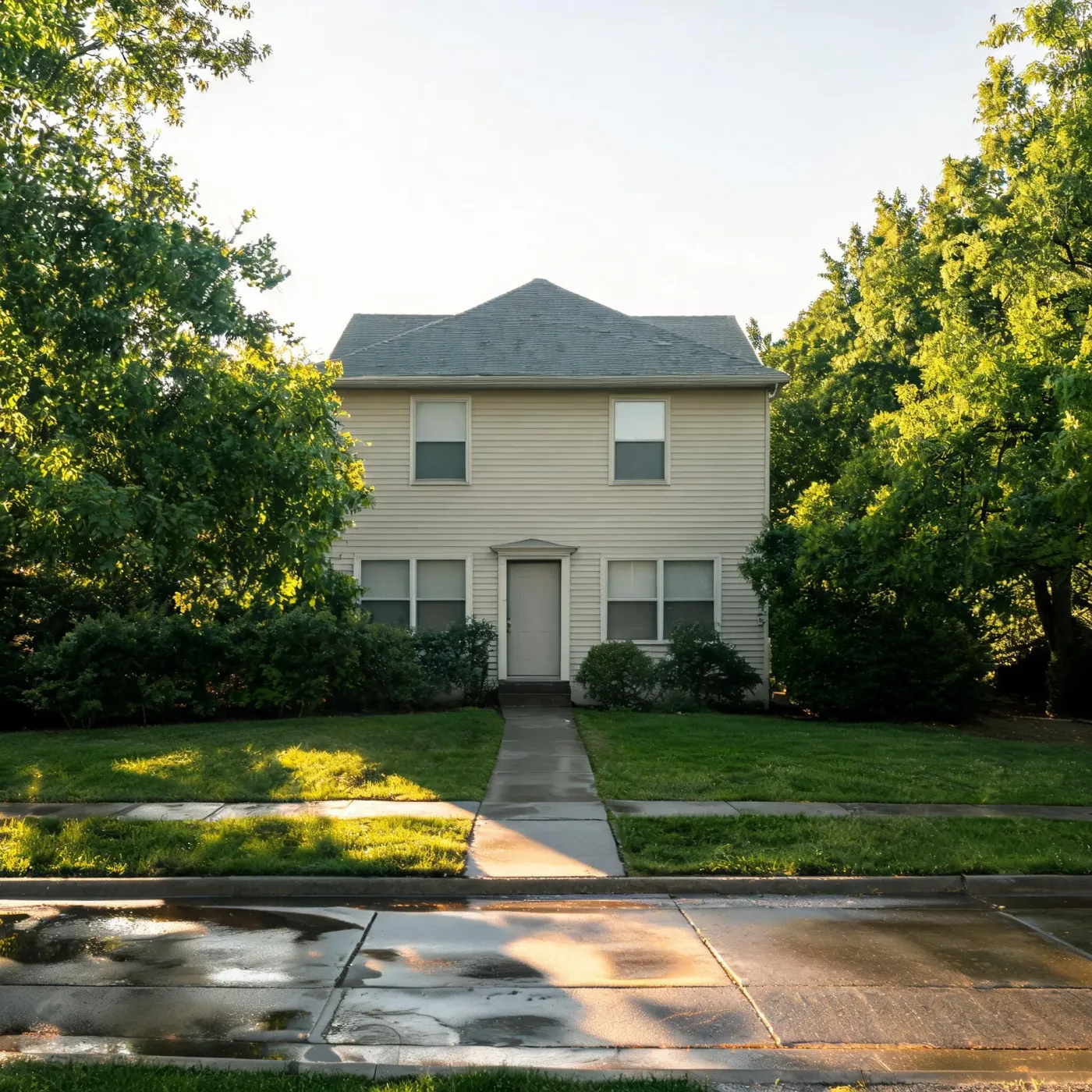
A two-story cream-colored house with horizontal siding and a gray hipped roof, flanked by large green trees and shrubs, with a concrete walkway crossing a lawn to a wet street in the foreground.

New York summers hold a lot of moisture. The dew point averages 62°F across June, July and August, according to NOAA climate data, and that's the number that tells you how heavy the air feels, not just how hot. That moisture is what your heat pump is pulling out of the air all summer, on top of cooling it. It's why the system runs longer on sticky days even when the thermostat number barely moves. None of that has to do with the emergency heat setting itself, which only matters in winter, but it's worth knowing the same heat pump is working through two different jobs depending on the season, and what wears on it in July isn't what wears on it in January.

NASA POWER T2MDEW county cells weighted by homes

Why is my heat pump stuck on emergency heat?

You'll notice the outdoor unit isn't running at all, even though it's cold enough that it should be. Inside, the air coming out of the vents feels hotter than usual, almost like a furnace. The thermostat might show "emergency heat" lit up on its own, without you touching it. Some homeowners hear the outdoor fan try to start and stop, or notice ice built up on the coil that never seems to melt off. If the system switched itself into emergency heat, something stopped the outdoor unit from doing its job, maybe a frozen coil, a failed defrost cycle, or a compressor that won't start. Left alone through a cold stretch, you're running on backup heat strips alone, and on New York electric rates that shows up fast on the bill.

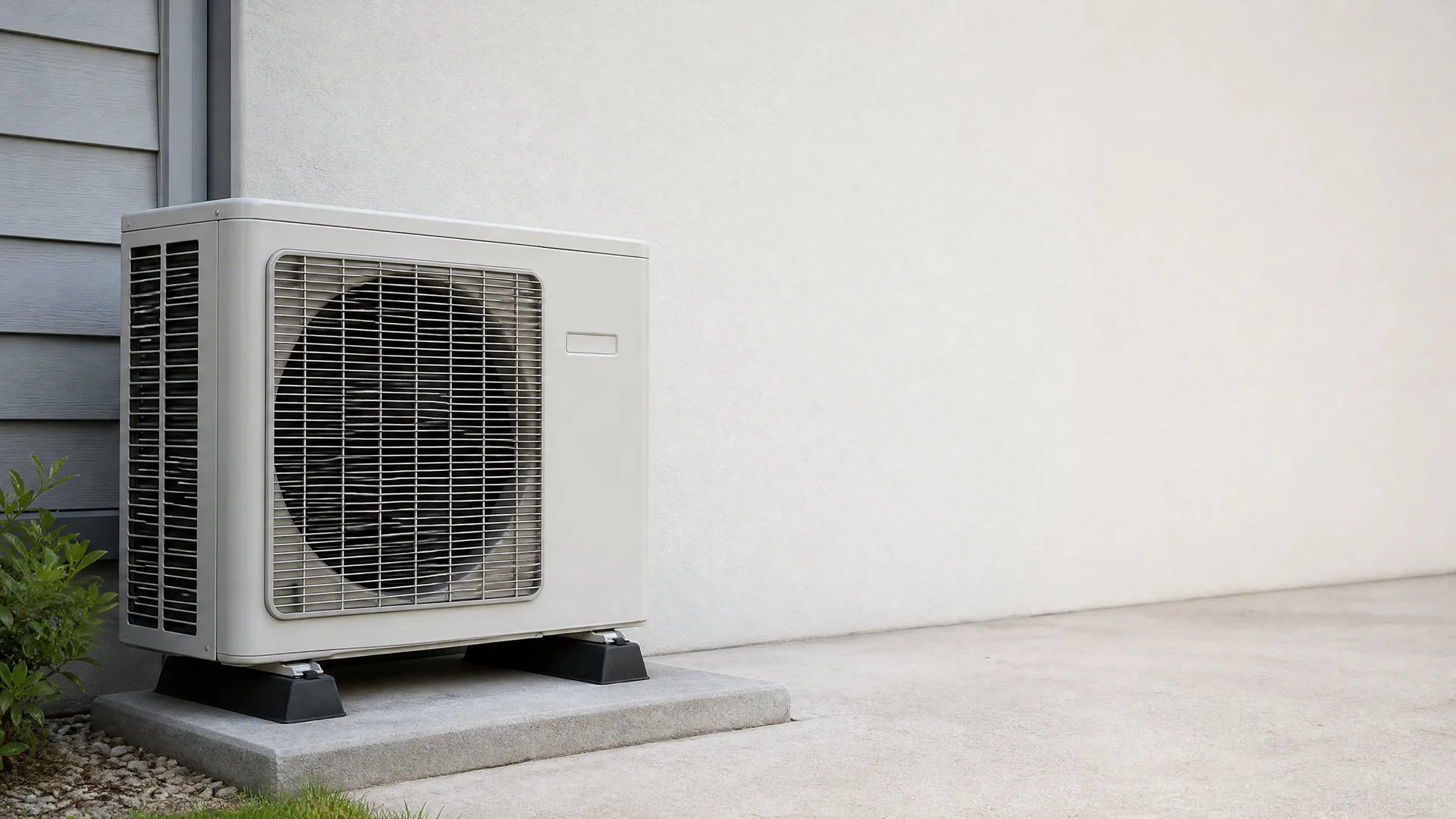
A white outdoor heat pump unit on rubber feet atop a concrete pad beside a light stucco wall, with gray siding and a small shrub at the left edge.

When emergency heat makes sense

If your outdoor unit is frozen over, iced up, or clearly not running at all, switching to emergency heat gets warm air moving while you wait on a repair. It's also the right call if the compressor has failed outright, since the backup heat strip can carry the house on its own. Think of it as a stopgap, not a setting to leave on for the season. It's there for the night you need heat and the heat pump itself can't deliver it.

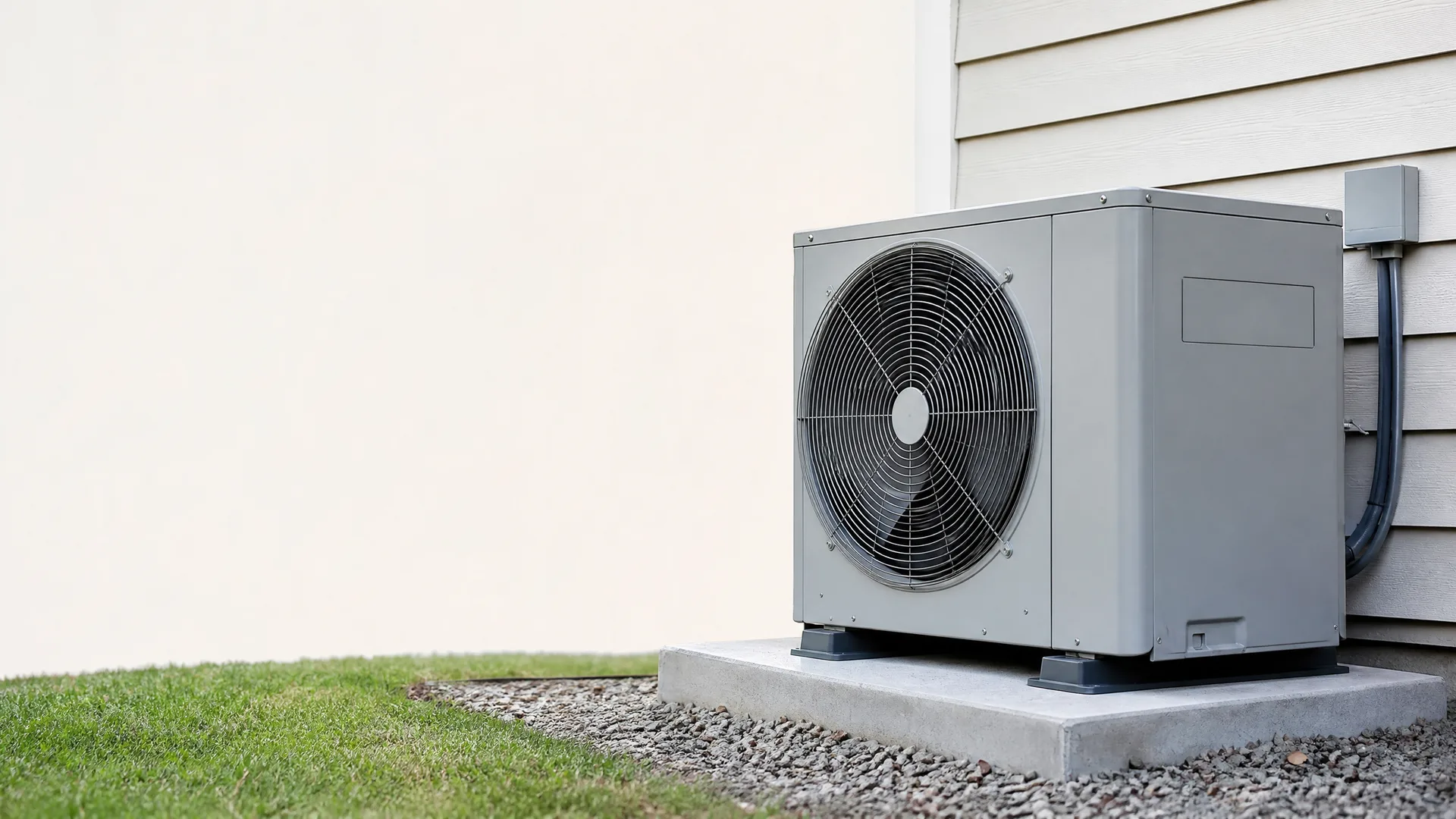
A gray outdoor heat pump unit with a large circular fan grille sits on a concrete pad beside a house with horizontal siding, surrounded by gravel and grass, with a conduit and junction box on the wall.

When it's costing you

Emergency heat runs on electric resistance strips instead of the heat pump's compressor, and in New York, where power costs more than almost anywhere else in the country, that difference shows up fast on the bill. If the thermostat is stuck on emergency heat and the outdoor unit looks fine, no ice, no strange noise, nothing blocking it, you're likely paying resistance-heat prices for a problem that doesn't need them. That's worth a call, not a switch back and a shrug.

Power costs 26.39 cents per kilowatt-hour statewide

Emergency heat runs on electric resistance coils instead of the compressor, and at 26.39 cents per kilowatt-hour, those coils push your bill up fast. Leaving it on for a night or two while you wait on a repair is fine. Running it for weeks gets expensive.

EIA-861 2025 statewide residential average

How your heat pump splits the work

  • A heat pump moves heat from outside air into your house instead of burning fuel to make it.
  • Below a certain outdoor temperature, usually in the 30s, the unit can't pull enough heat to keep up on its own.
  • At that point a backup heat source, usually electric strip heat, kicks in automatically alongside the compressor.
  • Switching the thermostat to emergency heat shuts the compressor off completely and runs the backup coils by themselves.
  • That setting exists for when the outdoor unit itself has failed, not for an ordinary cold snap.
  • The defrost cycle that clears frost off the outdoor coil can look like a malfunction but is normal operation.

Your heat pump doesn't make heat the way a furnace does. It moves heat that's already in the outside air into your house, which is why it can run all winter without burning anything. Down in the 30s and below, there's less heat out there to grab, so the compressor alone can't keep the house at temperature. That's when backup heat, usually electric strip heat built into the air handler, switches on alongside the compressor to cover the gap. Most of the time this happens on its own, without you touching the thermostat, and you'd only notice the bill, not the switch. Setting the thermostat to emergency heat is different. That tells the system to shut the compressor off entirely and run only on the backup coils. It's meant for when the outdoor unit can't run at all, a failed compressor, a frozen coil that isn't clearing, a tripped breaker outside. It's not meant for a regular cold night, because you'd be paying for all the heat with electric coils instead of letting the compressor do most of the work for free. One more thing that confuses people: every so often the outdoor unit will reverse itself briefly to melt frost off the coil, and the fan may pause or the unit may look idle for a few minutes. That's the defrost cycle doing its job, not a breakdown, and it stops on its own once the coil is clear.

A gray-haired man in a dark long-sleeve shirt sits on a gray sofa in a living room, looking toward a sunlit window with sheer curtains.
A gray-haired man in a dark green sweatshirt sits on a sofa in a living room, looking toward a bright window, with a houseplant, lamp, fireplace and framed art behind him.
A gray-haired bearded man in a dark green collared sweater sits on a sofa in a living room with a window, houseplant, floor lamp and bookshelves, looking off to the side.
A gray-haired man in a dark green sweater sits on a sofa in a sunlit living room, looking off to the side, with a framed landscape painting, dining table and shelving behind him.

Hand off the search today

Your request goes to one pro, not a list of companies.

You only hire the pro if you want to.

Emergency heat is backup only, meant for a system that's broken and waiting on a repair. It's electric coils doing all the work, and in New York that's an expensive way to heat a house for more than a night or two.

A heat pump repair gets the compressor running again, so the house goes back to heating the way it's supposed to. A local contractor who works on these year-round can usually spot the failed part fast and get you off those coils.

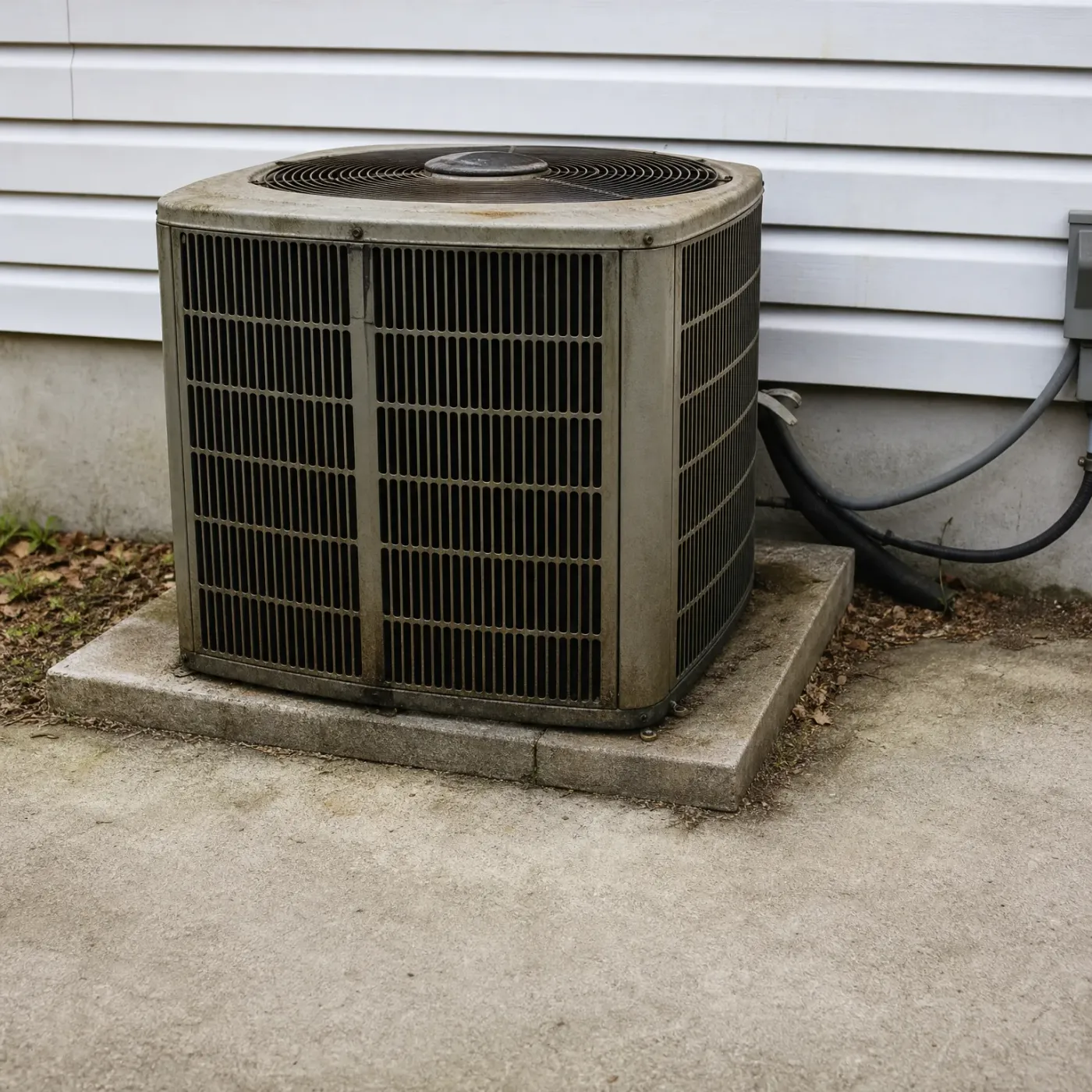
A weathered outdoor condenser unit on a concrete pad beside a house with white horizontal vinyl siding, with refrigerant lines and conduit running to a wall-mounted electrical box.
Before you get your heat pump repair
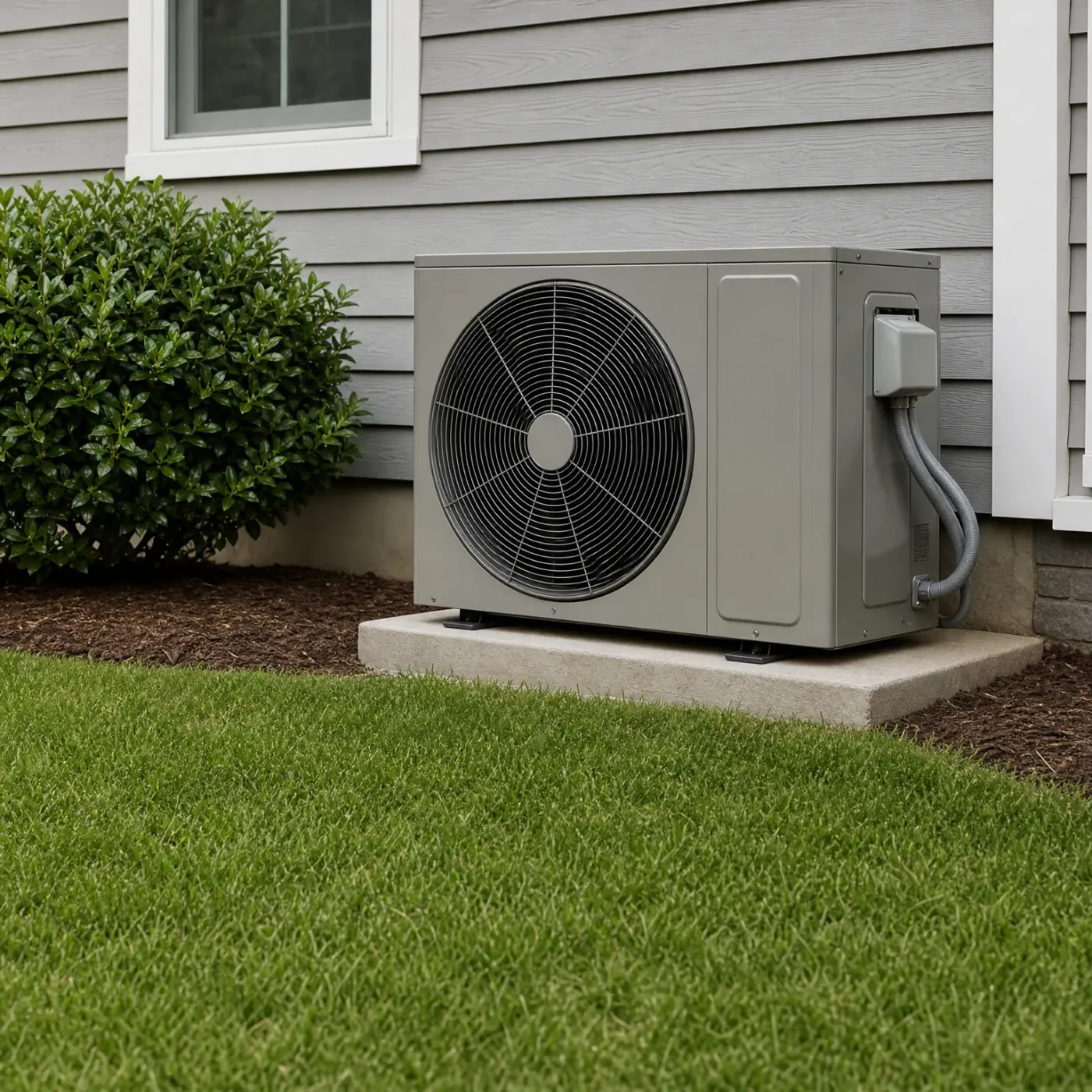
A gray outdoor heat pump unit with a large fan grille sits on a concrete pad beside a house with horizontal lap siding, next to a green shrub, mulch bed, and lawn.
After you get your heat pump repair

A thermostat stuck versus a system fixed

Switching to emergency heat gets you warm air for tonight. It does not tell the outdoor unit what's wrong, and it does not turn the compressor back on. You're paying for electric resistance coils to do a job the heat pump was built to do more cheaply, and that gap in cost keeps running for as long as the switch stays flipped. Nothing about the underlying problem changes on its own. Whatever put the unit into emergency heat, a failed compressor, a frozen coil, a tripped safety switch, is still there the next morning, waiting.

What a local contractor brings to it

A contractor who works on heat pumps in New York every winter has seen the same failures turn up season after season, in this climate, on this kind of equipment. They know what usually fails when a unit won't come out of emergency heat, and they'll check those things first instead of guessing. Submit the request and one licensed, local contractor gets matched to your situation, not a handful of companies all calling you back at once. From there, finding someone to look at it stops being on you. You've done the part that needed doing, and the rest is off your plate.

A woman with shoulder-length dark brown hair in a cream knit cardigan sits in an upholstered armchair beside a window, looking off to the side, with a white bookshelf and potted plant blurred behind her.
A woman with dark hair in a bun sits wrapped in a chunky knit blanket on a couch with a child resting his head on her shoulder, eyes closed, beside a lit lamp and bookshelf indoors.
  1. Thermostat calls for heat and checks the outdoor temperature first.

  2. Compressor tries to pull heat from the outside air.

  3. A control board senses the compressor can't keep up alone.

  4. Board locks out the compressor and switches on electric coils.

Emergency heat now vs. a repaired heat pump

Running on emergency heat

  • Electric resistance coils are doing all the heating, and at New York power rates that adds up fast on the bill.
  • The compressor stays locked out the whole time, so nothing is actually getting fixed while you wait.
  • It keeps the house warm on a cold night, but it's not built to carry the load for weeks.
  • The outdoor unit sits idle, which is normal if it's frozen over or the compressor failed, but it won't thaw or repair itself.
  • You still don't know what's wrong, so the same problem is there the next time the thermostat calls for heat.

After a repair

  • The compressor runs again, so the heat pump is pulling heat from the outside air instead of generating it with coils.
  • Your bill drops back down once the house is off electric resistance heat and back on the heat pump itself.
  • A licensed local contractor who works on these units all season can tell you what actually failed, whether it's a frozen coil, a bad compressor, or something electrical.
  • Sending one request means one contractor looks at your system, not a handful of companies calling you back.
  • The thermostat switch goes back to normal heat mode and stays there instead of defaulting to emergency heat on its own.
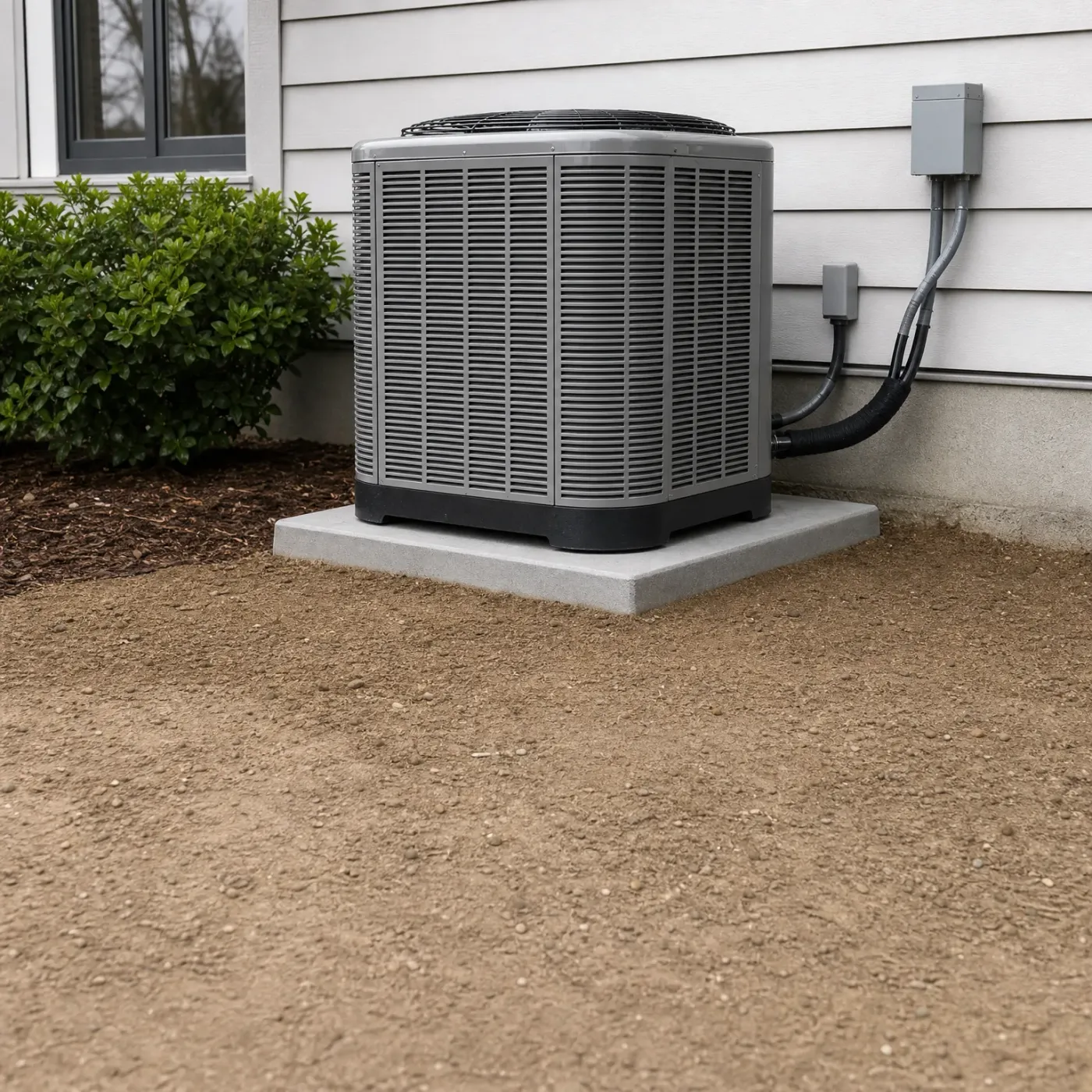
A gray outdoor condenser unit on a concrete pad beside a white horizontal-siding house, with refrigerant lines and conduit running to a wall-mounted disconnect box, bare soil in front and a green shrub at left.

Heat pump running normally

This is what your outdoor unit should look like doing its job: fins clean, running quietly, pulling heat out of the air even on a cold day. Refrigerant lines and the disconnect box are clear, nothing's blocked, and the compressor can work the way it's supposed to.
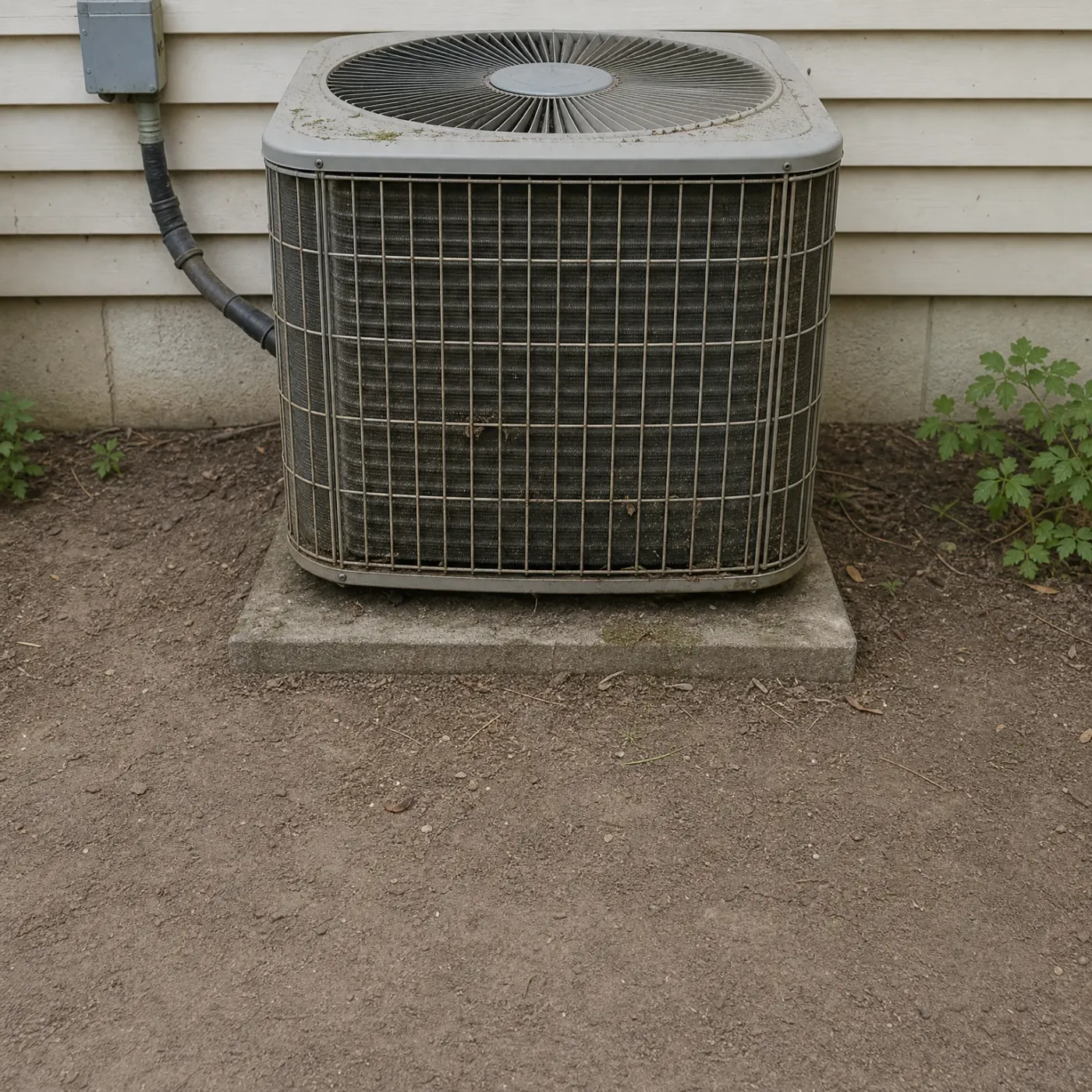

An outdoor air conditioning condenser unit on a concrete pad beside a house with light horizontal siding and a concrete block foundation, with bare soil and small green plants around it.

Heat pump in trouble

Dust and grime like this on the fins and grille block airflow the unit needs to pull heat from outside. A coil this dirty makes the compressor work harder for less heat, and it's often part of why the system can't keep up and switches you over to emergency heat.

Emergency heat means your heat pump's compressor is sitting idle and electric coils are covering for it, at a cost you'll see on the next bill. It's a stopgap, not a fix. Getting the compressor running again means a repair, and that's a job for someone who knows these units, not a reset or a new filter. A local contractor who services heat pumps all year has likely seen this exact fault before, the same lockout, the same frosted coil, the same control board tripping over a cold snap. When you put in a request, it goes to one licensed contractor working near you, not a pool of companies competing for the call. No ten phone calls to sort through, no strangers bidding on your address. Just someone local, qualified, and familiar with this equipment, looking at what's actually wrong so the outdoor unit can go back to doing the work instead of those coils.

A dark standing-seam metal roof with a stone chimney and metal cap, seen against a backdrop of autumn-colored forest and layered hills under an overcast sky.

Hand off the heat pump problem

Find a local pro

Asking costs nothing, and the choice to hire stays yours.

A frozen coil or a dead compressor doesn't fix itself, and every night on emergency heat is a night of electric coils billed at New York rates. Send the request and finding someone local who works on heat pumps all winter stops being your problem to solve.