
Aux heat cycling on only in the coldest stretches
This is the strip doing its job, backing up the compressor for short runs when it's near freezing or below. Expect a higher bill those days, not all winter.
Auxiliary heat is the backup heat strip in your heat pump's air handler, and it kicks in when the outdoor unit can't pull enough heat from the cold air by itself. On a heat pump, the outdoor unit still works down to low temperatures, but as it gets colder, it has to work harder to collect the same amount of heat, and at some point it falls behind what the house needs. The system switches on electric resistance heat to make up the difference. You'll usually see "AUX" or "EM HEAT" light up on the thermostat during a hard freeze, or during defrost cycles when the outdoor coil ices over and has to clear itself. It's normal to see it for short stretches in real cold. It's a different problem if it's running constantly, because that heat strip uses a lot more electricity than the compressor does to produce the same warmth.
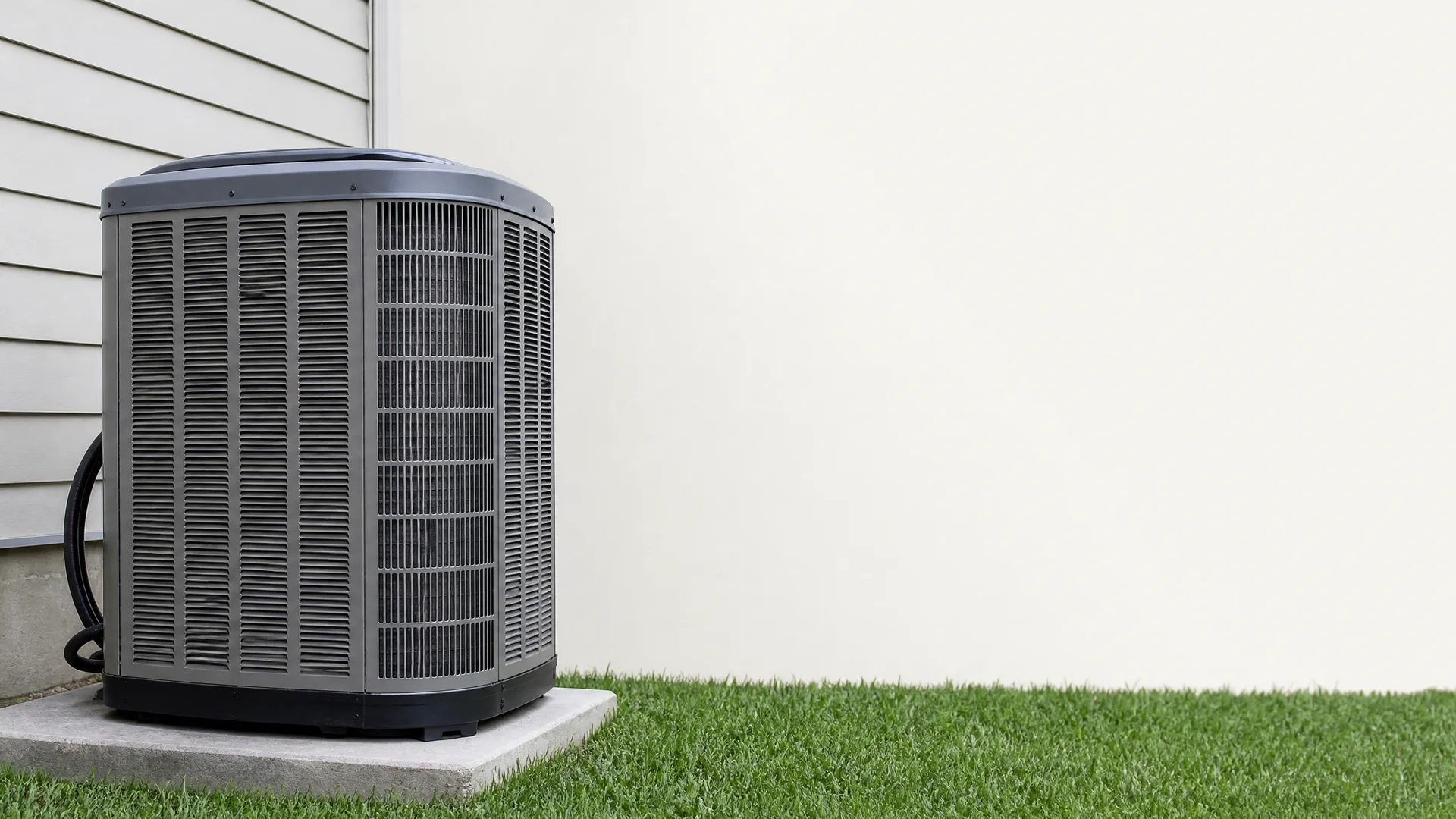
The electric strip heats by resistance, like a toaster. It doesn't move heat the way the compressor does, it makes it straight from electricity, so it draws far more power to produce the same warmth. In New York, where electricity runs among the highest rates in the country, a furnace stuck on aux heat for days shows up fast on the bill. A gas furnace never does this work this way, which is part of why so many homes here still heat with gas.
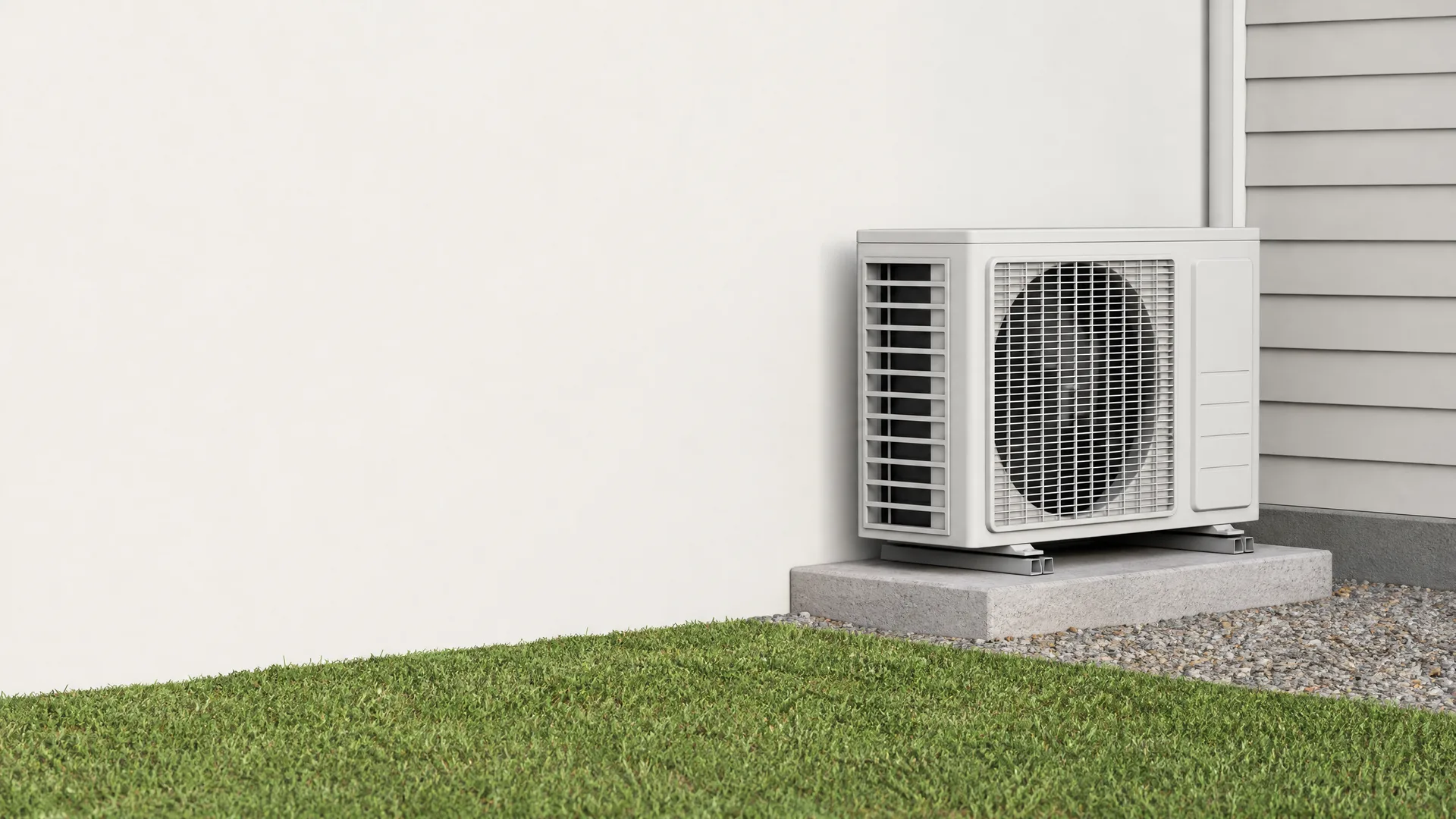
Your thermostat should only call for aux heat when the outdoor temperature drops low enough that the compressor can't keep up, or during defrost, or when you push the system hard with a big setpoint jump. If the aux light stays on when it's 40 degrees out, something is telling the system the compressor isn't producing heat when it actually is. That's a sensor, a control board, or a low charge, not a cold snap.
If aux heat stays lit all the time instead of cycling on only in the coldest stretches, something is keeping the outdoor unit from doing its job. That's worth knowing before the next bill comes, since in New York, where power costs what it does, a heat pump running on strip heat around the clock instead of the compressor is one of the more expensive ways to stay warm.
A thermostat set to recover a few degrees quickly will call for aux heat every time, since it's faster than the compressor alone. That's worth checking first. If the setting looks right, the outdoor unit itself may not be pulling heat the way it should. Ice built up on the coil, a failing defrost control, or a compressor that isn't running at all will all force the air handler to lean on the strip heat to keep up. None of those fix themselves. A heat pump that's supposed to carry most of the load through a New York winter and instead runs on aux heat all day needs a technician to find out why the outdoor unit isn't doing its share.
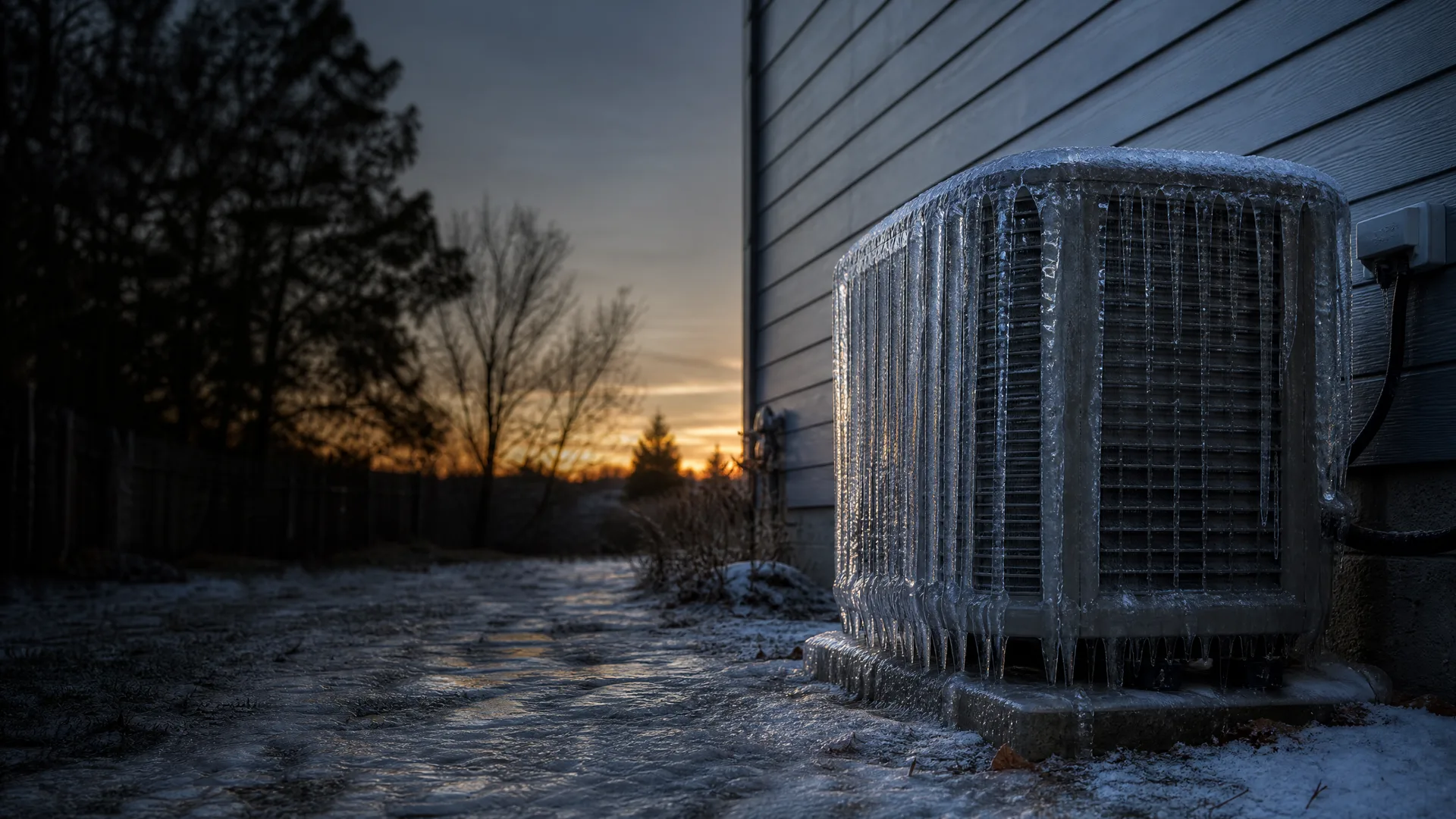
Six in the morning, still dark, and you go out for the paper. The side yard light catches the outdoor unit and you stop. It's wearing a shell of ice, thick over the coils, down over the base. Not the thin frost that melts off by nine. This is solid, the kind that doesn't let the fan turn. Inside, the air coming out of the vents feels warm enough but it's been running a long time to get the house there. You already know what that means for the bill this month. You go back in, open your phone, and start the only part of this that's yours to do: finding someone who can come look at it.
Describe what your heat pump is doing once, in one form.
Asking costs nothing, and the choice to hire stays yours.
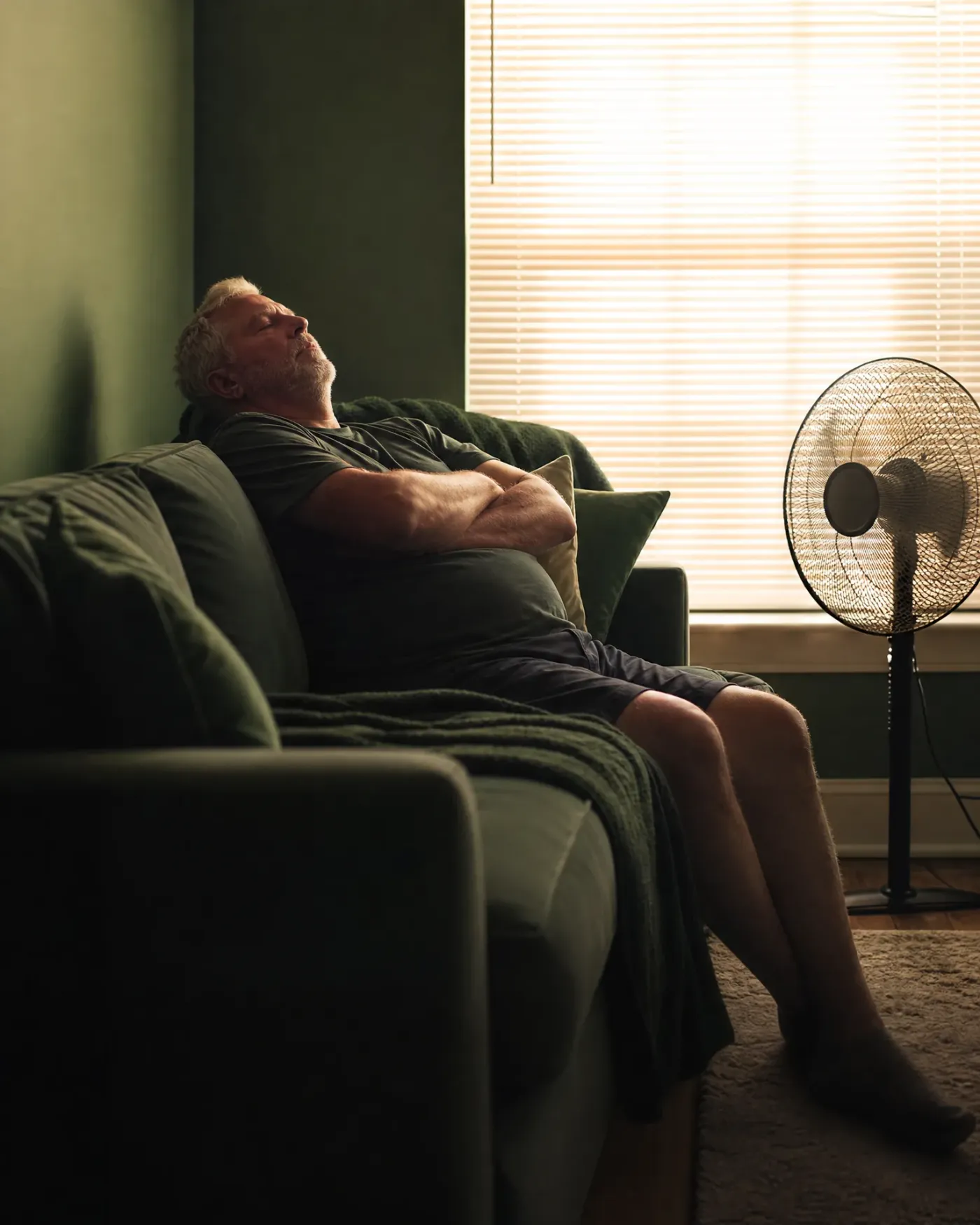
Some homeowners set the thermostat up a few degrees when a room feels cold, not knowing that extra push often calls on the strip instead of the compressor. The outdoor unit keeps working in the cold, but a big jump in setpoint is more than it can catch up on alone, so the system leans on aux heat to close the gap fast. Left alone, the heat pump would have gotten there too, just slower. A thermostat that's smart about this will only use the strip when the compressor truly can't keep up, not every time someone nudges the dial. Knowing that difference is worth more in New York than almost anywhere, with what power costs here.
There's a stretch of real winter, the kind where the air outside has little heat left to give, where aux heat isn't a sign of anything wrong. It's doing exactly what it was built for. In that case the question isn't how to stop it. It's whether the system is cycling back off the strip once the cold snap breaks, and whether the outdoor unit is clear enough to pull its share again. A heat pump that won't let go of aux heat even after conditions ease is the one worth having looked at. Calling around to find someone who can check it is its own chore. Sending the request once and letting that search be someone else's job isn't.
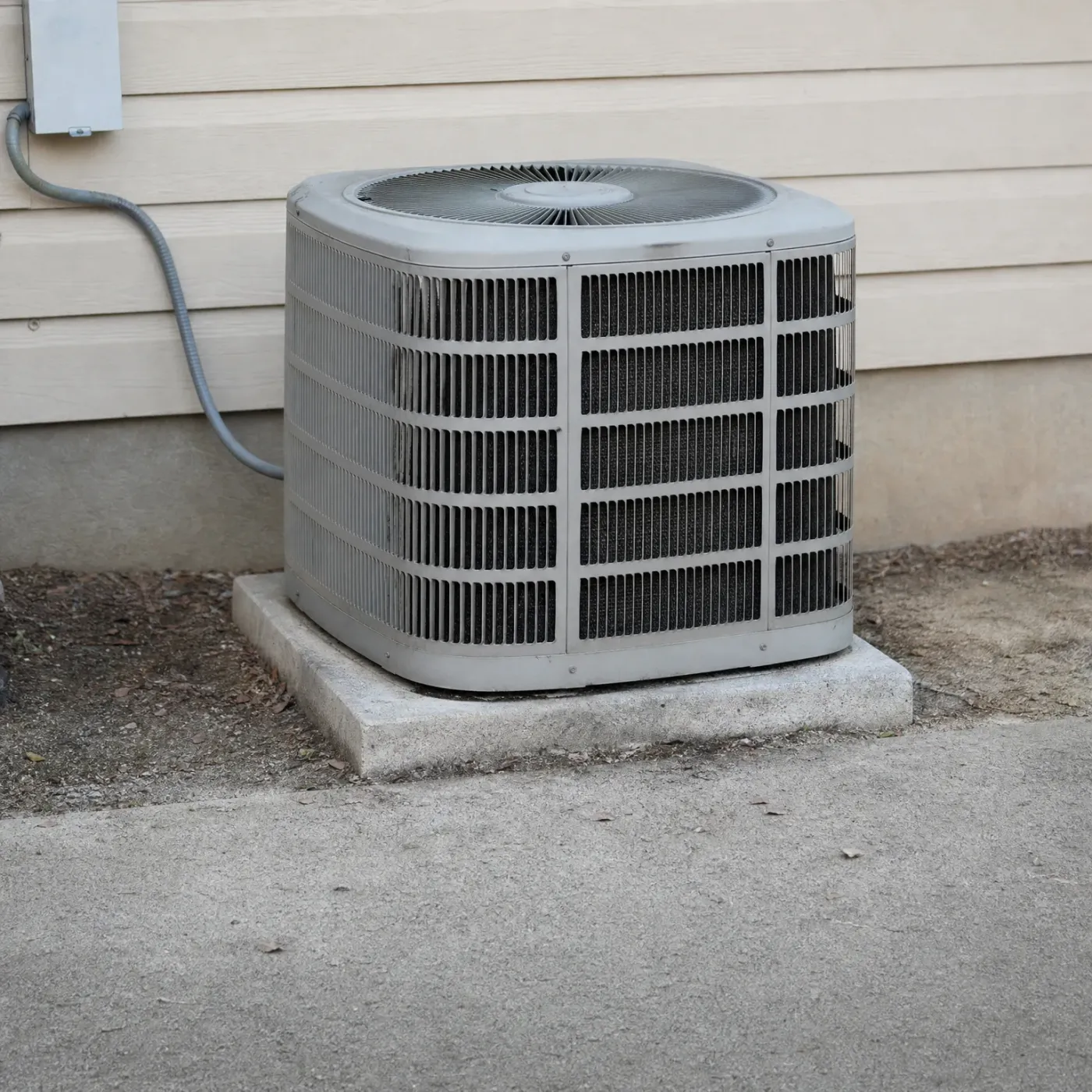
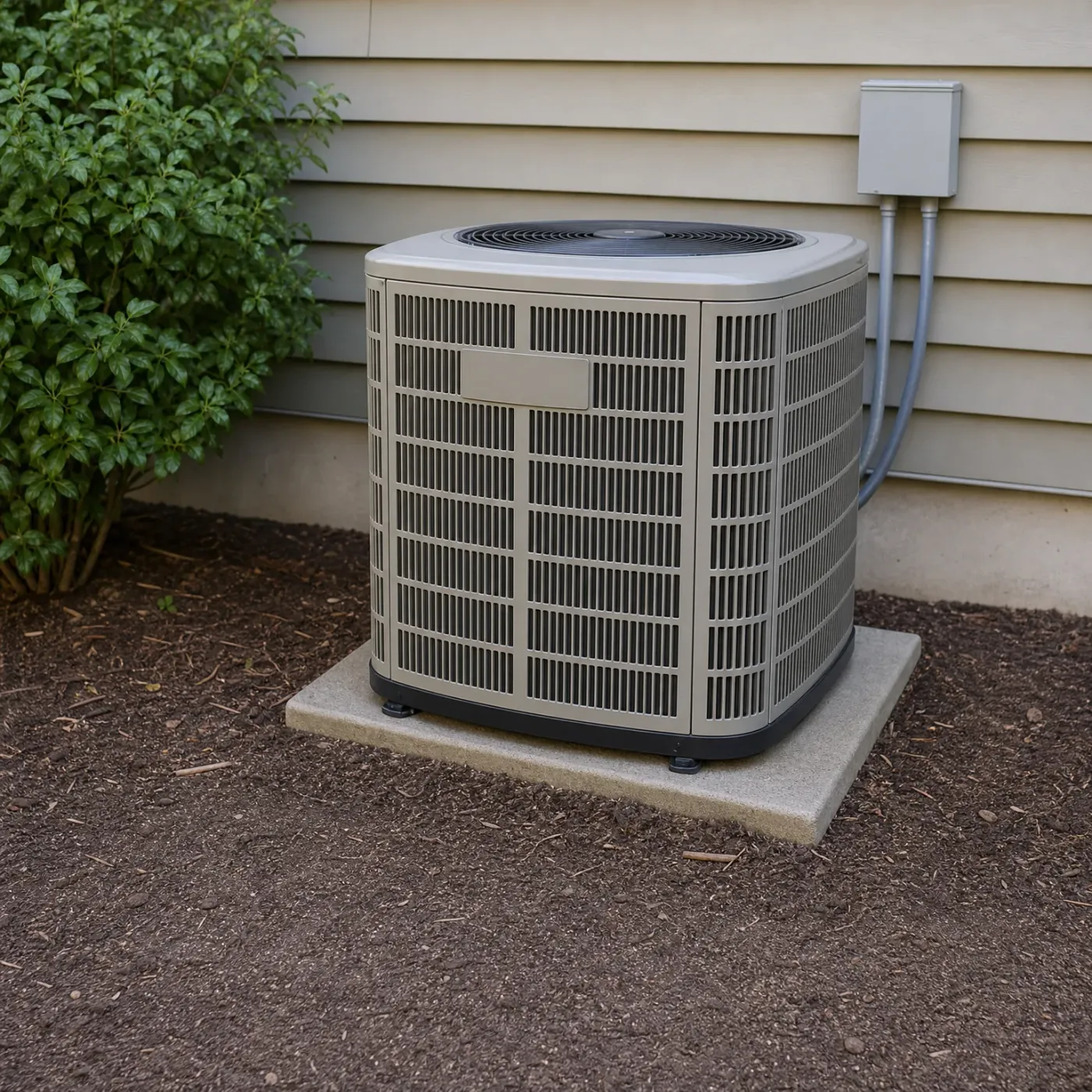
This is the strip doing its job, backing up the compressor for short runs when it's near freezing or below. Expect a higher bill those days, not all winter.
The strip is carrying heat the compressor should be handling. That points to a problem with the outdoor unit, and it's worth having looked at before another bill comes.
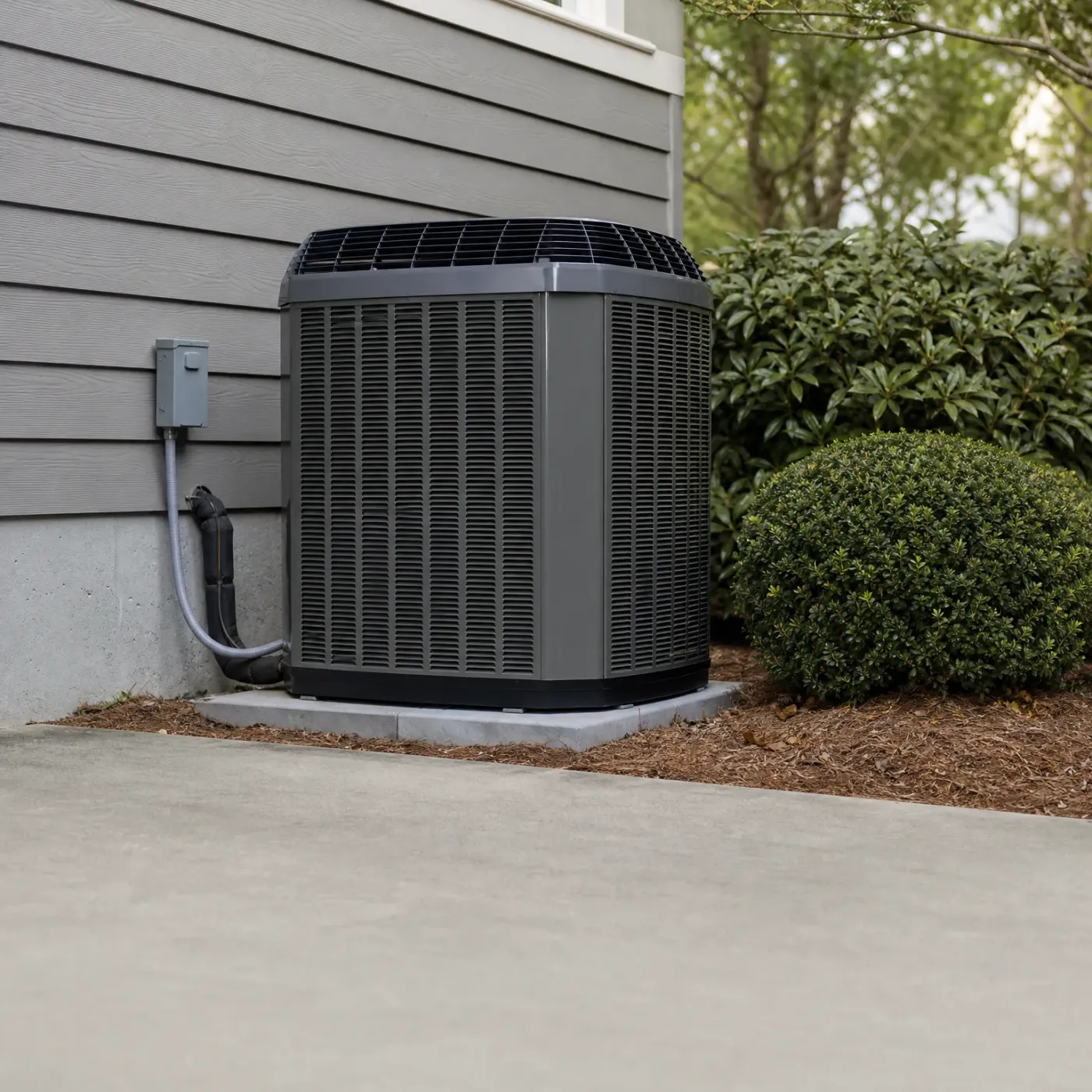
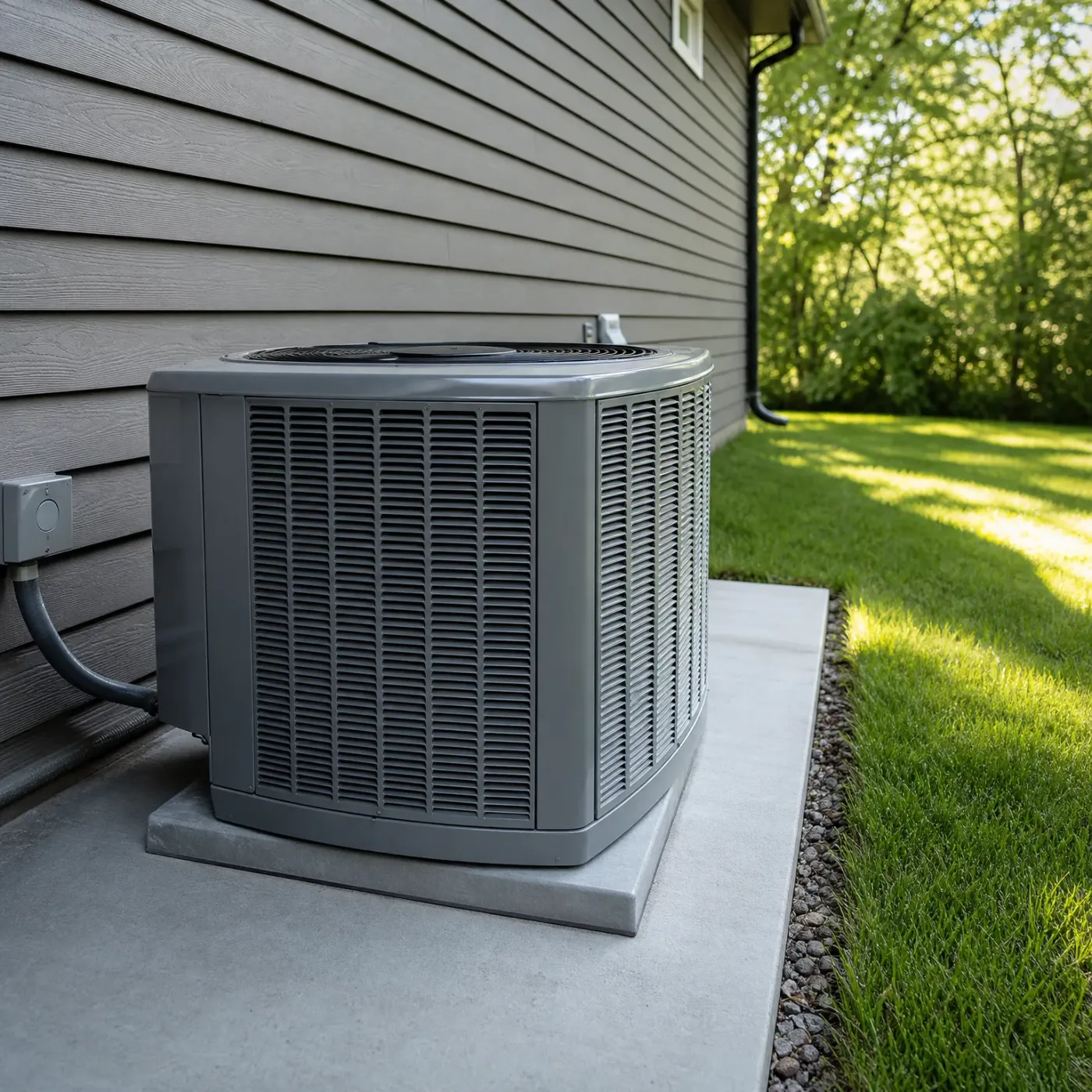
This is what a heat pump looks like when the compressor is handling the load on its own. Clean coils, clear base, lines running straight to the wall. Aux heat stays off except in the coldest stretches, and the bill reflects that.
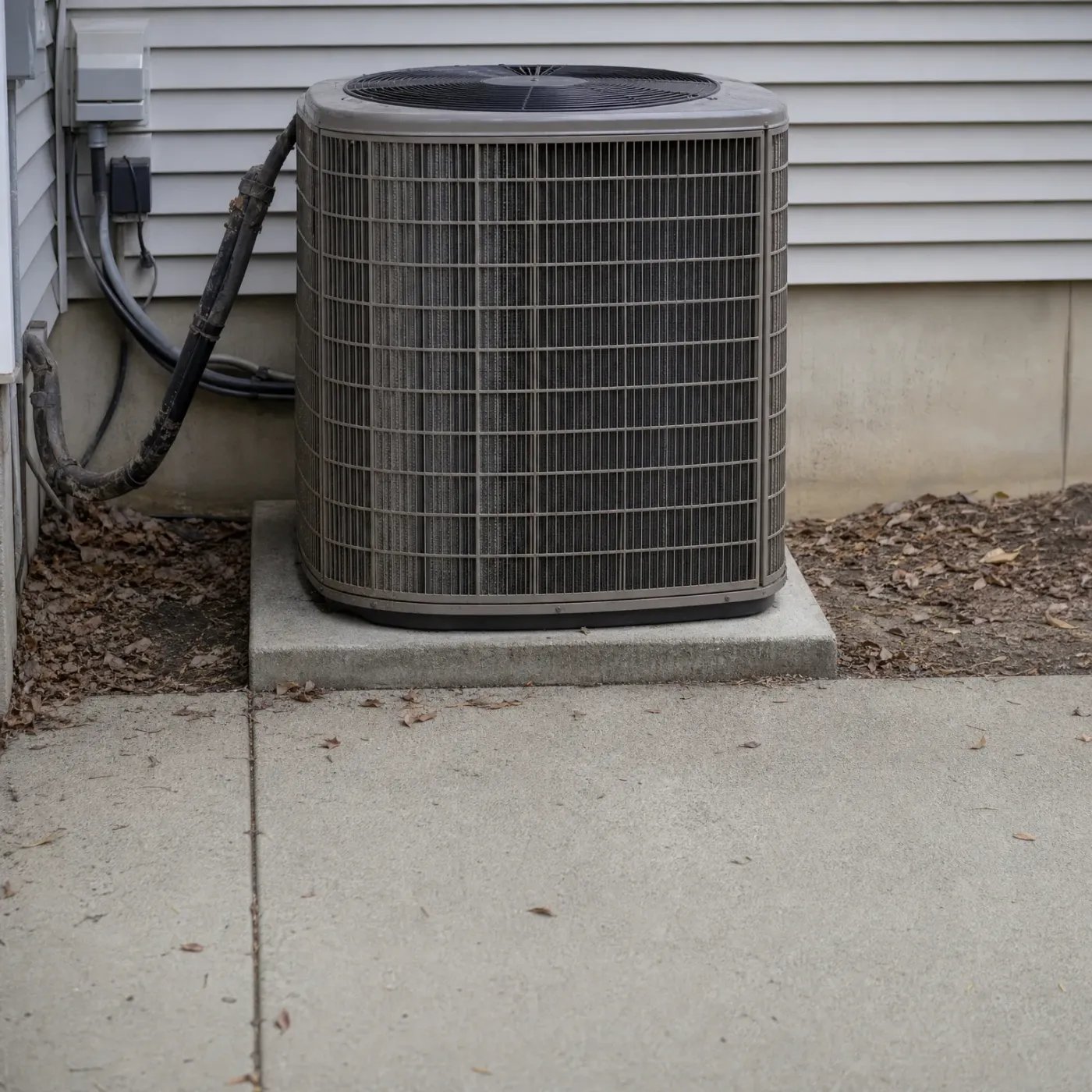
Dirty coil fins and leaves piled against the base choke off the airflow the compressor needs. When it can't pull heat from the air, aux heat picks up the slack more than it should, and that strip is the expensive way to heat your house.
That's what every kilowatt-hour costs here, whether the compressor is pulling heat from the cold air or the strip is making it straight from resistance. At that rate, hours of aux heat show up fast on the bill, which is why knowing when it's running matters.
EIA-861 2025 statewide residential average





Humidity doesn't drive aux heat, but it shapes how your heat pump runs the other half of the year. Summers here average a dew point of 62°F across June, July and August, according to NOAA climate data, which is sticky enough that the system spends real time pulling moisture out of the air, not just cooling it. That's a different load on the same compressor that carries your house through the cold months. A unit working hard against summer humidity is the same unit you're counting on in January, so what wears on it in July shows up as a weak compressor or a slow-icing coil come winter, right when aux heat is picking up the slack.
NASA POWER T2MDEW county cells weighted by homes



Aux heat is the electric strip stepping in when the compressor can't keep up with the cold on its own. That's normal on the coldest mornings. What isn't normal is the strip running most of the day, or a compressor caked in ice, or a system that won't switch back once the temperature climbs. Those point to a specific problem with the outdoor unit, not the weather doing what New York weather does every winter.
If that's what you're seeing, the next step isn't searching contractor listings, calling a few, explaining the ice and the short cycling and the bill to each one, then weighing quotes against each other. Send the form once and that work is off your plate. A licensed contractor takes it from there, looks at the actual unit, and tells you what's wrong with it.