How long heat pumps last in New York

Step 1 of 3: Equipment

How long do heat pumps last in New York?

You're probably trying to figure out if your heat pump is near the end of its life, or if a new one is worth the money before another New York winter and another muggy summer put it to the test. Knowing roughly how many years you can expect helps you decide whether to repair what you have or start looking at installation now.

A heat pump typically lasts 15 years

Most heat pumps run 15 years before they need replacing, give or take a couple depending on how hard the unit works and how well it's been maintained. In New York, that unit is running double duty: pulling moisture out of sticky summer air, then switching over to heat the house once temperatures drop. Since most homes here heat with gas, the heat pump in your home may be carrying less of the winter load than it would elsewhere, which can ease the wear somewhat. But electricity here costs more than in most of the country, so a unit that's lost efficiency as it ages shows up faster on your bill. If yours is approaching 15 years, it's worth having someone look at it before you're deciding in the middle of a heat wave or a cold snap.

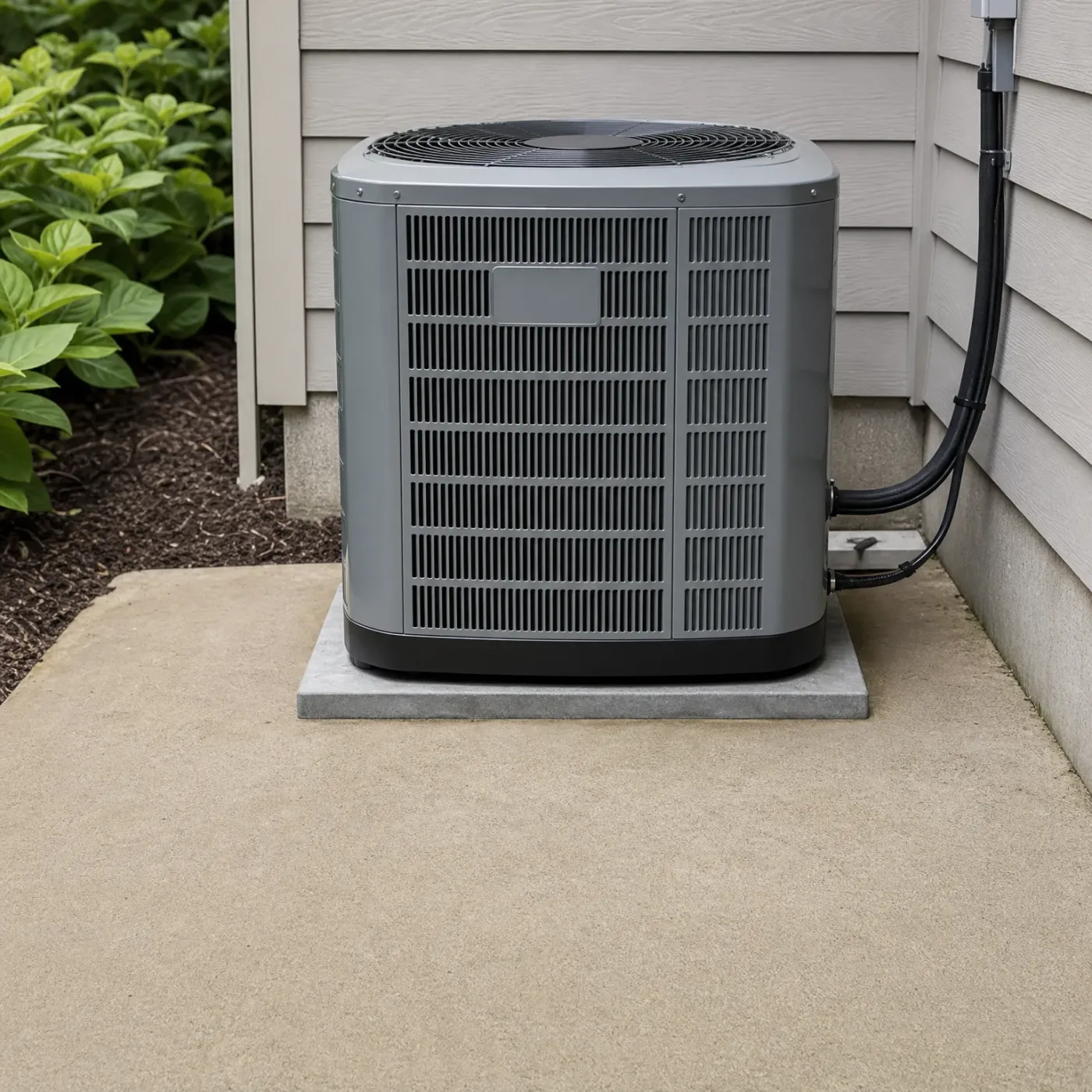
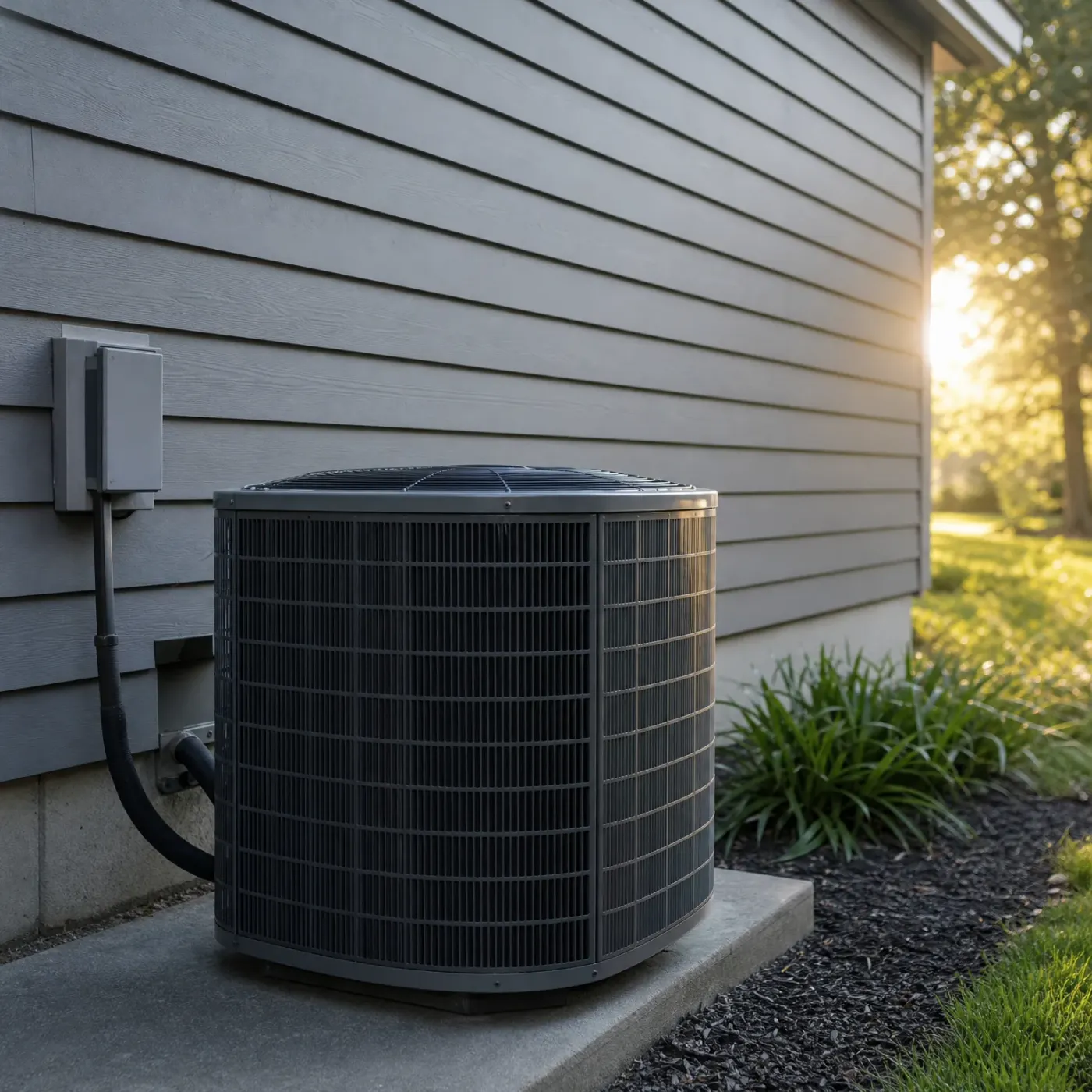
A gray outdoor air conditioner or heat pump unit on a concrete pad beside a house with horizontal lap siding, with conduit and refrigerant lines running up the wall and green shrubs and mulch at left.

Running the way it should

A heat pump that's keeping up sits clean and clear around the grille, with the refrigerant lines intact and nothing blocking airflow. It cycles on, runs, and shuts off without struggling, holding the house steady through a New York winter and the sticky months after.

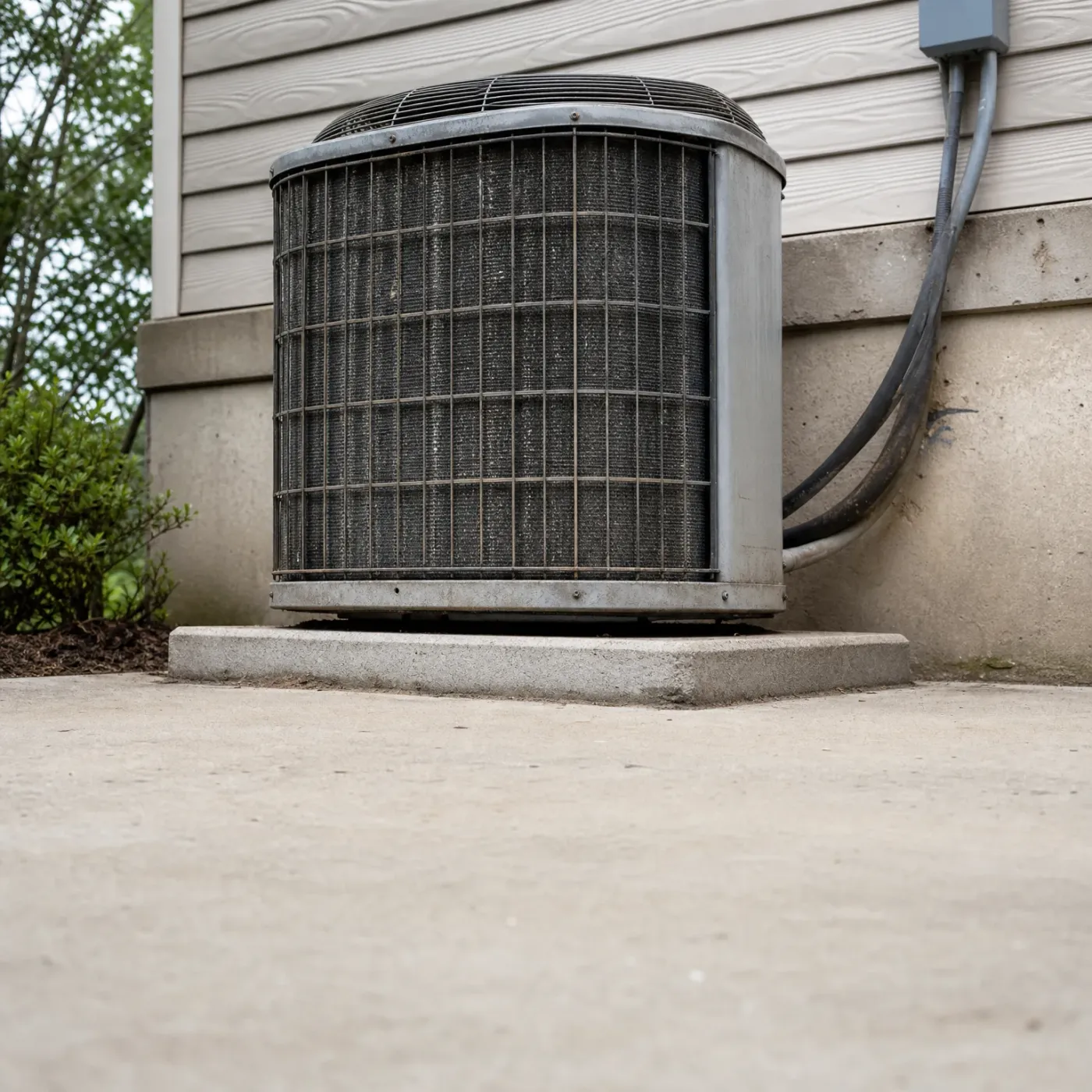
An outdoor air conditioning condenser unit on a concrete pad beside a house with horizontal siding and a concrete foundation, with refrigerant lines running to a wall-mounted disconnect box and shrubs at left.

Signs it's falling behind

Dust and grime caked into the grille mean the unit is working harder to pull air through it. Paired with a system that's been running for years, that strain adds up, and it's worth finding out whether you're looking at a repair or a system nearing the end of its life.

A man in a gray sweater reclines in a brown leather armchair with his eyes closed, beside a wooden side table holding a mug, a folded newspaper and a potted plant, with a bookshelf and sunlit window behind him.
A man with greying hair and a dark sweater leans back on an armchair with his eyes closed and a slight smile, in a living room with a bookshelf, plant, folded newspaper and mug on a wooden table.
A man in a gray fleece jacket sits reclined in a leather chair with his eyes closed, in a room with bookshelves, a table lamp, a window, and a desk holding a folded newspaper and a dark mug.
A bearded man in a gray fleece pullover sits with eyes closed in a brown leather armchair in a living room, with a floor lamp, bookshelf, potted plants, a side table holding newspapers and a dark mug, and a bright window behind him.

A heat pump doesn't make heat the way a furnace does. It pulls heat out of the outdoor air and moves it inside, then reverses that in summer to pull heat out of the house. That back and forth runs through the reversing valve, and switching it twice a day, every day, wears on it faster than most other parts. Cold weather brings frost on the outdoor coil, so the system runs a defrost cycle to clear it. That's normal. What's not normal is a unit defrosting constantly, which usually means it's losing ground against the cold rather than keeping up with it. The compressor is what usually decides when a heat pump is done. Once that goes, a repair often costs close enough to a new system that most homeowners replace it instead. New York winters ask more of the compressor than a milder climate would, since the unit has to run longer stretches to hold the house at temperature. A heat pump sized too big or too small for the house makes this worse, turning on and off more often instead of running steady.

What's actually wearing out inside

  • A heat pump moves heat instead of burning fuel, so the outdoor unit works hard in both January and July here.
  • The reversing valve switches the refrigerant flow between heating and cooling, and it's one of the first parts to wear out from constant switching.
  • Defrost cycles kick in automatically in cold weather to melt ice off the outdoor coil, and a unit that defrosts too often is losing efficiency.
  • The compressor is the part most likely to end a heat pump's life, since replacing it often costs close to a new system.
  • New York winters push the heat pump to run longer hours than it would in a milder climate, which adds wear over the years.
  • A heat pump that's sized wrong for the house cycles on and off more than it should, and that short cycling shortens its life faster than steady running would.
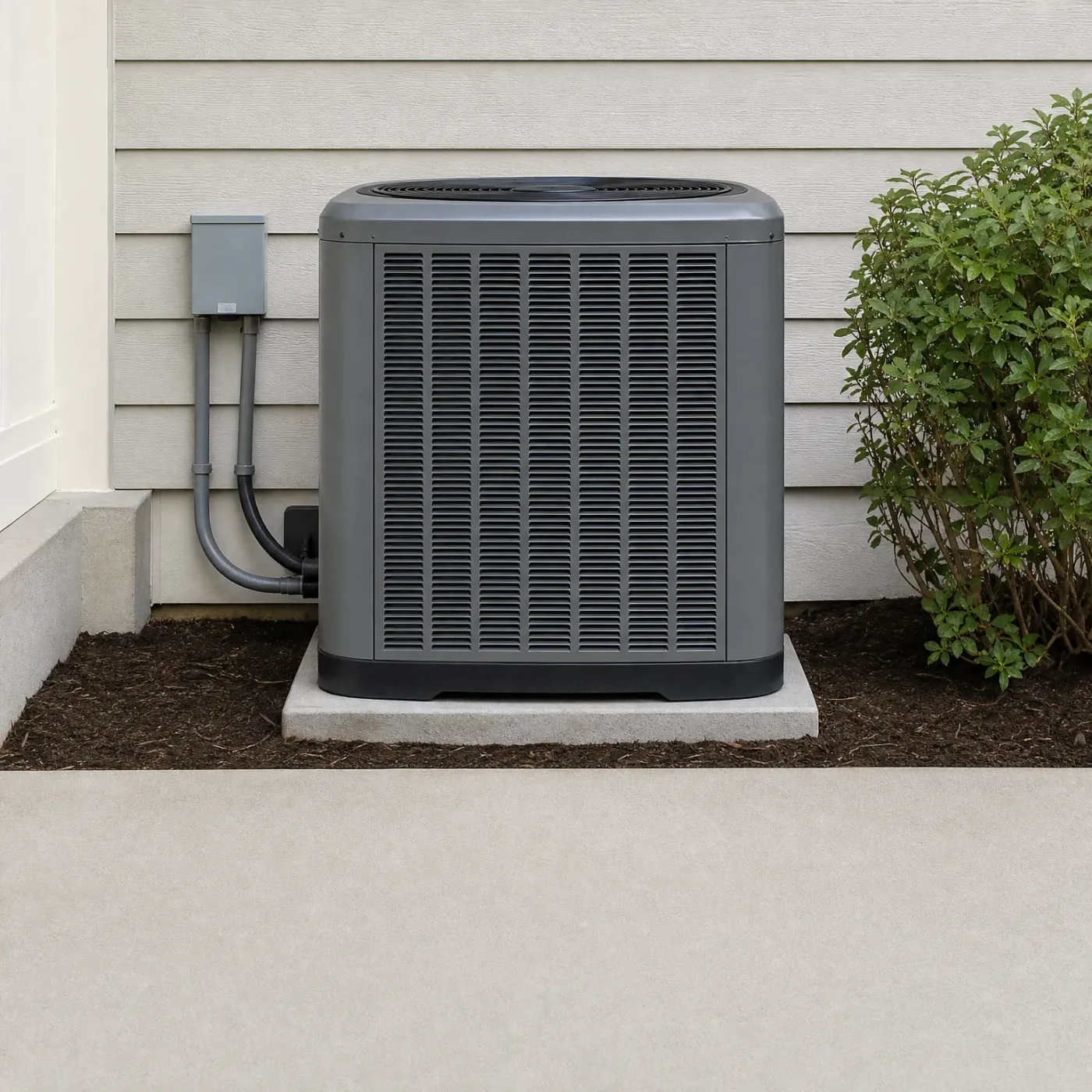
A gray outdoor condenser unit on a concrete pad beside a light-colored lap-sided house, with a wall-mounted disconnect box and conduit, dark mulch, and a green shrub to the right.
A clean unit like this one moves heat in both directions without a fight, which matters when it's doing the job your furnace used to do.
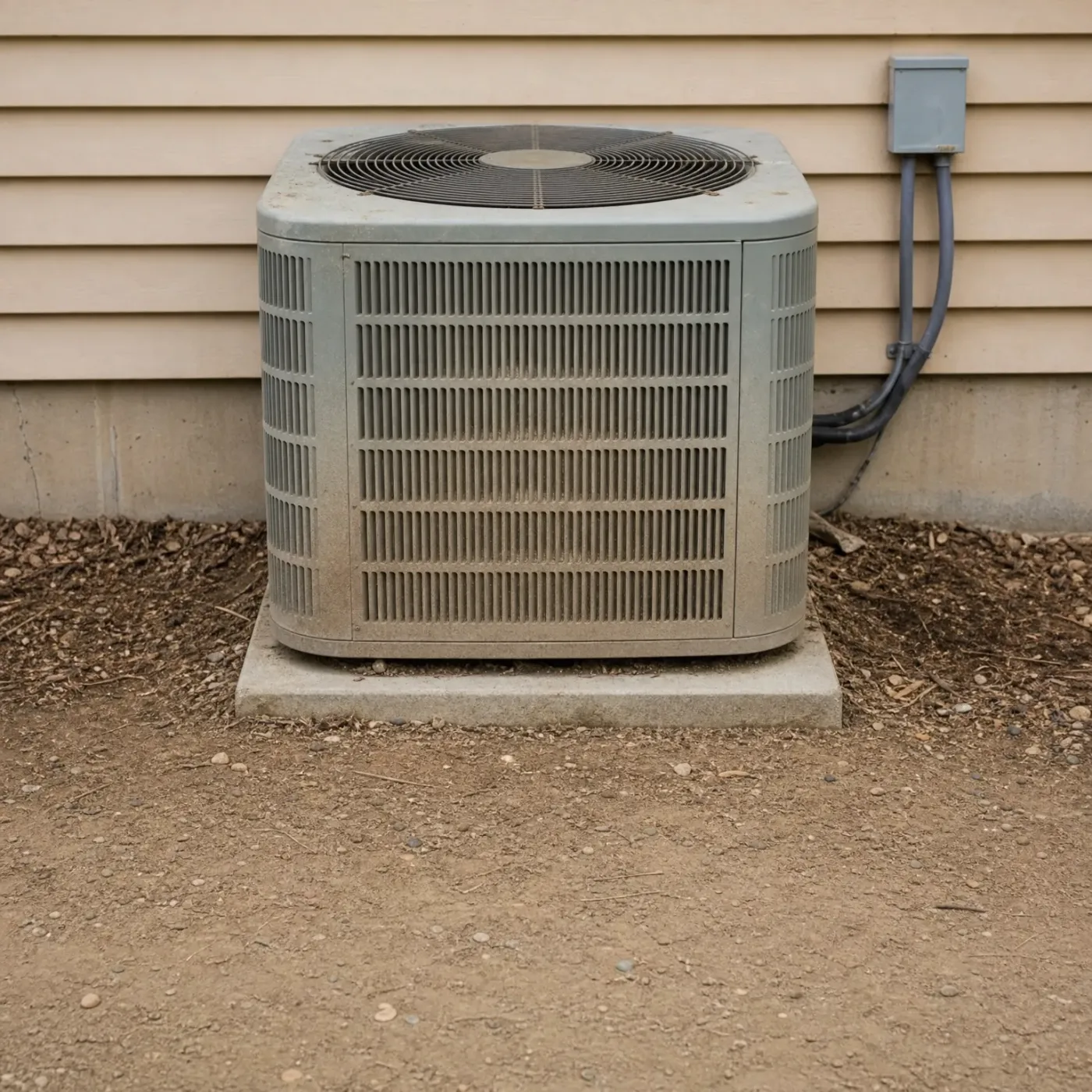
An outdoor air conditioner condenser unit on a concrete pad beside a house with horizontal lap siding, with a gray electrical disconnect box and conduit on the wall and bare dirt and mulch in the foreground.
Dust and grime packed into the grilles choke airflow, and a unit working that hard through a New York winter won't make it to a normal age.
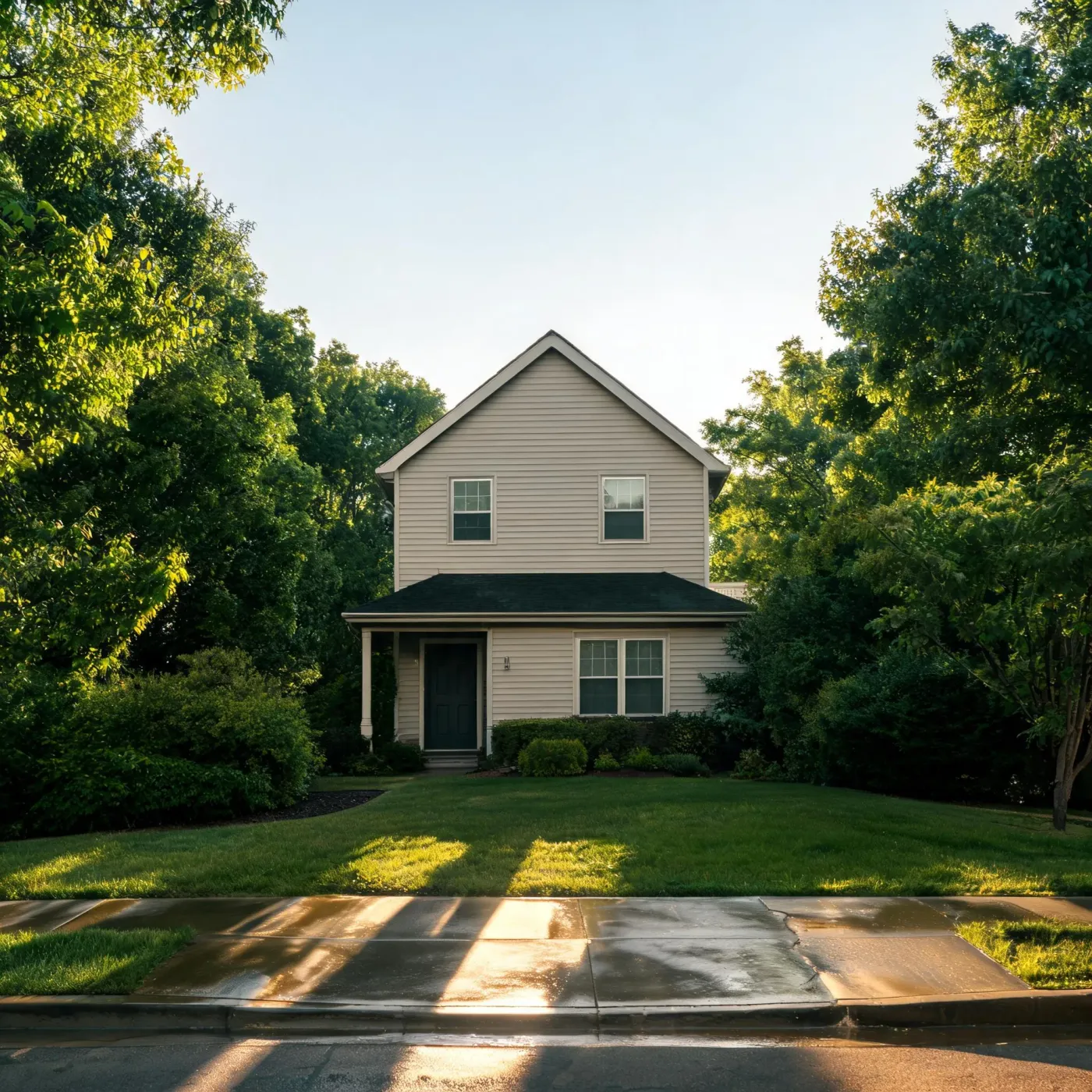
A two-story house with light beige horizontal siding, a gabled roof, a small covered front porch with dark door, and shrubs along the foundation, set behind a mown lawn and wet sidewalk with large leafy trees on both sides.

New York summers sit at a dew point of 62°F on average through June, July and August, according to NOAA climate data. That's heavy, sticky air, and it means your heat pump has to pull more moisture out before it can even start cooling the room down. The coil stays wetter longer, the unit runs longer to hit the same temperature, and a system already working through this kind of summer shows wear sooner than one in a drier climate. If yours is struggling to keep up on the muggiest days, that's worth paying attention to now, not in August. Send in the form and the search for someone qualified to look at it is off your plate.

NASA POWER T2MDEW county cells weighted by homes

It's off your list after this

One installer gets your project, so there's no bidding war over it.

No fee to send it, and nothing to sign.

Why gas homes run it less

Most houses in New York heat with gas, so a lot of heat pumps here only handle cooling, maybe some shoulder-season heating when it's not worth firing up the furnace. A unit running three or four months instead of carrying the whole winter sees less wear on the compressor and the reversing valve. That lighter duty cycle is part of why some of these systems stretch past what you'd expect from a house that leans on the heat pump alone from October through March.

What a full heating load does

A heat pump that's your only source of heat works differently. It runs through the coldest nights of January, not just the muggy stretch of July, and the compressor doesn't get the long rest a gas-backed system gives it. With power costs in New York among the highest in the country, a homeowner running one this way also feels any drop in efficiency faster, on the bill, long before the unit actually quits. That combination tends to shorten the years you get out of it.

A gray-haired man with a beard in a blue button-placket shirt reclines on a couch with his eyes closed, beside a sunlit window with a green plant.
A woman in a cream knit sweater sits in an armchair with her eyes closed near a window showing yellow autumn foliage, with a mug on a round wooden side table beside her.

What a dying heat pump costs you

An aging heat pump doesn't fail all at once. It loses the ability to hold temperature on the coldest nights, so the house runs a few degrees cooler than the thermostat says, and whatever backup heat you have picks up the slack at a higher cost. In summer it struggles with New York's muggy air, cycling longer to pull moisture out of rooms that still feel damp. You feel it on the power bill before you feel it anywhere else, since electricity here isn't cheap and a strained compressor pulls more of it every month it keeps running past its prime.

What's at risk if you wait

Push a failing heat pump through one more New York winter and the risk isn't just comfort. A compressor that's already struggling can seize outright on a night when you need it most, leaving you with no backup if your system doesn't have one wired in. Refrigerant leaks get worse under stress, not better, and a unit that's losing charge works harder to do less. Replacing it on your own schedule, before a January breakdown forces the issue, means picking the install date instead of having it picked for you by whatever gives out first.

Power costs 26.39 cents per kilowatt-hour statewide

At 26.39 cents per kilowatt-hour, every hour your heat pump runs short or struggles costs you more here than almost anywhere else. A unit that's lost efficiency doesn't just heat or cool worse, it pulls more power to do it, and that shows up on the bill before it shows up as a breakdown.

EIA-861 2025 statewide residential average

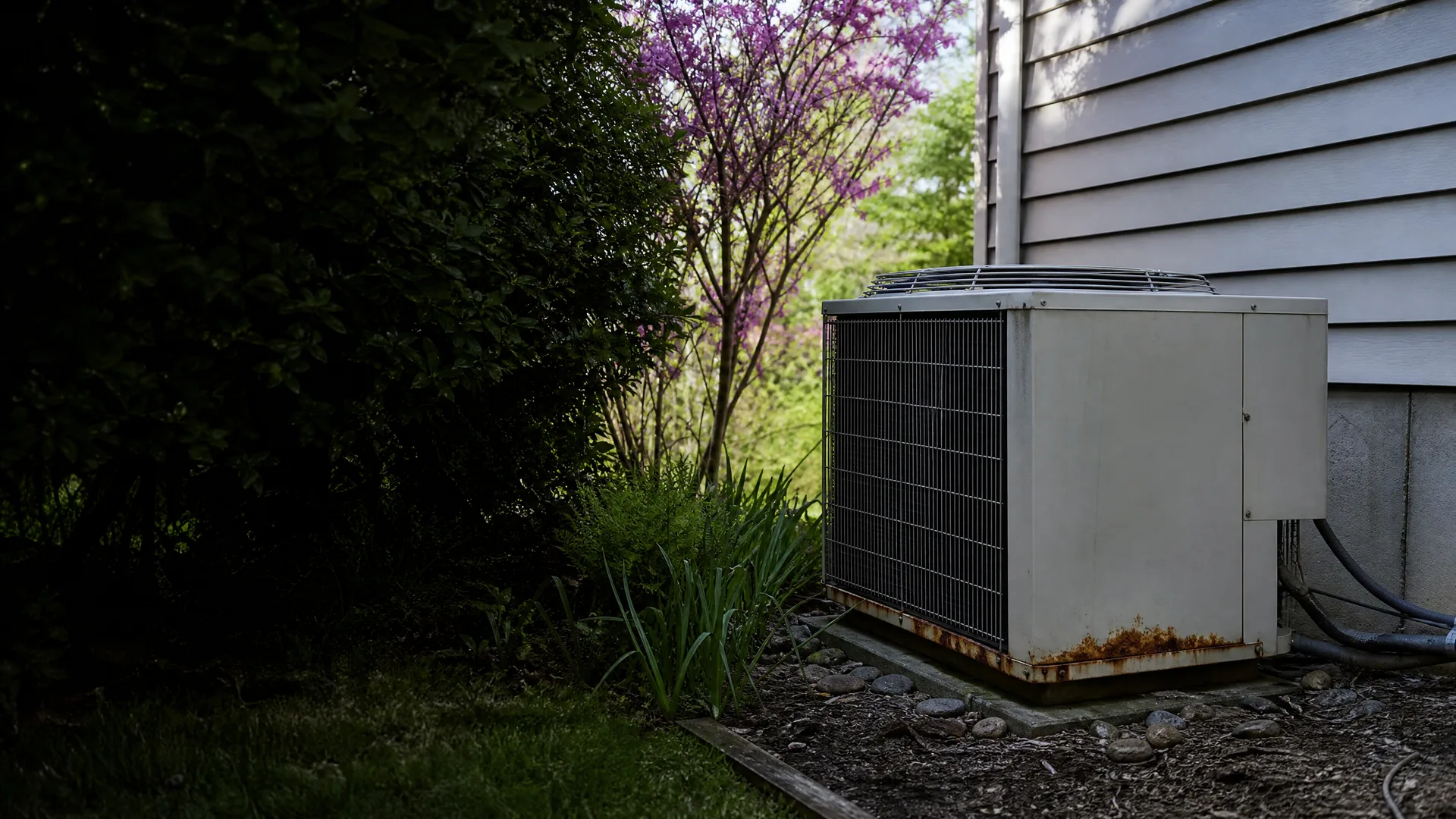
An outdoor air conditioning condenser unit with rust streaks sits on a concrete pad beside a light-colored lap-sided house, surrounded by shrubs, gravel and a flowering tree.

You're out in the side yard in April, coiling the hose up before the warm weather hits, and you catch sight of the unit sitting against the fence. Rust has crept along the base, flaking where the panel meets the ground. It ran all winter without much complaint, but looking at it now you notice the casing has gone soft at the corners, the kind of wear that doesn't show itself when you're inside checking the thermostat. You crouch down, press a thumb against the rust, and it gives a little. Nothing's wrong with it today. But you make a note to ask about it before summer's humidity has it running nonstop again.


A heat pump in New York lasts around 15 years, less if it's been carrying both your winters and summers, more if gas handles the heating and it only runs cooling and shoulder season. You've got the signs now: rust at the base, weak airflow, a refrigerant line that isn't sitting right, a bill that's crept up without a reason you can point to. If what you checked matches what's failing, you know where you stand. A unit near the end isn't worth chasing through another winter on the chance it holds. When you request an installer through this page, you're connected with one licensed contractor local to your area, someone who works on heat pumps in New York homes all year and knows which parts give out first in this climate. Not a handful of companies competing for your callback, just the one who fits the job. From there, the search is off your plate.

An outdoor air conditioner condenser unit on a concrete pad beside a gray horizontal-lap-sided house, with an electrical disconnect box and refrigerant line on the wall, grass, shrubs and a tree with low sun behind.

Stop chasing a heat pump pro

Send my request

Only one pro gets your request, so you hear from one company.

Sending the form costs nothing.