Tell us about the job
Takes about a minute. No obligation.
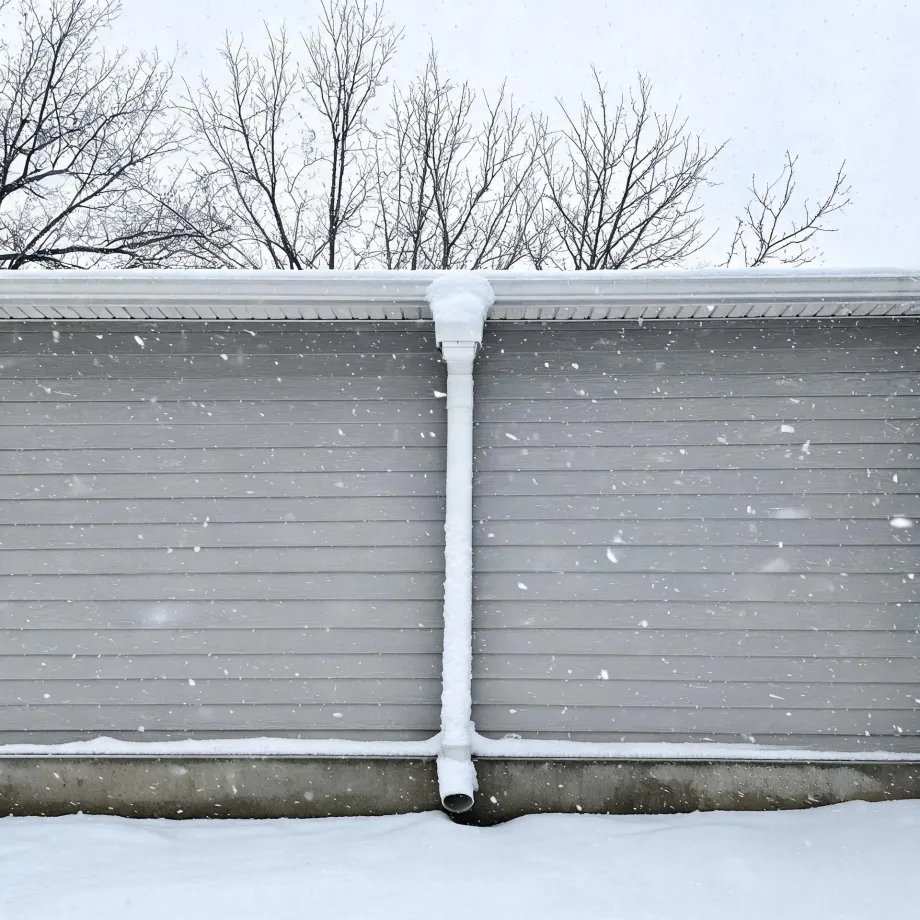
Sizing a heat pump for Jefferson County starts with how far the outdoor temperature drops and how long it stays there. Homes in Jefferson County, NY run heat about nine months a year, from September through May. Capacity on a heat pump falls as temperatures fall, so a unit that looks adequate on paper can fall short on the coldest days of a long heating run. A contractor has to establish the building's actual heat loss and model what the system delivers at the low end of the local temperature range before a quote means anything. Backup heat, if the load calculation calls for it, gets specified at that stage.
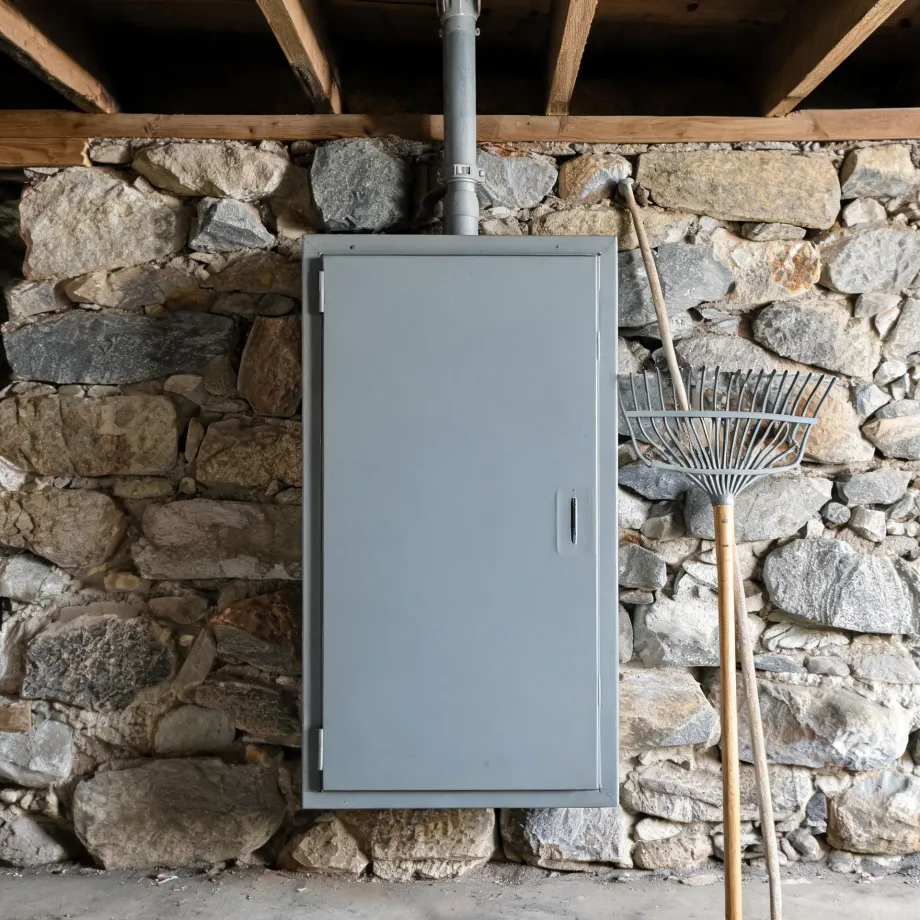
Ductwork sized for a furnace or a baseboard system does not automatically carry a heat pump. Half the homes in Jefferson County, New York were built in 1972 or earlier (2020-2024 ACS 5-year). A contractor quoting an installation in much of this county opens walls or crawl spaces to find duct runs and electrical service that were designed around different equipment entirely, and whether those can support a new system is what the job actually turns on. If the existing ductwork cannot handle the airflow, or the panel cannot supply the load, that is a separate line on the estimate before any equipment gets priced.
What a Heat Pump Installation Puts in Your Home
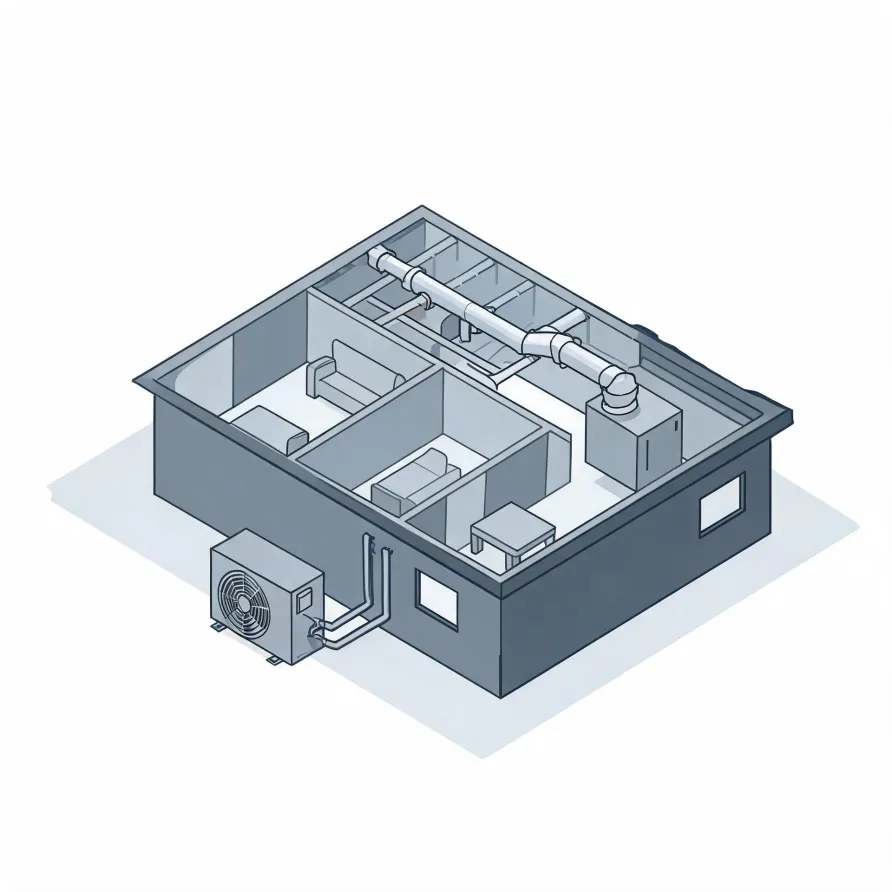
The outdoor unit sits outside the house, usually on a pad at ground level or mounted on an exterior wall, and holds the compressor and the coil that exchange heat with the outside air. The indoor air handler mounts inside, often in a utility closet, basement, or attic, and moves conditioned air through the home.
A refrigerant line set runs between the two units, carrying the refrigerant that links the outdoor and indoor sides of the system. A thermostat, mounted on an interior wall, gives the homeowner control over the whole system and tells the equipment when to run.
The drawing shows a typical layout, and a licensed contractor determines exactly how each piece fits the conditions in your house.
Get matched in Jefferson CountyJefferson County, by the numbers
163 severe weather events were recorded in Jefferson County, New York between 2015 and 2024.
NOAA National Centers for Environmental Information, Storm Events Database, bulk CSV export, events 2015-01-01 through 2024-12-31.Half the homes in Jefferson County, New York were built in 1972 or earlier (2020-2024 ACS 5-year).
U.S. Census Bureau, 2020-2024 American Community Survey 5-Year EstimatesJefferson County, New York holds 61,862 housing units (2020-2024 ACS 5-year).
U.S. Census Bureau, 2020-2024 American Community Survey 5-Year EstimatesOwners occupy 54.7% of the occupied homes in Jefferson County, New York (2020-2024 ACS 5-year).
U.S. Census Bureau, 2020-2024 American Community Survey 5-Year EstimatesSevere Weather Events in Jefferson County
Jefferson County's climate puts real demands on heating and cooling equipment year-round. A heat pump sized and installed for local conditions handles those demands better than one specified for somewhere else.
163 severe weather events, 2015–2024. Source: NOAA National Centers for Environmental Information, Storm Events Database.