Tell us about the job
Takes about a minute. No obligation.
Sizing a heat pump for this county means solving a problem that does not exist everywhere: the system's ability to pull heat from outdoor air falls as temperatures drop, and Onondaga winters push well below the point where that loss becomes real. Homes in Onondaga County, NY run heat about eight months a year, from October through May. A contractor has to calculate not just the heating load of the house but where in the season the heat pump starts leaning on backup resistance elements, because that crossover point determines what the homeowner actually pays to run the system. Getting the balance wrong at installation does not show up as a breakdown. It shows up on the utility bill, every winter.
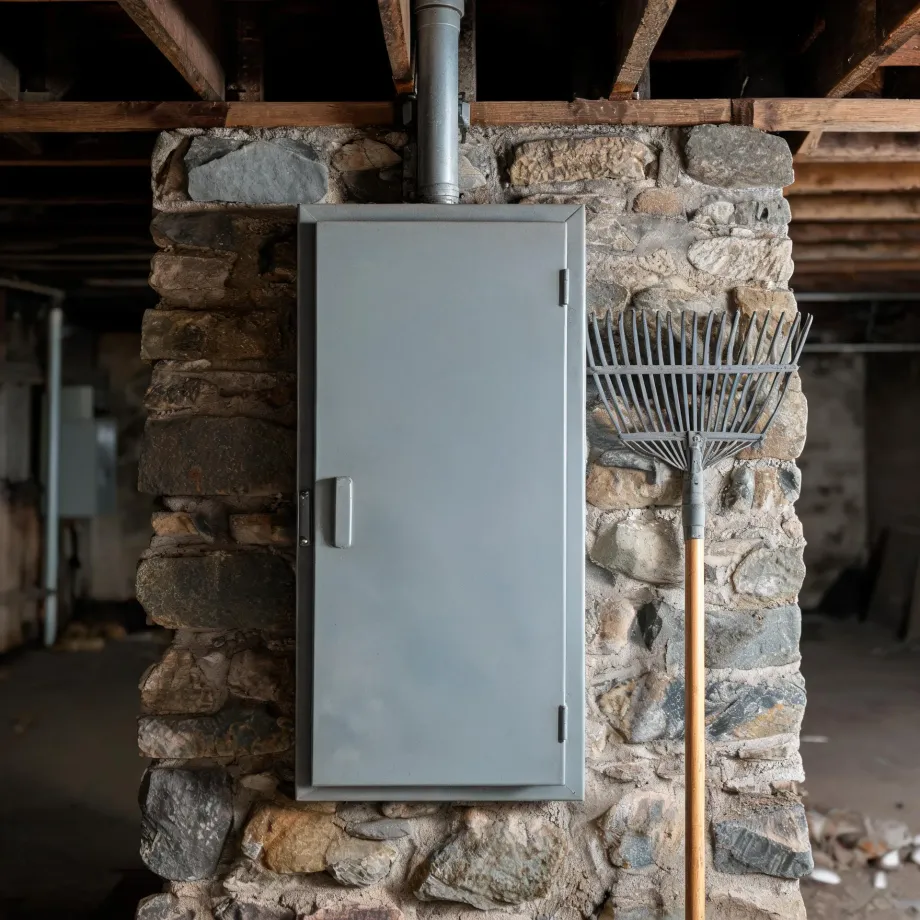
Ductwork laid out for a gas furnace or a window unit was built around a different airflow path than a heat pump needs, and the wiring behind it was sized for a smaller draw. Half the homes in Onondaga County, New York were built in 1964 or earlier (2020-2024 ACS 5-year). A contractor quoting a heat pump installation here measures the existing panel against what the new equipment will actually pull, because the gap between what that wiring was designed to carry and what a heat pump demands is where jobs get complicated or repriced.
What Gets Installed With a New Heat Pump
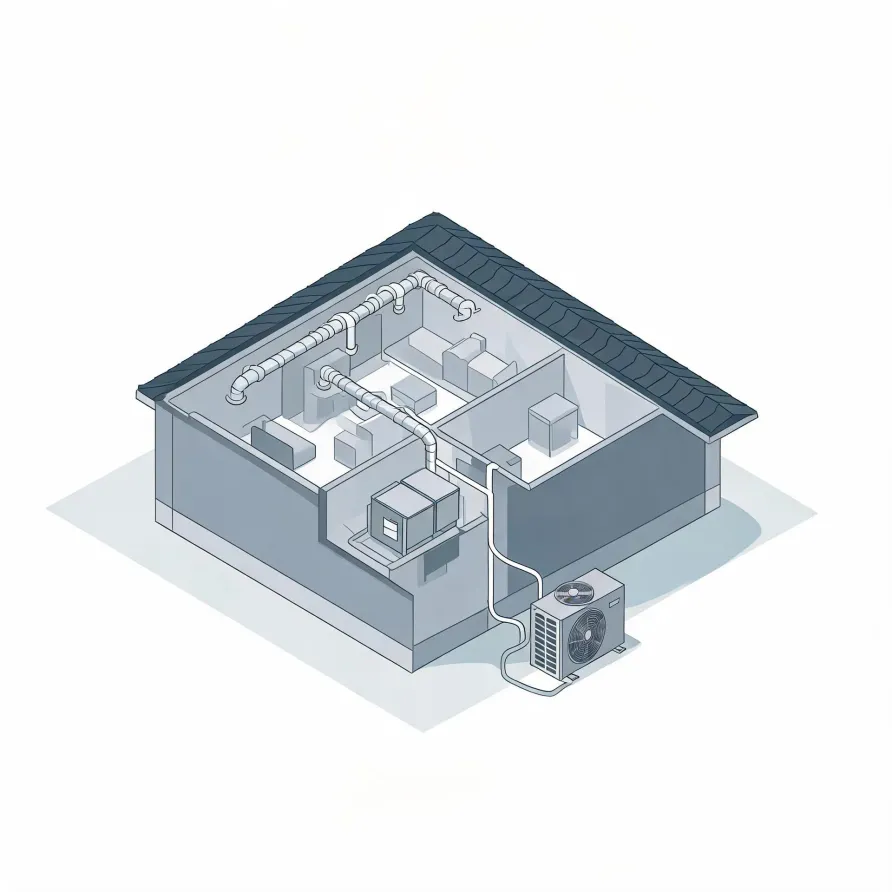
The outdoor unit is the piece a homeowner sees first, mounted on a pad or bracket outside the house, and it holds the compressor and the coil that pull heat from the air. Inside, an air handler goes in a mechanical room, basement, or utility closet, and it circulates conditioned air through the home.
A refrigerant line set runs between the two units, connecting the outdoor and indoor sides through a small penetration in the wall. A thermostat goes on an interior wall where it reads the living space and tells the system when to run.
The drawing shows a representative layout, and a licensed contractor determines exactly what applies to this house.
Get matched in Onondaga CountyOnondaga County, by the numbers
223 severe weather events were recorded in Onondaga County, New York between 2015 and 2024.
NOAA National Centers for Environmental Information, Storm Events Database, bulk CSV export, events 2015-01-01 through 2024-12-31.Half the homes in Onondaga County, New York were built in 1964 or earlier (2020-2024 ACS 5-year).
U.S. Census Bureau, 2020-2024 American Community Survey 5-Year EstimatesOnondaga County, New York holds 212,002 housing units (2020-2024 ACS 5-year).
U.S. Census Bureau, 2020-2024 American Community Survey 5-Year EstimatesOwners occupy 65.9% of the occupied homes in Onondaga County, New York (2020-2024 ACS 5-year).
U.S. Census Bureau, 2020-2024 American Community Survey 5-Year EstimatesSevere Weather Events in Onondaga County
Weather puts a measurable load on heating and cooling equipment, and that load varies by where you live. A heat pump sized and installed for local conditions handles the work better than one spec'd for somewhere else.
223 severe weather events, 2015–2024. Source: NOAA National Centers for Environmental Information, Storm Events Database.