Tell us about the job
Takes about a minute. No obligation.
Sizing a heat pump for Monroe County is not a catalog exercise. Homes in Monroe County, NY run heat about eight months a year, from October through May. Capacity on a heat pump drops as outdoor temperatures fall, and the coldest stretch of that heating window is precisely when the gap between a correctly sized system and an undersized one becomes a problem the homeowner feels. A contractor running the load calculation here has to establish where the system's output curve crosses the house's heat demand, and whether backup resistance heat is needed to cover the shortfall, before the equipment order goes in.
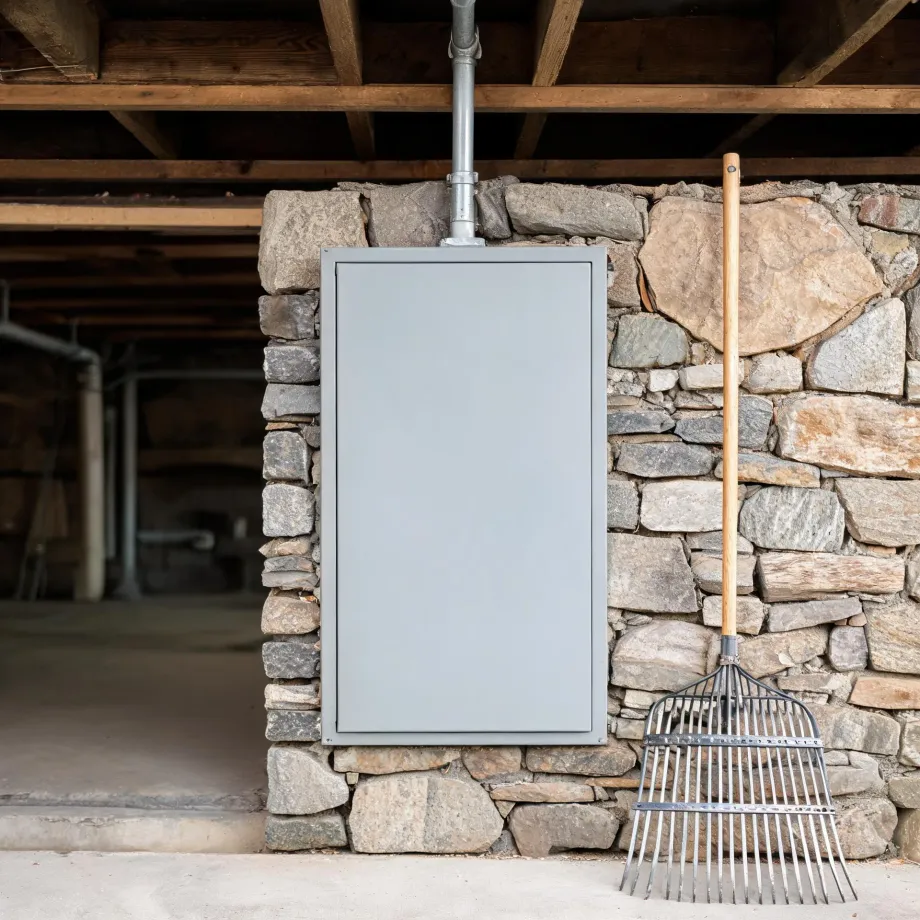
Ductwork and electrical service are what decide how a heat pump installation goes, and in Monroe County the electrical side carries most of the uncertainty. Half the homes in Monroe County, New York were built in 1965 or earlier (2020-2024 ACS 5-year). A home built by that point was wired for smaller loads, and a heat pump draws more current than the resistance heat or window units many of those houses originally ran. Before a panel can be ruled out as a constraint, a contractor has to open it and read what is actually there. That finding shapes the quote more than the equipment selection does.
What Gets Installed With a New Heat Pump
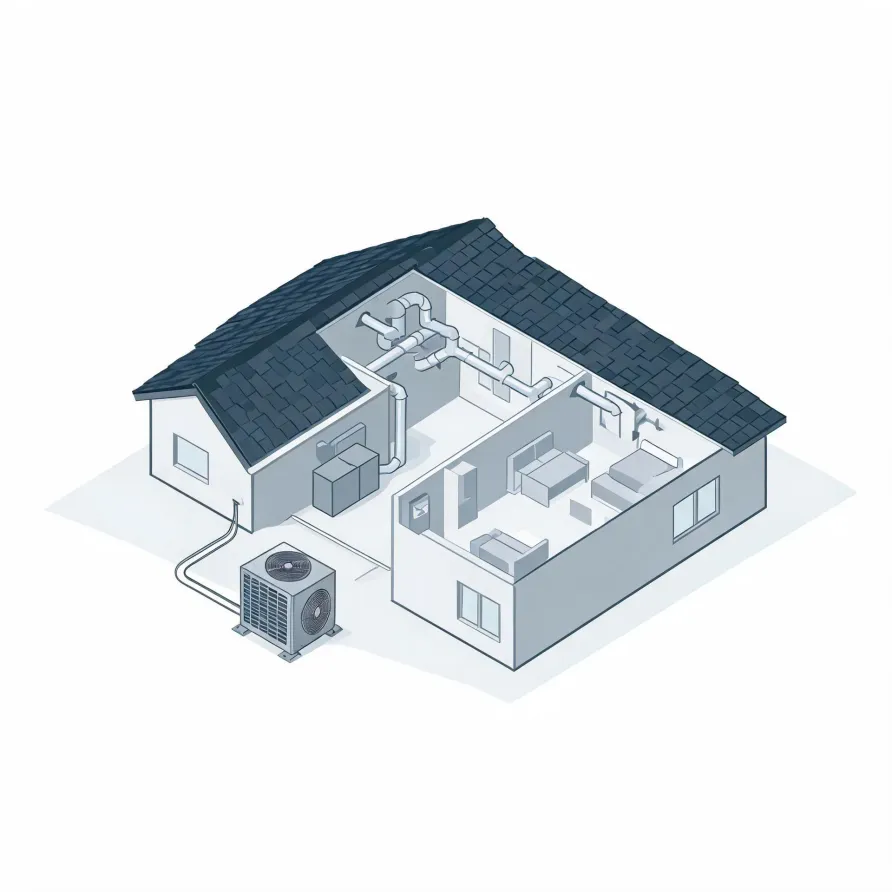
The outdoor unit is the piece most homeowners see first. It sits on a pad outside the house, usually along a side or rear wall, and it pulls heat from the outside air. Inside, an air handler mounts in a utility space, basement, or closet and moves conditioned air through the home.
A refrigerant line set runs between the outdoor unit and the air handler, carrying the working fluid between them. A thermostat goes on an interior wall where it reads the temperature of the living space and tells the system when to run.
The drawing shows a typical layout, and a licensed contractor determines exactly how the components are configured for your house.
Get matched in Monroe CountyMonroe County, by the numbers
191 severe weather events were recorded in Monroe County, New York between 2015 and 2024.
NOAA National Centers for Environmental Information, Storm Events Database, bulk CSV export, events 2015-01-01 through 2024-12-31.Half the homes in Monroe County, New York were built in 1965 or earlier (2020-2024 ACS 5-year).
U.S. Census Bureau, 2020-2024 American Community Survey 5-Year EstimatesMonroe County, New York holds 339,430 housing units (2020-2024 ACS 5-year).
U.S. Census Bureau, 2020-2024 American Community Survey 5-Year EstimatesOwners occupy 63.7% of the occupied homes in Monroe County, New York (2020-2024 ACS 5-year).
U.S. Census Bureau, 2020-2024 American Community Survey 5-Year EstimatesSevere Weather Events in Monroe County
Heating and cooling equipment in Monroe County works against whatever the local climate demands of it, and that demand is shaped by how often the weather turns hard. A heat pump sized and installed for this area has to hold up under the same conditions this chart documents.
191 severe weather events, 2015–2024. Source: NOAA National Centers for Environmental Information, Storm Events Database.