Tell us about the job
Takes about a minute. No obligation.
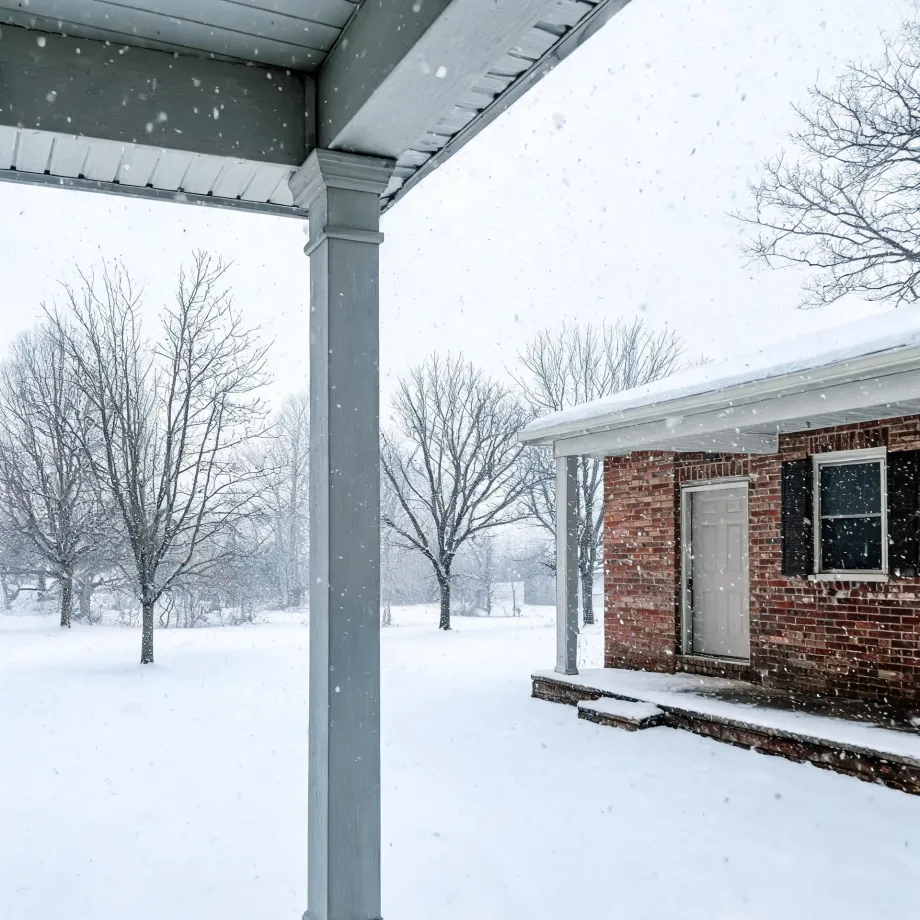
Sizing a heat pump for Clinton County means accounting for what cold actually does to the refrigerant cycle. Homes in Clinton County, NY run heat about nine months a year, from September through May. As temperatures fall through those months, a heat pump's output drops with them, and a unit spec'd for average conditions rather than the coldest stretch will hand off to backup heat more than the homeowner expects. A contractor has to run a full load calculation before quoting, and that calculation has to treat the coldest part of the heating season as the design condition, not the mild shoulder weeks. Get the sizing wrong at installation, and no amount of tuning fixes it later.
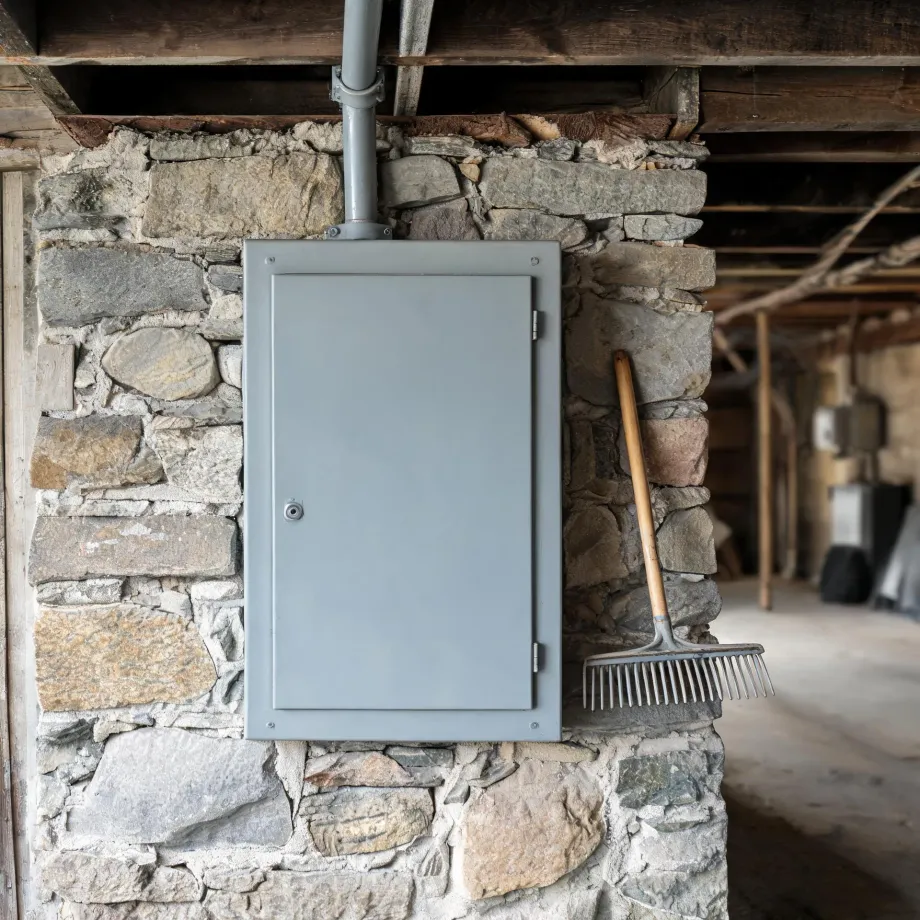
Ductwork built for a furnace moves air differently than a heat pump needs it to move. Half the homes in Clinton County, New York were built in 1974 or earlier (2020-2024 ACS 5-year). That matters for installation because a contractor quoting a heat pump here has to open the distribution system and measure what it actually carries before the equipment choice is settled. Panels from that era often need evaluation too, since heat pumps draw on a circuit that older residential electrical service was not sized to feed. The duct layout is where the job gets defined.
What Gets Installed With a New Heat Pump
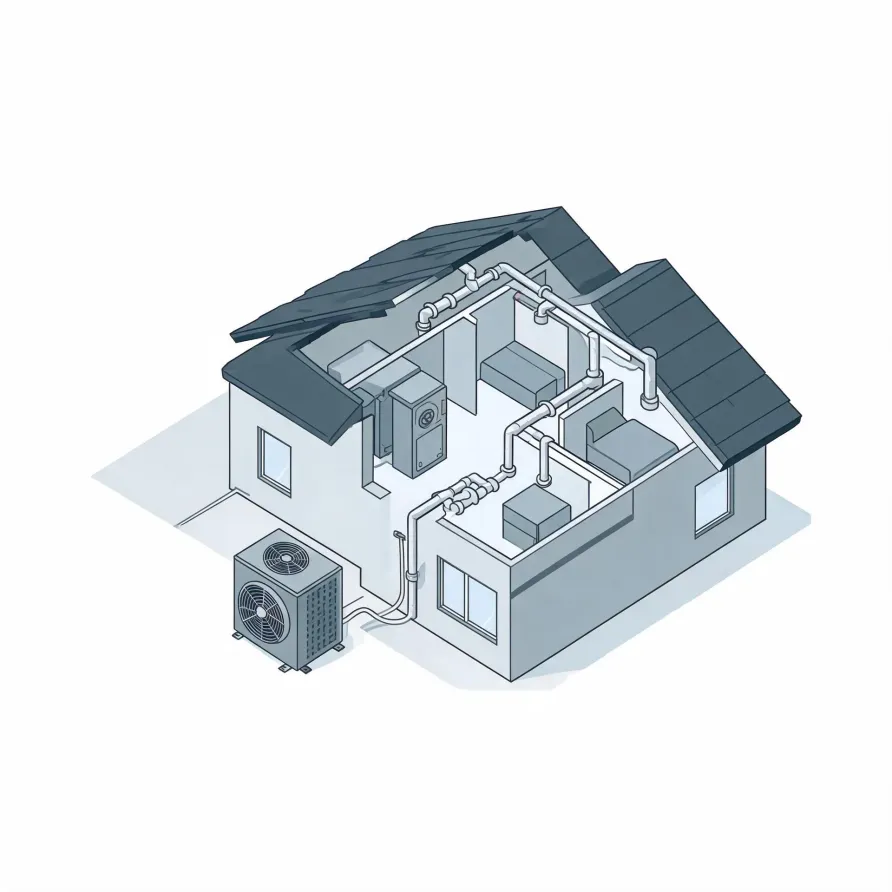
The outdoor unit is the piece a homeowner notices first. It sits outside the house on a pad or wall bracket and holds the compressor and condenser coil, which together do the core work of moving heat between indoors and out. Inside, an air handler mounts in a utility space, closet, or attic and pushes conditioned air through the home.
A refrigerant line set runs between the two units, carrying the fluid that links them, and a condensate drain line carries moisture away from the air handler. The thermostat mounts on an interior wall and gives the homeowner control over the whole system.
The drawing shows a typical layout, and a licensed contractor determines exactly what applies to this house.
Get matched in Clinton CountyClinton County, NY, by the numbers
133 severe weather events were recorded in Clinton County, New York between 2015 and 2024.
NOAA National Centers for Environmental Information, Storm Events Database, bulk CSV export, events 2015-01-01 through 2024-12-31.Half the homes in Clinton County, New York were built in 1974 or earlier (2020-2024 ACS 5-year).
U.S. Census Bureau, 2020-2024 American Community Survey 5-Year EstimatesClinton County, New York holds 37,658 housing units (2020-2024 ACS 5-year).
U.S. Census Bureau, 2020-2024 American Community Survey 5-Year EstimatesOwners occupy 69.4% of the occupied homes in Clinton County, New York (2020-2024 ACS 5-year).
U.S. Census Bureau, 2020-2024 American Community Survey 5-Year EstimatesSevere Weather Events in Clinton County
Heating and cooling equipment in this region works against whatever the climate puts on it, and that workload shapes what a heat pump needs to do year-round. How hard conditions push here is a local fact, and it belongs in any honest conversation about sizing and installing the right system.
133 severe weather events, 2015–2024. Source: NOAA National Centers for Environmental Information, Storm Events Database.