Tell us about the job
Takes about a minute. No obligation.
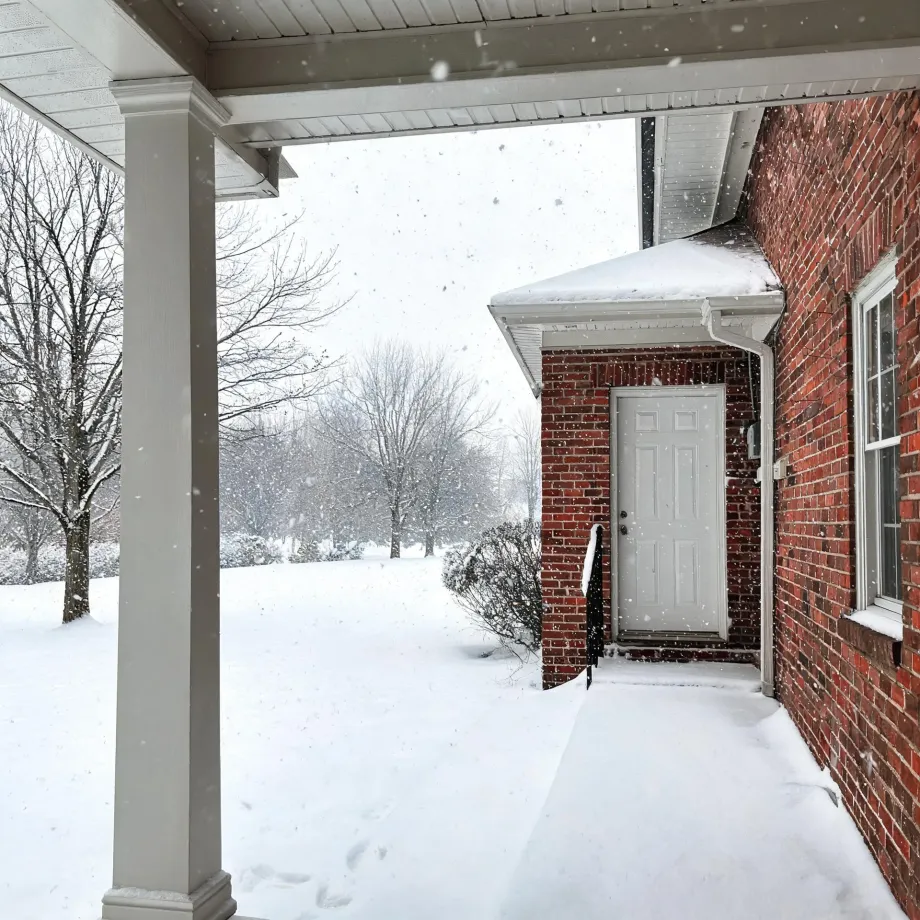
Sizing a heat pump for Suffolk County starts with what the heating side demands. Homes in Suffolk County, NY run heat about eight months a year, from October through May. As outdoor temperatures drop through those winter months, a heat pump's capacity falls, and a system sized on square footage alone will fall short on the coldest days. A contractor has to work out the backup heat threshold, the refrigerant circuit capacity, and whether the existing service panel can carry the load before anything is quoted or ordered.
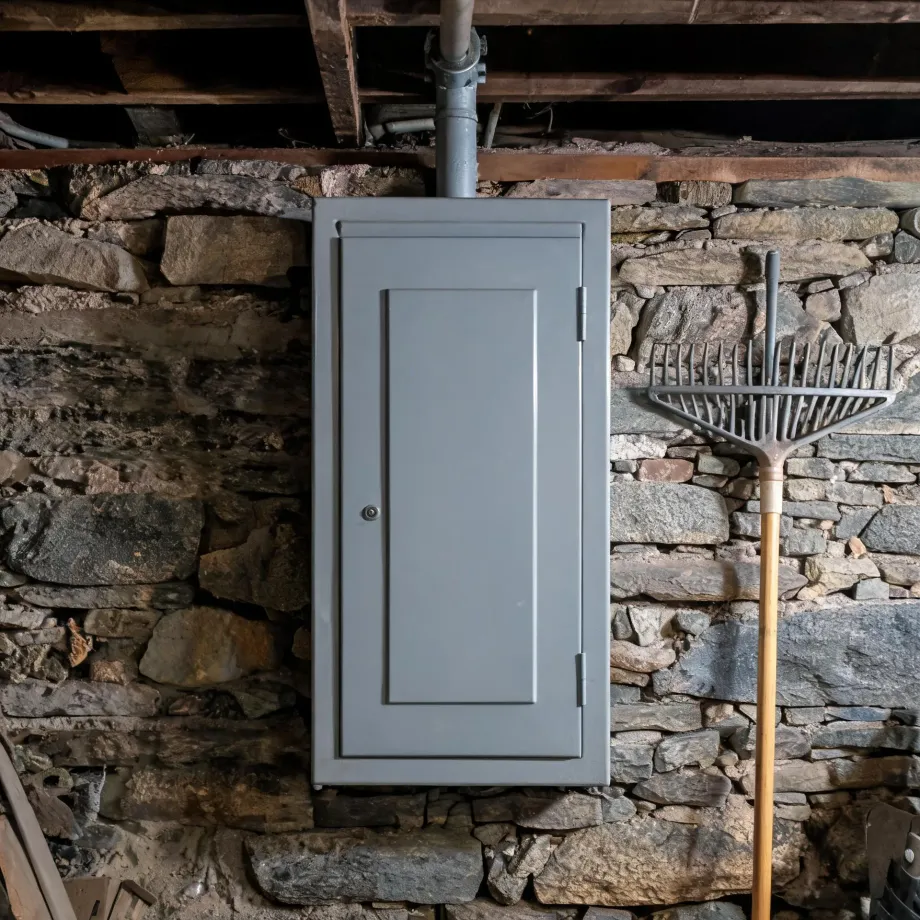
Ductwork laid in for a previous system is what a contractor has to size a new heat pump against, and in Suffolk County that ductwork is often built around assumptions a modern unit will not share. Half the homes in Suffolk County, New York were built in 1970 or earlier (2020-2024 ACS 5-year). A heat pump moves a higher volume of air at lower temperature differentials than most of what that ductwork was originally designed to carry, so the runs, returns, and sealing all get checked before the equipment gets priced. The electrical service gets the same look, since the panel may be sized for a load the new unit exceeds.
What Gets Installed With a New Heat Pump
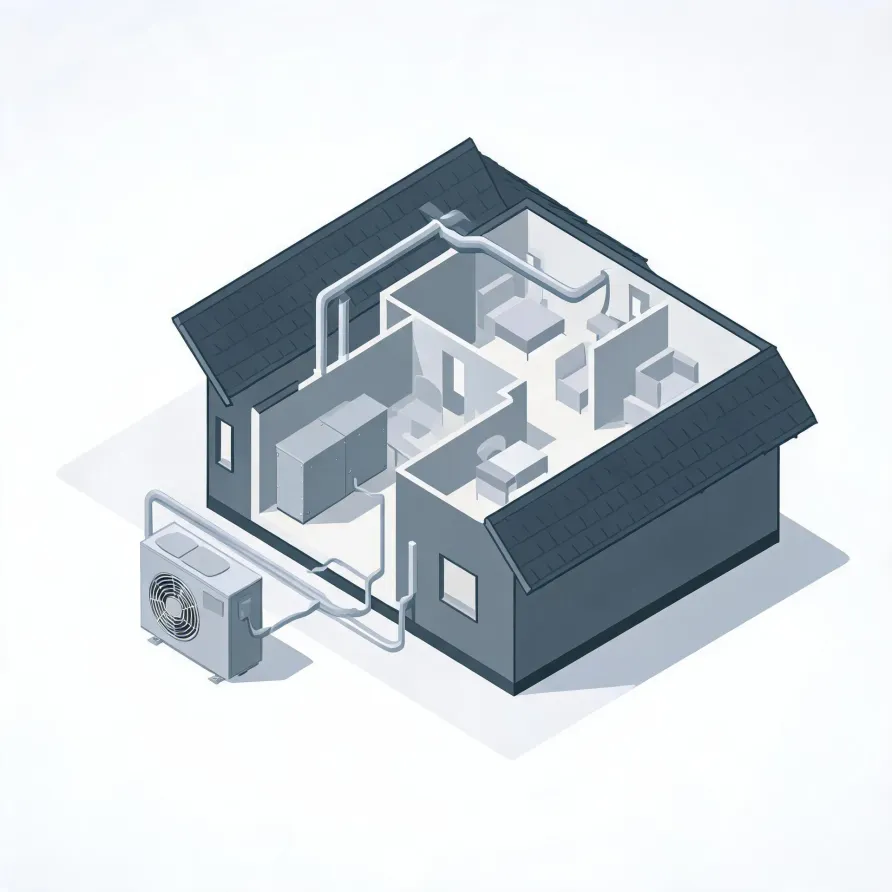
The outdoor unit is the piece a homeowner sees first, mounted on a pad beside the house, and it holds the compressor and the coil that pull heat from the outside air. Inside, an air handler sits in a utility space, closet, or attic and circulates conditioned air through the home. Together these two units are what a contractor sets in place.
A refrigerant line set runs between the outdoor unit and the air handler, connecting the two through an exterior wall. A thermostat goes on an interior wall where it reads the home's temperature and signals both units. Some installations also include a disconnect box mounted near the outdoor unit, giving the system a dedicated shutoff point.
The drawing shows a typical layout, and a licensed contractor determines exactly what applies to this house.
Get matched in Suffolk CountySuffolk County by the numbers
566 severe weather events were recorded in Suffolk County, New York between 2015 and 2024.
NOAA National Centers for Environmental Information, Storm Events Database, bulk CSV export, events 2015-01-01 through 2024-12-31.Half the homes in Suffolk County, New York were built in 1970 or earlier (2020-2024 ACS 5-year).
U.S. Census Bureau, 2020-2024 American Community Survey 5-Year EstimatesSuffolk County, New York holds 580,772 housing units (2020-2024 ACS 5-year).
U.S. Census Bureau, 2020-2024 American Community Survey 5-Year EstimatesOwners occupy 82.2% of the occupied homes in Suffolk County, New York (2020-2024 ACS 5-year).
U.S. Census Bureau, 2020-2024 American Community Survey 5-Year EstimatesSevere Weather Events in Suffolk County
Heating and cooling equipment in Suffolk County works against whatever the climate throws at it, and local weather patterns shape how hard that equipment has to work year after year. A heat pump sized and installed for actual local conditions holds up better than one spec'd for somewhere else.
566 severe weather events, 2015–2024. Source: NOAA National Centers for Environmental Information, Storm Events Database.