Tell us about the job
Takes about a minute. No obligation.
Sizing a heat pump for a Cayuga County home means settling a question that does not arise the same way in a short heating season: how far the refrigerant cycle's capacity will drop before outdoor temperatures bottom out, and what backs it up when it does. Homes in Cayuga County, NY run heat about eight months a year, from October through May. A heat pump loses heating capacity as the outdoor temperature falls, so the coldest weeks of that run are the ones that determine whether the backup heat strip is a safety net or a primary workhorse. A contractor has to establish the Manual J load for the house, the low-end outdoor design temperature, and whether the existing electrical service panel can carry resistance backup heat before a quote means anything.
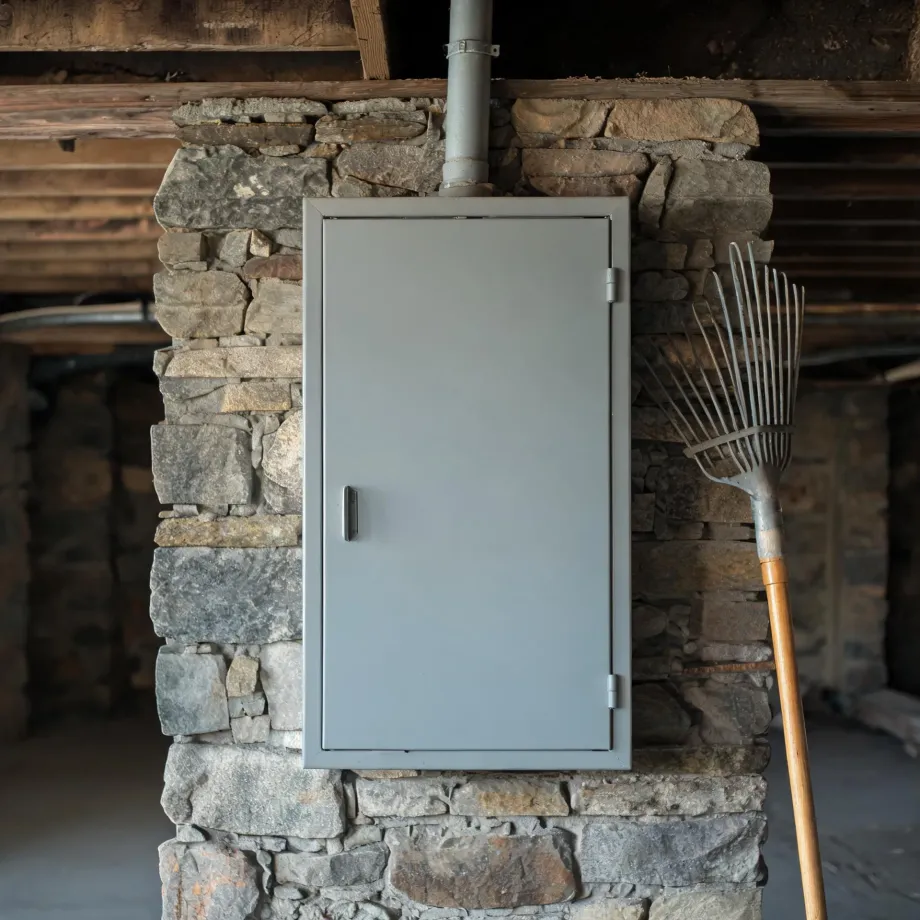
Ductwork and electrical panels are where a heat pump installation in Cayuga County either goes smoothly or adds scope. Half the homes in Cayuga County, New York were built in 1958 or earlier (2020-2024 ACS 5-year). Housing that old was built around different systems entirely, and the electrical service that fed them was sized for a smaller load than a heat pump pulls. A contractor will open the panel, measure what is there, and determine whether it carries the new unit before a final quote is possible.
What Gets Installed With a New Heat Pump
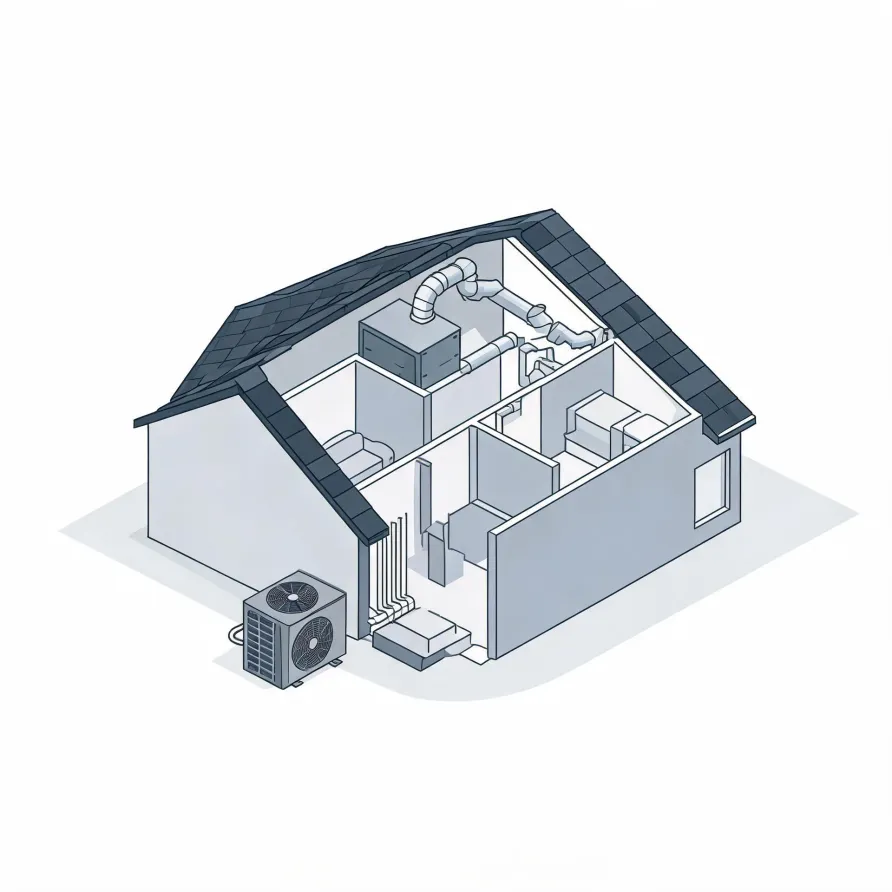
The outdoor unit is the piece a homeowner sees first, mounted on a pad or wall bracket outside the house, and it holds the compressor and the outdoor coil that do the core work of moving heat. Inside, the air handler sits in a mechanical closet, attic, or basement and pushes conditioned air through the home.
A refrigerant line set runs between the two units through the wall or floor, carrying the working fluid back and forth. The thermostat goes on an interior wall where it reads the living space and signals both units to run or stop.
The drawing shows a typical layout, and a licensed contractor determines exactly how each piece gets placed in your home.
Get matched in Cayuga CountyCayuga County, by the numbers
206 severe weather events were recorded in Cayuga County, New York between 2015 and 2024.
NOAA National Centers for Environmental Information, Storm Events Database, bulk CSV export, events 2015-01-01 through 2024-12-31.Half the homes in Cayuga County, New York were built in 1958 or earlier (2020-2024 ACS 5-year).
U.S. Census Bureau, 2020-2024 American Community Survey 5-Year EstimatesCayuga County, New York holds 36,829 housing units (2020-2024 ACS 5-year).
U.S. Census Bureau, 2020-2024 American Community Survey 5-Year EstimatesOwners occupy 71.4% of the occupied homes in Cayuga County, New York (2020-2024 ACS 5-year).
U.S. Census Bureau, 2020-2024 American Community Survey 5-Year EstimatesSevere Weather Events in Cayuga County
Cayuga County weather puts real demands on heating and cooling equipment, and those demands shape what a heat pump here needs to handle year-round. Sizing and installing for local conditions is part of what separates a system that holds up from one that struggles.
206 severe weather events, 2015–2024. Source: NOAA National Centers for Environmental Information, Storm Events Database.