Tell us about the job
Takes about a minute. No obligation.
Sizing a heat pump for Albany County starts with the heating load, not the cooling load, and the heating load here is the one that decides everything. Homes in Albany County, NY run heat about eight months a year, from October through May. As outdoor temperatures drop through those months, a heat pump's capacity falls with them, and a system that looks adequate on paper can lean heavily on electric resistance backup to carry the coldest weeks. A contractor quoting an installation here has to model that gap, then choose equipment and a backup strategy that close it. An undersized system reveals itself slowly, through higher bills and longer runtime, not through an obvious failure on day one.
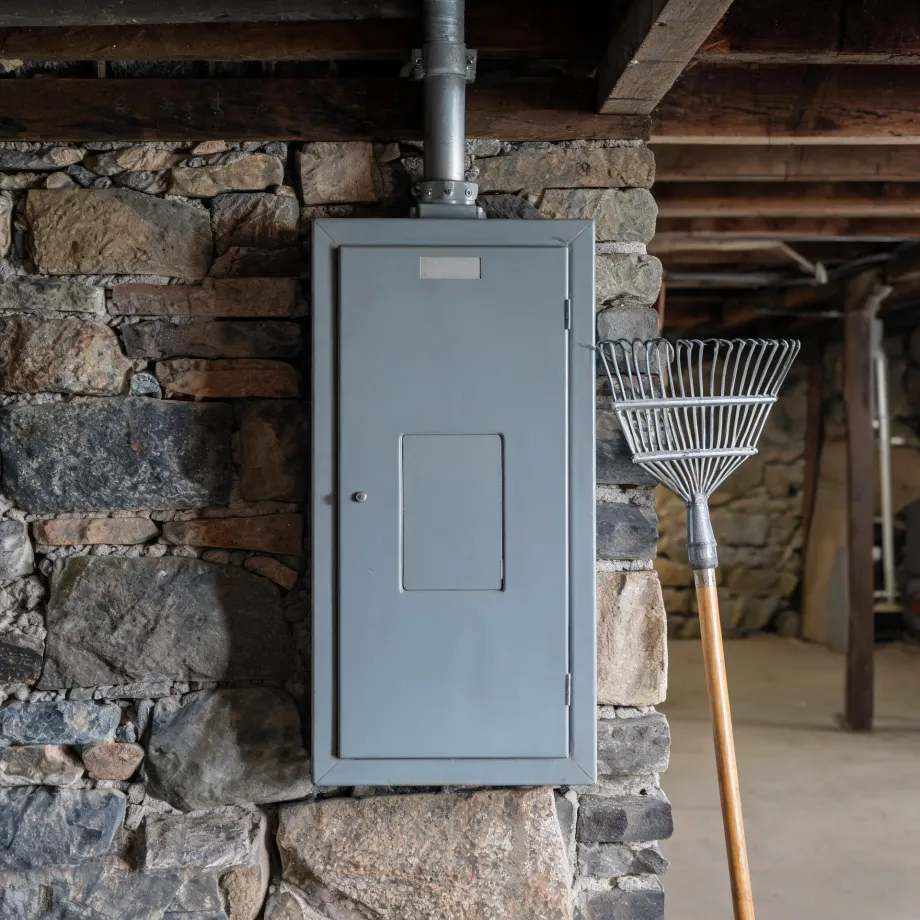
Ductwork put in for one kind of system carries assumptions about airflow, load, and routing that a heat pump does not necessarily share. Half the homes in Albany County, New York were built in 1964 or earlier (2020-2024 ACS 5-year). A contractor quoting a heat pump installation here checks whether the existing ducts move enough air for the new equipment, and whether the electrical service panel carries the load the new unit draws. Those two questions decide whether the installation is a swap or a larger job.
What Gets Installed With a New Heat Pump
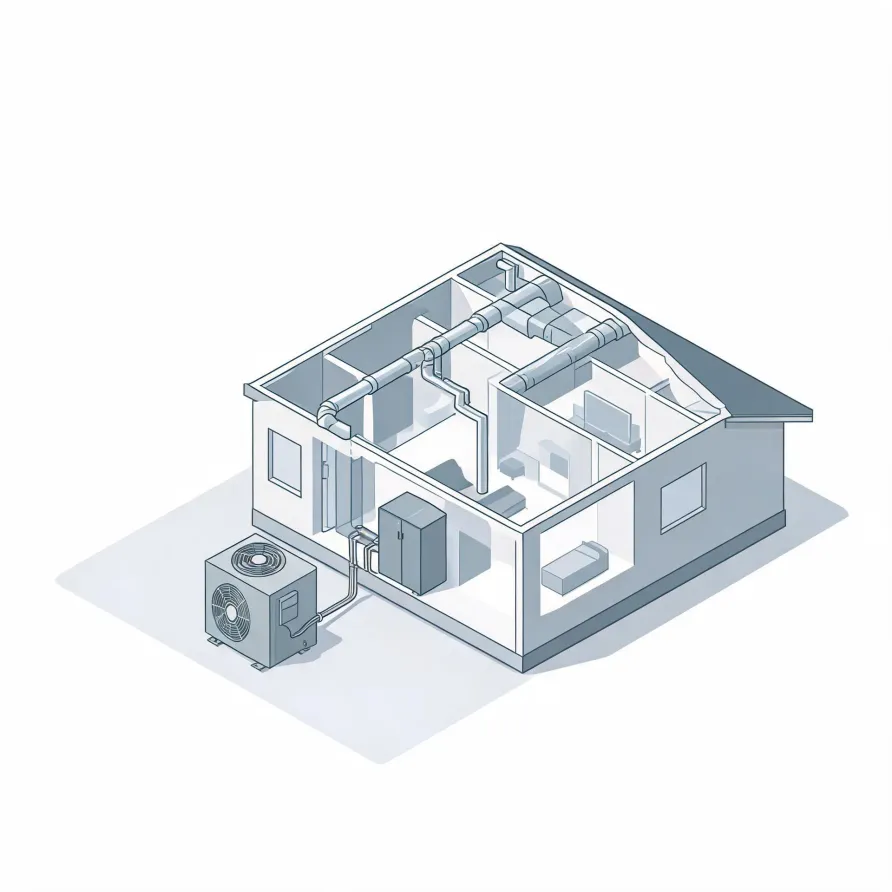
The outdoor unit is the piece a homeowner sees first, mounted on a pad beside the house. It holds the compressor and the coil that pulls heat from outside air. Indoors, the air handler sits in a utility closet, basement, or attic and moves conditioned air through the home.
A refrigerant line set runs between the two units, typically along an exterior wall, carrying the working fluid that connects them. The thermostat goes on an interior wall where it can read the living space accurately and give the homeowner control over the whole system.
The drawing shows a general layout of these components, and a licensed contractor determines exactly how each one applies to your house.
Get matched in Albany CountyAlbany County by the Numbers
435 severe weather events were recorded in Albany County, New York between 2015 and 2024.
NOAA National Centers for Environmental Information, Storm Events Database, bulk CSV export, events 2015-01-01 through 2024-12-31.Half the homes in Albany County, New York were built in 1964 or earlier (2020-2024 ACS 5-year).
U.S. Census Bureau, 2020-2024 American Community Survey 5-Year EstimatesAlbany County, New York holds 147,662 housing units (2020-2024 ACS 5-year).
U.S. Census Bureau, 2020-2024 American Community Survey 5-Year EstimatesOwners occupy 56.6% of the occupied homes in Albany County, New York (2020-2024 ACS 5-year).
U.S. Census Bureau, 2020-2024 American Community Survey 5-Year EstimatesSevere Weather Events in Albany County
Albany County's climate puts real demands on heating and cooling equipment, and those demands vary with what the weather actually does year to year. A heat pump sized and installed for local conditions holds up differently than one specified without that picture in mind.
435 severe weather events, 2015–2024. Source: NOAA National Centers for Environmental Information, Storm Events Database.